Compare dog liability insurance in Rhode Island. Check how your homeowners or renters policy handles dog bites, animal exclusions, and policy limits.
Ask whether the contract could cover a claim involving your dog and whether any restriction applies to your household. Tell the insurer about the animal, its living and care arrangements, and prior incidents when requested. A liability figure on the declarations does not tell you whether a particular dog, person, or event is covered.
Does homeowners or renters insurance cover dog bite liability?
Ask the insurer which people qualify under the contract and what it needs to know about the dog. Explain whether it lives with you, is sometimes in another person’s care, or is regularly at another property. An insurer may have underwriting questions, exclusions or conditions. Get the response in writing and ask where the policy or endorsement reflects it. If you move, adopt a new dog, or change the living arrangement, check the answer again.
Renters should read the lease separately and check whether there are landlord insurance requirements. Permission to keep a dog and insurance for liability are distinct. Ask what proof the manager accepts. The Warwick renters insurance limits guide helps separate the policy’s liability, personal property, and loss-of-use lines.
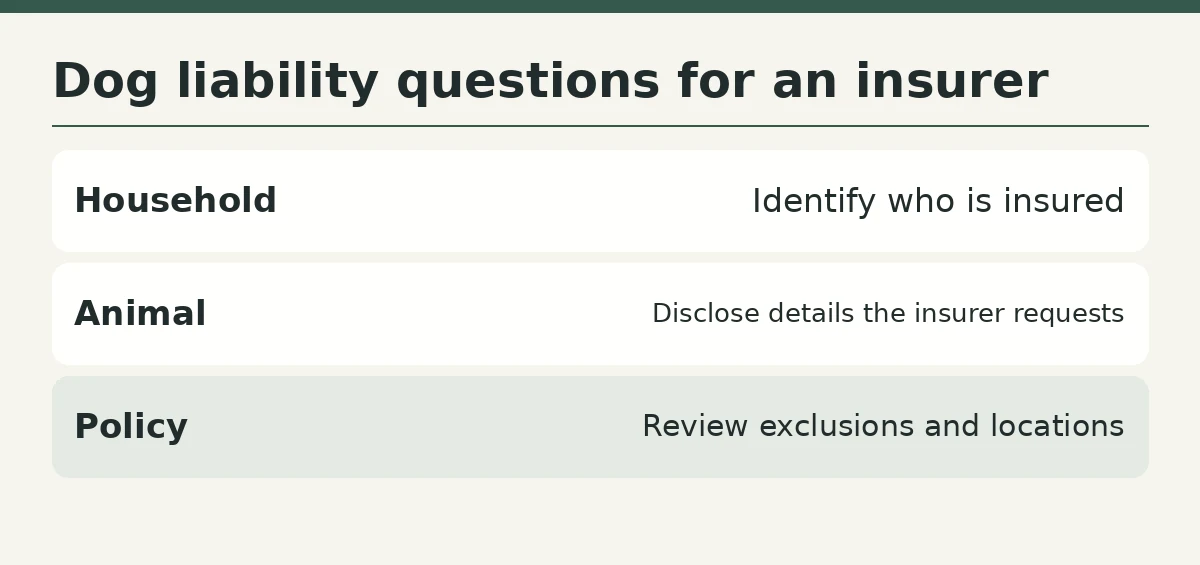
Request a standalone dog liability quote using the same address
Tell each carrier the actual location, household, and ownership details it requests. Ask whether a homeowners or renters liability form contains an animal exclusion and what limit the standalone policy would provide. Confirm who is insured and check the territory. If an umbrella is in the comparison, read the Rhode Island personal umbrella guide to check its underlying liability requirements.
Compare personal liability and medical payments to others
Personal liability may address covered claims involving legal responsibility and may provide defense in eligible circumstances. Medical payments to others can have separate terms and limits. Ask how they differ and which people or events are eligible. The policy’s declarations may show a medical payments limit even if a particular event is excluded. Ask about locations away from the home, such as a visit to someone else’s property, and what conditions apply.
In an illustrative covered liability claim with $130,000 of damages and a $100,000 applicable limit, $30,000 is above the primary limit. That arithmetic does not establish anyone’s liability or the amount a claimant would receive. A separate umbrella could be relevant only if it covers the people and event and its underlying requirements are met.
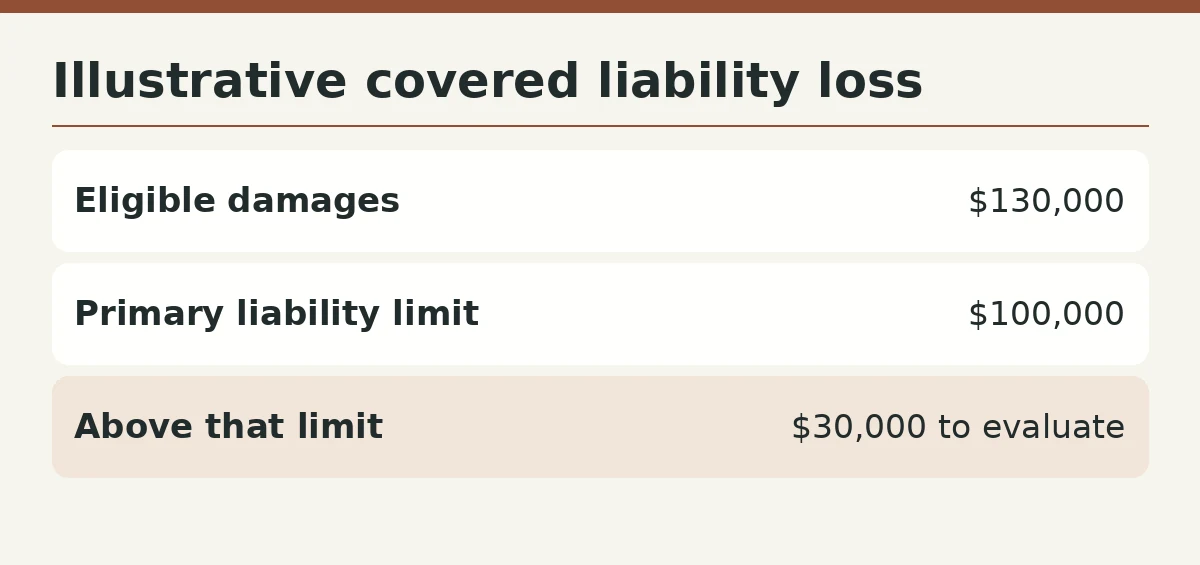
Check animal exclusions before comparing dog liability insurance quotes
If the quote mentions a limitation connected to an animal, ask the insurer to send the exact form and explain what it does. Tell the company whether the household has a prior report or claim and answer its application questions accurately. If one insurer cannot offer the coverage you want, compare another carrier or ask whether a separate animal liability product is available. Compare names, actual events covered, limits, and exclusions before comparing the quoted premiums.
If the dog is used for a business or regularly stays at another location, tell the insurer. Ask whether a personal policy will evaluate an event related to that activity. If you have a Rhode Island umbrella policy, request written confirmation of how the umbrella treats the exposure and what underlying limit it requires. A higher umbrella amount should not be used to assume coverage for an exclusion.
Keep the record usable if an incident occurs
Address immediate safety and medical needs and follow applicable reporting requirements. Notify the insurer as required by the contract and give it the date, location, and factual information about the event. Keep copies of correspondence, relevant photos, and contact information. Refer legal or settlement communications to the carrier as its instructions direct. For claim organization, use the Rhode Island claim decision guide to identify the policy and written decision you need to review.
When shopping for a new policy, compare the actual endorsements on both quotes. Check which person or property is named and whether the company has recorded the information you provided. Save the accepted insurer’s response with the declarations. A good review tells you which insurer you would call and what coverage it would evaluate if a claim arises.
Ask about three places the dog spends time
Describe what happens at your house, at a relative’s home, and at another place where the dog is regularly cared for. Ask who qualifies as an insured under each policy and what terms matter when someone else is handling the dog. If you leave the dog with a paid caretaker, ask that person or business what insurance it has and what contract applies. Avoid assuming your own insurance or the caretaker’s policy will cover every person or circumstance.
If you are housesitting or fostering a dog rather than owning it, explain the arrangement to the carrier. Ask what it needs to know about ongoing care and the people who live with you. If the dog is occasionally used in an activity involving money, disclose it and ask if another type of policy is needed. Obtain the reply in writing and note what facts the carrier used. Update it when the arrangement changes.
Compare a higher limit with a change in coverage wording
Suppose one eligible policy offers $100,000 of personal liability, while a second offers $300,000 at a higher premium. Before pricing the difference, ask whether both cover the animal-related risk you described. A higher amount has no effect on an excluded event. Have each agent identify any animal restriction or endorsement and ask what conditions apply. If the quote excludes part of the risk, ask whether another product can address it and how that product would coordinate with the main liability policy.
If the risk is covered, compare the defense terms and how the policy uses the limit. Ask whether the contract can evaluate injury to a visitor and damage to another person’s property under the same liability line. Do not rely on the $130,000 example as a statement that anyone is responsible for a particular event. The claim’s facts and applicable law govern that issue. Use the numbers to decide what clarification you want when quoting.
Keep the carrier’s underwriting answer with the policy
If you were asked about earlier incidents or the household’s animals, retain accurate responses and update the insurer when it requests a change. Save the edition of any endorsement named in the quote. Review the issued policy for the expected limit and restriction. A person may quote one thing by phone while the declaration uses a shorter description. Ask the carrier to identify the controlling wording if there is a mismatch.
For renters, keep written proof the manager received the policy evidence it requested. For an umbrella, verify the underlying limits and which animals or activities it considers covered. The Warwick home insurance declarations guide explains where to find liability and medical payments limits. When a policy renews, compare the actual forms and tell the insurer about any material changes to the household or dog-care arrangement.
Ask about incidents off the premises
For a dog that spends time with relatives or goes to a park, describe who handles the animal and where an incident could occur. Ask the carrier whether coverage depends on ownership, custody, or the location of the event. If another household member is named on a separate policy, ask which policy would be reviewed. Do not treat a generic liability limit as a statement that a particular person or dog is insured away from the property.
If a dog is temporarily cared for by a business, ask what the business’s insurance and service agreement mean for the arrangement. Give your own insurer the same facts and ask whether there are restrictions. Keep any written answers with the relevant policy. If a caretaker changes or moves to a different location, update the carrier when required. Having an invoice for a service is a separate matter from whether it creates or changes liability insurance.
Compare a landlord requirement with what the insurer provides
A lease can specify a dollar limit, require proof, or describe conditions for keeping a dog. Read the clause and ask the property manager to confirm what will satisfy it. You might find a renters policy that meets the liability amount but excludes a particular risk. Ask the carrier to identify the form and get an answer about the animal before relying on it. A lease showing that a pet is permitted does not establish coverage under an insurer’s contract.
If you need a separate liability product, compare its limit and defense terms with the main policy and ask which contract addresses claims involving the dog. Ask whether it has an applicable deductible, which people are insured, and what territories apply. Check whether any umbrella can sit above it. Download the issued endorsement or policy for later review and keep proof of the accepted coverage with your lease documents.
Check how an insurer handles a reported event
If an incident occurs, address immediate safety and seek medical help when needed. Write down the date, location, and factual details when you can. Give the insurer the information it asks for and ask for a claim number. If there is a local reporting requirement, verify it with the appropriate authority. Keep correspondence and follow the insurer’s directions about forwarding any demand. A discussion with a neighbor and a formal claim can produce different records; keep both accurate and separate.
If the carrier provides a written coverage position, ask which provision it used. Check whether it affects defense, payment, or both. If the insurer requests information about earlier incidents, respond accurately. Review any timeline in the policy or letter and obtain appropriate advice if legal deadlines are involved. Insurance coverage and a determination of legal responsibility are distinct. Avoid treating any informal estimate as an outcome.
Verify the insurer’s answer at renewal
Ask whether the insurer changed any endorsements or conditions. If your household moved, adopted another animal, or began caring for dogs for pay, describe the change. Request the revised terms before deciding which limit fits. Keep a copy of prior documents for events during the previous term and compare the current form for whatever arrangement you have now.
Ask which policy would need notice when a visitor alleges an injury
Suppose a visitor reports an injury after entering the property and later sends a demand. Give the insurer the date, factual description, and communications it requests. When there is primary and umbrella coverage, check the notice terms for both. These provisions may require different steps or dates. Ask whom to call if the carrier requests more detail about animal ownership, care, or location. Keep the record of the insurer’s instructions. Avoid signing any settlement or assuming a decision before you understand what the insurer will review and whether you need separate advice.
Compare standalone dog liability insurance and an umbrella policy
List the concern that the homeowners or renters quote excludes or limits. Ask whether the specialty contract covers that situation, which people are insured, and whether there are territorial or activity limits. Read how it handles defense expenses and how it interacts with the primary policy or umbrella. Check the premium after considering deductibles or limits and request proof before relying on the new coverage. If the household leases the property, confirm whether the lease accepts the combined proof. The documents should describe the dog and household arrangement accurately.
Some carriers ask for the date and circumstances of an earlier incident. Provide an accurate account and request a written decision based on those facts. Compare insurance eligibility separately from local requirements about keeping an animal. If you are unsure what local rules apply, check with the appropriate municipal authority.
Before choosing dog liability coverage
Request the actual animal endorsement. Tell the insurer who owns and cares for the dog, where it stays, and how it is used. Ask which people and locations the policy covers and whether it restricts coverage for the animal.
Get a comparable limit and written terms. Ask how personal liability, defense, and medical payments work for a covered incident. If you rent, confirm whether the proof will meet your lease requirements.
Check an umbrella or specialty policy separately. Ask which underlying limits are required and whether the policy is available for the precise exposure you described. A higher limit is useful only when the loss qualifies.
If your household rents out a home, ask which policy responds to a liability allegation involving the rental property. Use the Warwick landlord insurance quote checklist to give each carrier the same occupancy and tenant details.
Sources consulted
Insurance Information Institute, dog-related liability insurance information; National Association of Insurance Commissioners, homeowners and umbrella insurance guidance.