
Dispute a home or auto insurance claim in Rhode Island. Find the policy, compare itemized repair estimates, and check appraisal or complaint options.
If a Rhode Island home or auto insurance claim is denied or paid for less than you expected, start by identifying the decision you want reviewed. It may be a disagreement about whether the policy covers the event, the repair scope, depreciation, a deductible, or the value of a vehicle. Ask for the carrier’s written position and the policy language or calculation it used. A focused request can give the adjuster something specific to verify.
Build a file with the policy and the decision
Gather the declarations and endorsements that were in force on the date of loss. Save the insurer’s estimate or valuation, payment statement, and any denial or reservation letter. Add your photos, contractor estimates, receipts, and the claim correspondence. Keep copies in date order. Use a short timeline that lists when the loss was reported, when the insurer inspected the damage, when it made a decision, and what remains unanswered.
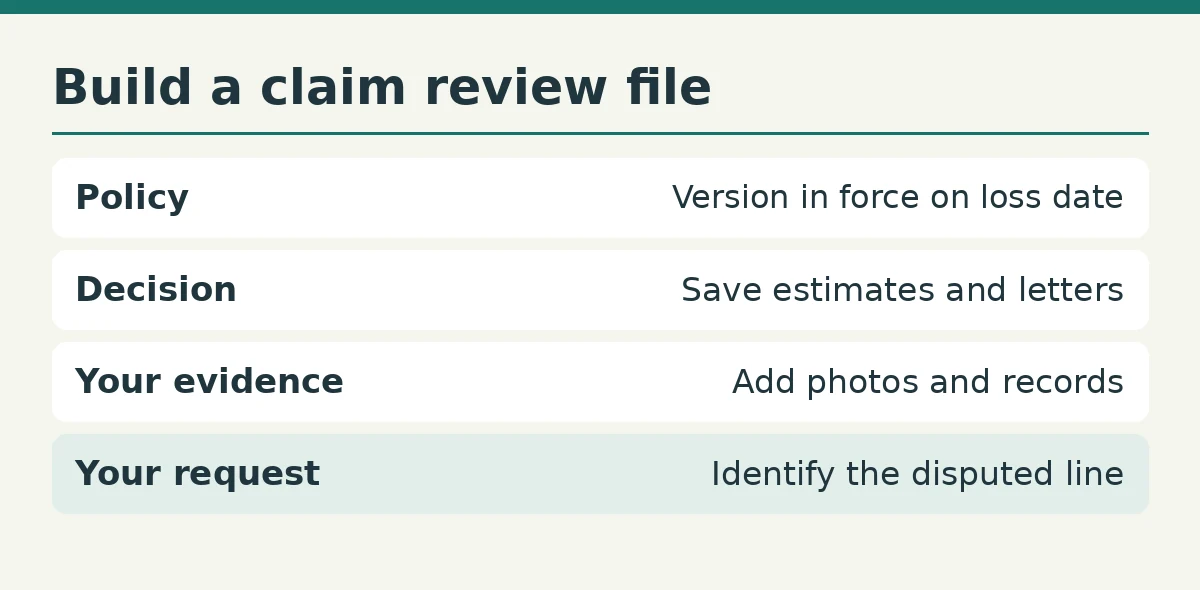
If the dispute involves a home, ask what the insurer attributed to the covered event and what it excluded from the repair. If the dispute involves a car, ask whether the carrier is using a repair estimate or a total loss valuation. The Rhode Island total loss settlement guide shows how to check a vehicle’s equipment and comparable listings. Identify the exact document and line that does not match your records.
Save the claim decision for your next insurance quote
If an excluded item prompted the dispute, save the carrier’s written explanation and the precise form it cited. At renewal, ask each insurer whether its proposed form would treat the same item differently and request that answer in writing. Keep the active claim file separate from the new quote. For a dispute focused on a car’s market value, see the Rhode Island total loss valuation guide.
Ask for the reasoning behind the number
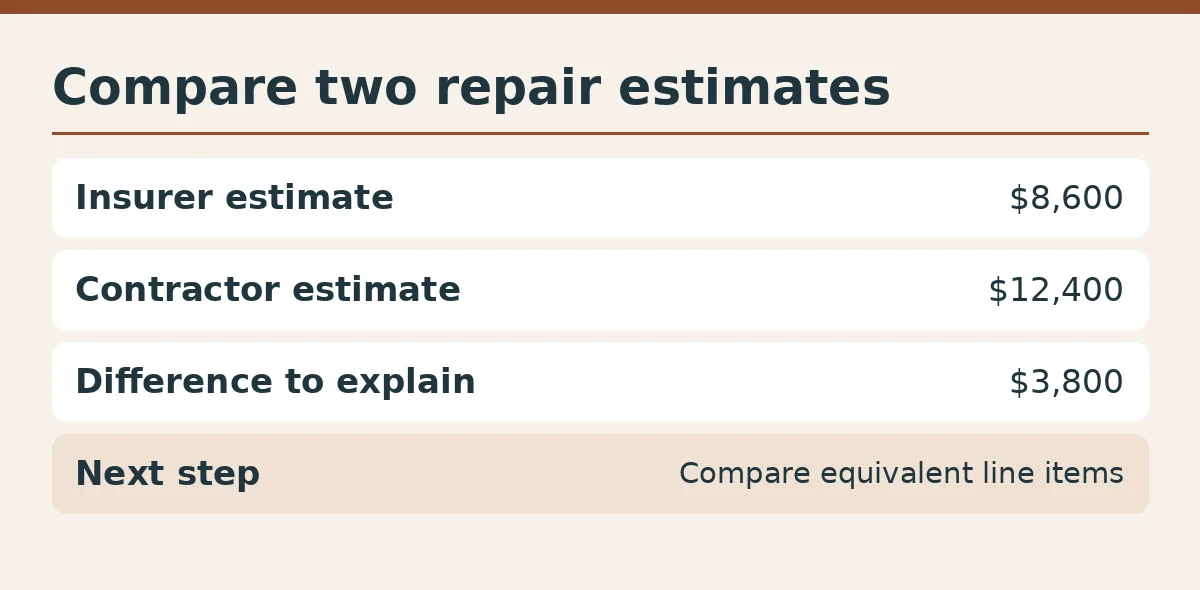
Suppose the insurer’s home estimate is $8,600 and your contractor’s is $12,400. The $3,800 difference might come from missing work, a different material, a difference in labor quantities, depreciation, or a coverage decision. Ask both parties for itemized estimates and compare equivalent lines. Request an explanation of any excluded work and ask which policy provision applies. Keep the comparison focused on the items that produce the difference.
If you send new evidence, state what it shows. A photo of concealed water damage, a written permit requirement, or a report about the cause of a loss can answer different questions. Request written confirmation that the insurer received the material. Ask when you should expect a reply and what further information would help. If the insurer changes its estimate, ask for the revised calculation and confirm which issues remain open.
Check which review option fits the dispute
Start with the adjuster and the carrier’s internal review process. Ask whether a supervisor can review the decision and how to submit the request. For a payment disagreement, check whether the policy has appraisal language and what issues it addresses. Appraisal often concerns the amount of loss. It may have different limits when the dispute is about whether the policy covers the event. Ask what the policy requires for notice, selection of appraisers, and costs before choosing that route.
If you use an Allstate policy, the Warwick Allstate claims guide can help you organize your records and identify the carrier’s reporting options. For a storm-related property claim, separate any disagreement about the cause from a disagreement about your homeowners deductible or the settlement value. A decision can involve more than one question. State each separately.
Use the Rhode Island Insurance Division process when appropriate
The Rhode Island Department of Business Regulation’s Insurance Division provides a process for insurance complaints. Check the current instructions, who can submit a complaint, and what documentation is required. Describe the policy, claim number, decision, attempts to resolve it with the insurer, and the response you are requesting. Attach relevant records and follow the official submission instructions. The state’s process can review insurance practices and seek a company response. Outcomes depend on its authority and the facts.
A complaint, internal review, and legal action can have different purposes and deadlines. If a deadline is approaching or the disagreement involves significant legal rights, get advice on the deadlines and options that apply to your case. Ask whether submitting a complaint affects any other deadline rather than assuming the time to act has changed.
Track what happens after you send the request
Write down when the company or the Division received the documents and save each response. If an estimate changes, compare the revised figure with the specific items in your request. If the insurer sends payment for an undisputed amount, read the accompanying documents and ask what remains open before signing a release. Store final correspondence and proof of payment with the policy. A complete file lets you see whether the original issue was resolved and whether any separate claim questions still need attention.
Write a request that identifies the remedy you want
A short request can name the claim, the date of the decision, the part you disagree with, and the action you want. For example, ask the carrier to reconsider a roof repair line using an attached contractor measurement or to correct the trim in a total loss valuation. Label the attachments and explain which facts each one supports. If the letter raises several questions, number them so you can check whether each was answered.
Before sending the request, look for any deadline in the policy or claim letter. Write down the date and how notice must be delivered. Use the insurer’s stated channel, retain a copy, and save any receipt or confirmation. If the issue is urgent, use the carrier’s phone line to ask who handles it and follow up in writing. Keep the conversation record with the request.
Distinguish an additional estimate from a second claim
A contractor or repair shop may discover more damage after work begins. Ask the insurer whether that information should be submitted as a supplement to the open claim and what proof it needs. Include photographs or an explanation of why the work could not be seen during the first inspection. Obtain written authorization where the carrier requires it. If the insurer treats the work as unrelated, ask for an explanation of the cause and the policy provision it used.
If a payment arrives while the supplemental request is under review, ask what the payment covers. Compare it with the latest statement and check whether it resolves the whole claim or only the undisputed work. Keep a separate tally of amounts billed, accepted, and still under review.
Sources consulted: Rhode Island Department of Business Regulation, Insurance Division complaint instructions; Rhode Island Unfair Property/Casualty Claims Settlement Practices, 230-RICR-20-40-2; National Association of Insurance Commissioners, What You Should Know About Settling a Homeowners Insurance Claim.
Identify the disputed item before asking for claim review
Ask for the decision and coverage wording in writing. Separate a difference in an estimate from a disagreement about whether an item is covered. If the issue is the price assigned to a damaged car, request the carrier’s comparables with the Rhode Island total loss valuation guide before submitting a review request.