
Build an inventory for homeowners insurance in Warwick, RI. Estimate replacement costs, document your valuables, and choose a personal property limit.
A home insurance inventory records what you own, where you kept it, and what it would cost to replace it. For a Warwick homeowner, it is useful both before a quote and after a claim. Begin with the belongings you would need to replace after a major loss. Then add enough information that you could recognize each item and find its receipt, model number, or photograph without having to return to the property.
Walk through the home one room at a time
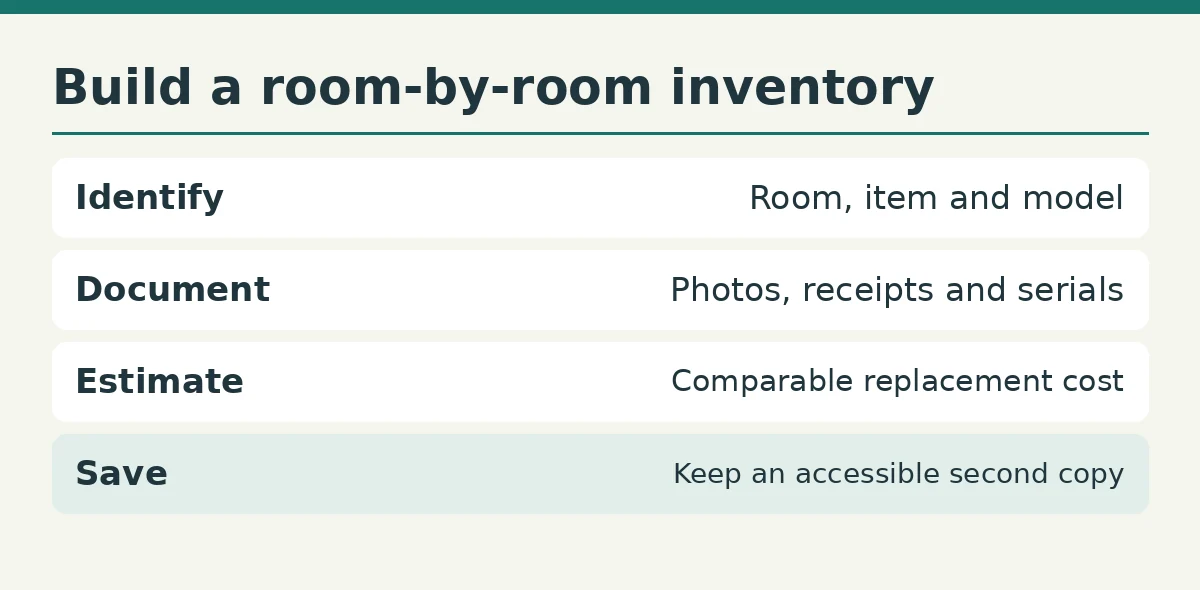
Start with broad photographs of the rooms, then capture items that merit a closer record. Open drawers, cabinets, and closets. Photograph tools in the garage, kitchen equipment, linens, and seasonal clothing. A list with only electronics and furniture can miss much of the cost of replacing an ordinary household. Record the approximate purchase date, brand, and model for more expensive items. For ordinary goods, a grouped list can be more practical than logging every individual towel or plate.
If you keep belongings in a detached garage, basement, or storage unit, record that location separately. Ask your insurer whether the policy limits coverage based on where an item is kept. If you own equipment used for work, note that use and ask whether business property is treated differently. Renters can adapt the same method and compare their figures with the Warwick renters insurance limits guide.
Choose the contents limit before requesting a personal property quote
Add up the estimated cost of current equivalents room by room. Ask each insurer to quote an identical contents limit and identify special limits for categories that account for a large share of the amount. If a covered claim would be settled in two payments, ask what receipts would trigger a later payment. Check the issued amount against your homeowners declarations page.
Put replacement cost and documentation in separate columns
List a reasonable cost for a comparable new item and the date you checked the price. Keep proof of what you own in another column: a receipt, a photo, a serial number, or an appraisal. An older receipt can help identify an item without showing what it costs to replace today. If you use a current price, record the model and whether the price includes delivery or another charge. This is an estimate for comparing limits. The insurer may value a claim under different terms.
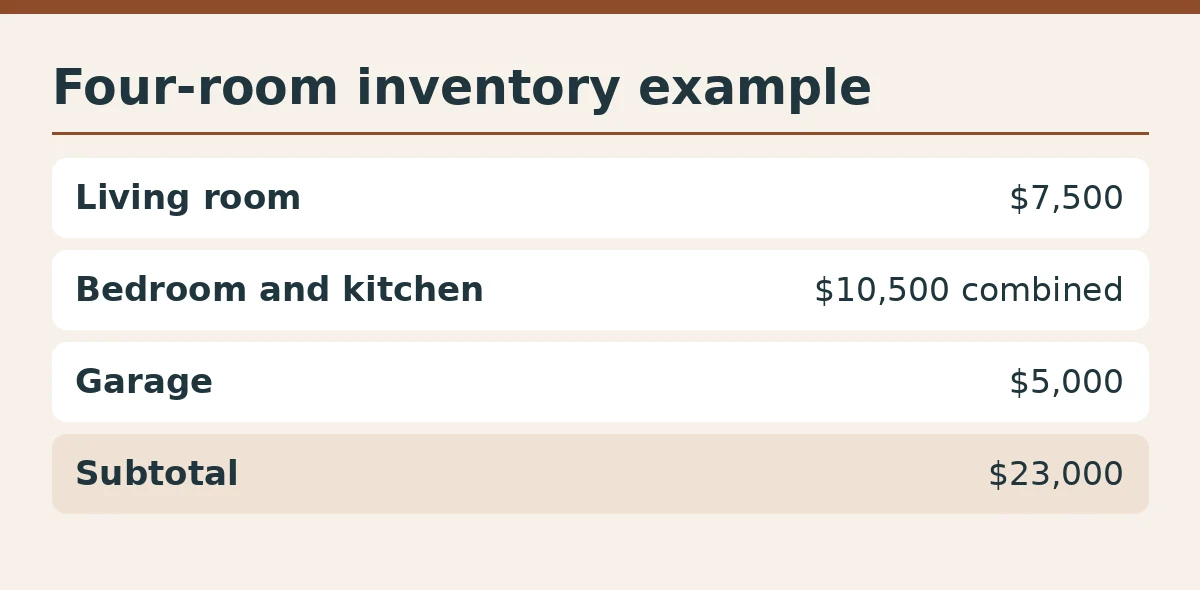
For example, imagine a living room would cost $7,500 to refurnish, a bedroom $6,000, a kitchen $4,500, and a garage $5,000. The four groups total $23,000 before adding belongings stored elsewhere. Take a second pass through the house to identify missing rooms. Then check the personal property limit and settlement terms on the homeowners declarations page. Ask whether the policy pays actual cash value or replacement cost and when any additional replacement payment can be requested.
Record valuables and special limits separately
Check jewelry, collectibles, cameras, bicycles, musical instruments, and any other items you would have difficulty replacing. Ask the insurer about limits by item category and by cause of loss. For example, a theft limitation may affect certain valuables even when the overall contents limit is much higher. Ask whether a separate endorsement or schedule is available, how values are established, and whether the company needs an updated appraisal.
Keep private identifying information out of broadly shared files. Store serial numbers and proof of purchase somewhere you can access if your usual device is damaged. If you share a home with someone whose property might be covered under a different policy, identify which items belong to whom. Ask the carrier to explain who qualifies as an insured person before using the inventory to decide on your limit.
Build a list you can use after a loss
Keep at least one copy away from the house or in a secure account you can reach from a different device. Add a date to each copy. Record the rooms you reviewed and the areas you have not checked yet. If something is damaged, use the inventory to identify it and then add claim information such as the observed damage, photographs, and the date it was reported. Ask your insurer before discarding damaged property unless immediate disposal is necessary for safety.
A claim can involve replacement purchases over time. Keep original and replacement receipts separately, and record which amounts have been submitted or paid. If an insurer asks for a proof of loss or another form, note its deadline and submit the inventory in the format requested. The Warwick claim filing guide describes the reporting process for an Allstate policyholder.
Review the inventory at renewal
Add major purchases and remove items you sold or donated. If you inherit something, take photographs and record when it entered the household. After a move or renovation, update where items are kept. Ask your insurer about the appropriate limit using the refreshed total and the highest-value items. If you raise the limit, check how the new premium and settlement terms appear in the issued documents.
A reliable inventory has enough detail to help you remember what was in the home without becoming too difficult to maintain. A dated video walk-through, a short list of high-value items, and a folder of receipts are a practical start. Expand room by room as you collect information.
Turn a video into a list you can keep current
A video can quickly show where items are kept, but it may not capture details that are difficult to read on screen. Pause on the model plate of major appliances when you can see it clearly. Take a separate photo of any serial number you cannot capture in the video. Label photos by room and date so you can find them later. For similar items, record the number of items and a sensible replacement cost per unit. Make notes when a grouped total includes a particularly expensive piece.
To make the process manageable, choose one room and complete it before starting the next. At the end, check whether the list includes belongings you take away from the home regularly, such as a laptop or musical instrument. Ask the insurer how the contract treats property away from the premises and which limits apply. Store the answer with the inventory.
Track new purchases without rebuilding the whole file
Keep a folder for receipts from the current year. When you buy a higher-value item, add its model and location to the existing record. After each annual review, store a dated copy so you can see which belongings were in the household during an earlier policy term. This also helps explain why an updated contents estimate increased between renewals.
Sources consulted: National Association of Insurance Commissioners, Consumer Homeowners and home inventory guidance; NAIC, actual cash value and replacement cost consumer guidance.
Use the home inventory to compare personal property quotes
Price a new equivalent of ordinary items, then check whether coverage uses actual cash value or replacement cost. Keep photographs and current estimates separate from the original receipts. For rings and watches, check the scheduled jewelry insurance guide before assuming the overall belongings limit covers the value.