Compare roof replacement cost and actual cash value on Warwick home insurance quotes. Check depreciation, roof schedules, and your policy deductible.
Two Warwick homeowners insurance quotes can have the same dwelling limit and pay very different amounts for roof damage. One may value a covered roof loss at replacement cost, while another may deduct depreciation or use a payment schedule tied to the age or material of the roof. Ask how the policy settles roof claims and request the wording before comparing premiums. The answer can change how much cash you need after a storm.
Start with the settlement method for the roof itself
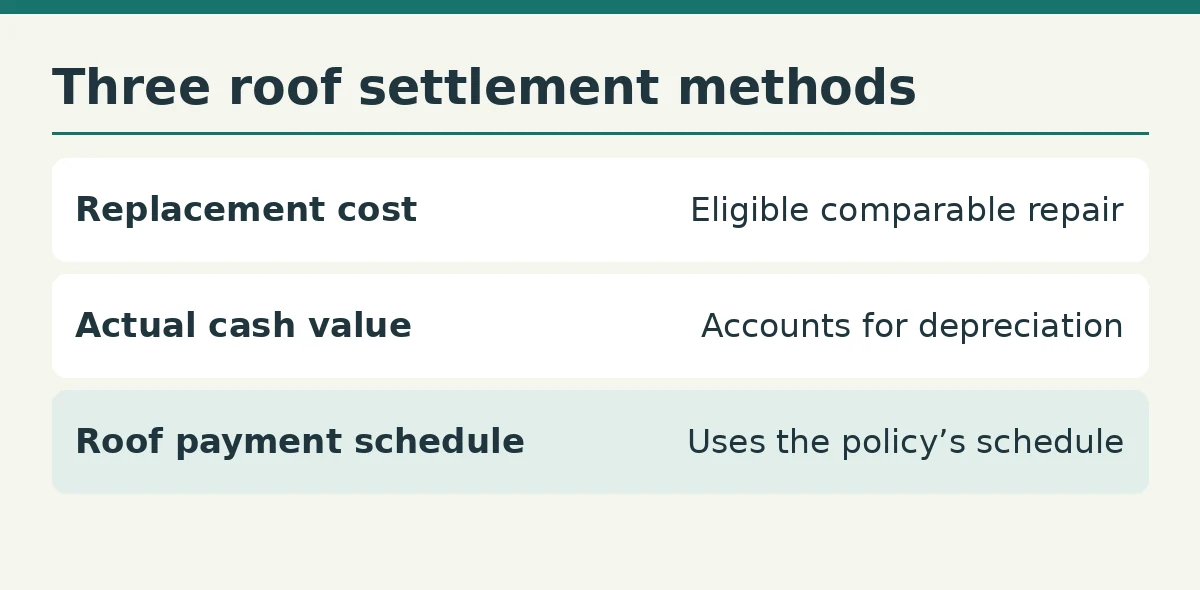
Replacement cost generally measures eligible repair or replacement with comparable materials without a depreciation deduction in the final covered amount. Actual cash value generally accounts for age, wear, and condition. A roof payment schedule can use specified percentages or other terms. The policy may treat the roof differently from the rest of the dwelling. Check the endorsements for the edition and date that apply, and ask how the company classifies your roof’s material and age.
Some replacement cost policies initially pay an amount based on actual cash value. They may release additional money after eligible repairs or replacement are completed and documented, subject to deadlines and policy limits. Ask what proof is needed, when it must arrive, and what happens if the final invoice differs from the adjuster’s approved amount. Find out how you would pay the contractor while waiting for any recoverable depreciation.
Ask both home insurance quotes to use the same roof age
Give the carrier the installation year, material, and any receipts. Request a hypothetical settlement for the same covered repair on each proposed form, including the deductible and any depreciation or roof schedule. Compare the possible difference against the full-year premium. If inspection has already prompted a cancellation or nonrenewal notice, use the replacement homeowners insurance checklist.
Compare the same covered loss on both policies
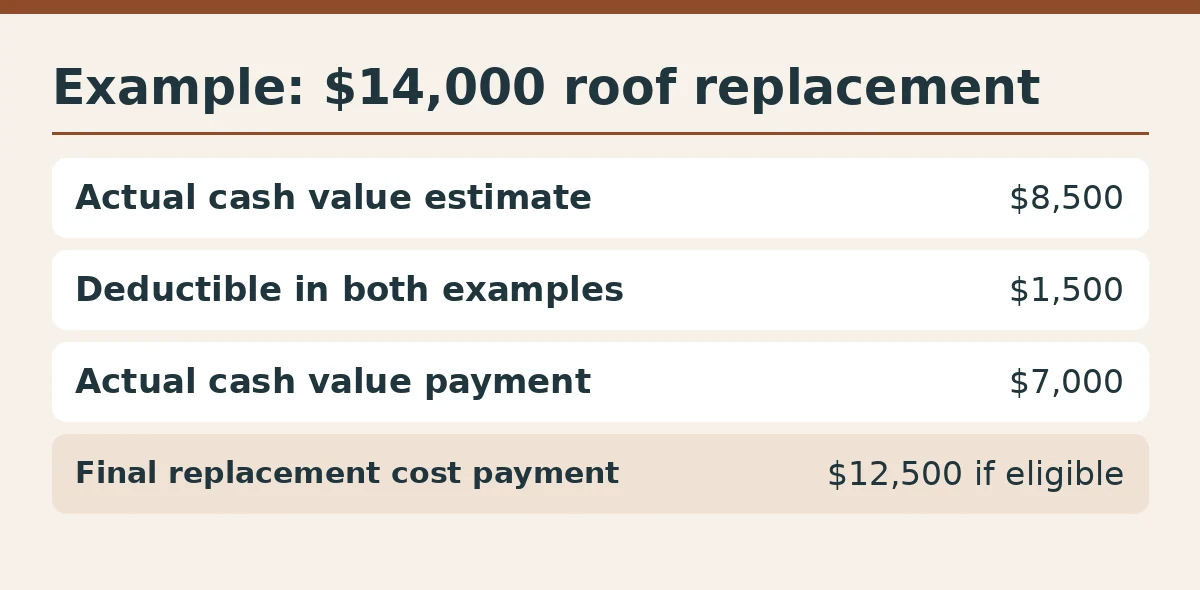
Imagine a covered roof loss with an approved replacement cost of $14,000, an actual cash value estimate of $8,500, and a $1,500 deductible. On an actual cash value basis, the illustrative payment would be $7,000. If the policy provides replacement cost and the eligible replacement is completed as required, the eventual illustrative amount would be $12,500. The $5,500 difference reflects the assumed depreciation in this example. It does not include changes in scope, other limits, or an endorsement.
Now ask what happens if the applicable hurricane deductible is higher than the standard deductible in the example. The valuation and deductible are separate calculations. For a Warwick property with a percentage hurricane deductible, read the Rhode Island homeowners deductible guide and calculate the applicable amount in dollars. Use the policy’s trigger and facts about the event rather than assuming a deductible applies because there was heavy wind.
Separate a covered cause from the roof’s condition
Age and condition can matter when the insurer decides whether to offer or renew a policy, and they may also affect the amount of a claim payment. Ask how the contract treats deterioration, maintenance, and wear. A contractor may find both storm damage and older deterioration on the same roof. Ask the adjuster to identify which work it attributed to the event and which work it excluded. Keep the dates of installation, earlier repairs, and any pre-loss photographs that are available.
If only part of the roof is damaged, ask how the insurer evaluates the repair scope and handles any differences in material. Get the contractor’s estimate and the adjuster’s estimate in writing. Compare the location, quantity, and materials line by line before discussing the total. If the contractor identifies code requirements, ask which costs relate to covered repair and which need ordinance or law coverage.
Compare the premium savings with the payment difference
Ask each carrier for quotes with the same property details and deductible. If one policy’s annual premium is $220 lower but its roof terms leave a larger amount for you to pay after a covered loss, consider how you would fund that difference. Ask whether a higher deductible can achieve part of the premium savings while keeping the settlement method you want. The answer depends on what a carrier offers for your home.
Request a sample calculation based on the roof’s recorded age and material. Ask whether the basis will change at a future renewal as the roof ages. Save the issued endorsement with your homeowners declarations page so you can review it again. If you replace the roof, provide the invoice and completion date to the insurer and ask it to confirm how the information was recorded.
Keep the paperwork that makes a claim review easier
If you need emergency repairs, check how the insurer wants them documented and retain invoices. Ask how long you have to complete permanent repairs and how to submit a supplemental estimate if the contractor finds additional damage. Keep a single folder for the photos, estimates, correspondence, and policy terms. If a payment differs from the illustration you received when shopping, ask for the calculation used on the actual loss and identify whether the difference comes from valuation, scope, or the deductible.
Ask what a roof payment schedule would mean for your house
If a quote mentions a schedule, ask for the table applicable to the roof and the evidence the insurer uses to assign the age. Request an example of a loss using that schedule, the deductible, and the approved amount for the damaged portion. If a contractor installed shingles at different times on different sections, explain that to the company. Ask which dates it uses and whether it needs an invoice or inspection. When you receive the policy, save the table and the insurer’s reply with it.
Ask also whether the same schedule applies to both full replacement and partial repairs. If the policy treats the roof surface, underlayment, and associated fixtures separately, ask what that means for a repair estimate. A coverage description on the quote can be shorter than the actual endorsement, so identify the wording that governs the work you are likely to need.
Check how you would fund the period between payments
In the $14,000 example, the initial $7,000 payment could leave you needing $7,000 to cover the contractor’s bill before an eligible second payment. With a $12,500 final insurance payment in that illustration, your lasting share would be $1,500. The amount you need on hand before the final payment and the amount you ultimately bear are different figures. Ask the adjuster which documents would trigger a second payment and when the lender might need to endorse a check. Ask the contractor what payment schedule the contract requires and compare it with the insurer’s process before committing to the work.
Sources consulted: National Association of Insurance Commissioners, Rebuilding After a Storm and its Post-Disaster Claims Guide; Rhode Island property insurance and weather claims regulation, 230-RICR-20-05-13.
Compare roof settlement terms before choosing a homeowners quote
Give companies the same roof age, materials, and repair history. Ask whether the roof uses replacement cost, actual cash value, or a payment schedule and how the deductible would apply. If an inspection prompted a nonrenewal notice, use the Rhode Island homeowners replacement coverage checklist.