
Compare term life insurance conversion in Warwick, RI. Check when your option expires, which permanent policies qualify, and how much they would cost.
Start with the conversion provision in your issued contract. Ask which permanent policies are eligible, whether you can convert part of the benefit, and what rate applies on the proposed date. Compare the actual conversion offer with keeping your term insurance or requesting a new life insurance quote. The conversion option may end before the policy’s term does.
Find the term life conversion deadline and eligibility
Locate the policy number, issued term, and conversion clause or rider. Ask how the carrier calculates the last day to exercise the option and whether an age or policy anniversary is involved. Request the deadline in writing. Find out whether the company needs the application, a payment, or another document by a specified date. A request for information is not necessarily the exercise of the option.
Ask about evidence of insurability. A conversion provision may permit an eligible change without new evidence under certain terms, while a new policy application may require underwriting. Ask the company which conditions apply to the actual contract. Look for the eligible conversion products, how much can be converted, and whether a partial conversion is permitted. Use the Warwick term life quote guide to compare that option with a fresh term offer.
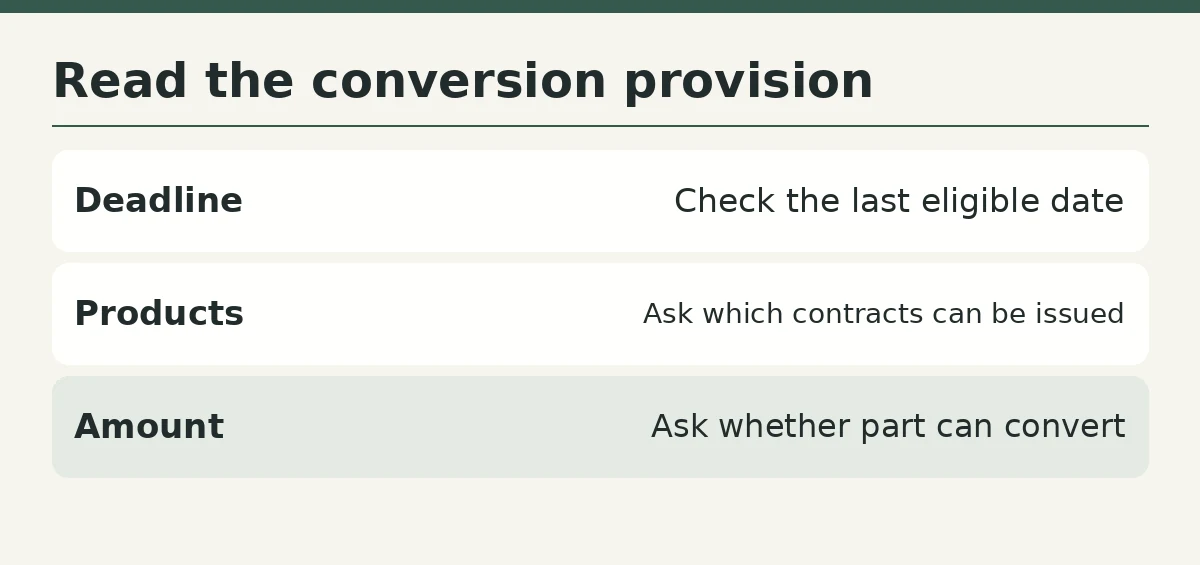
Ask for a partial term life conversion illustration
If your policy permits a partial conversion, ask the carrier to quote two benefit amounts under each eligible permanent product. Get the conversion deadline, premium guarantee, and any effect on the existing term benefit confirmed in writing. If the policy comes from employment, use the Rhode Island employer life insurance guide to check the separate portability or conversion rules.
How partial term life conversion changes your death benefit
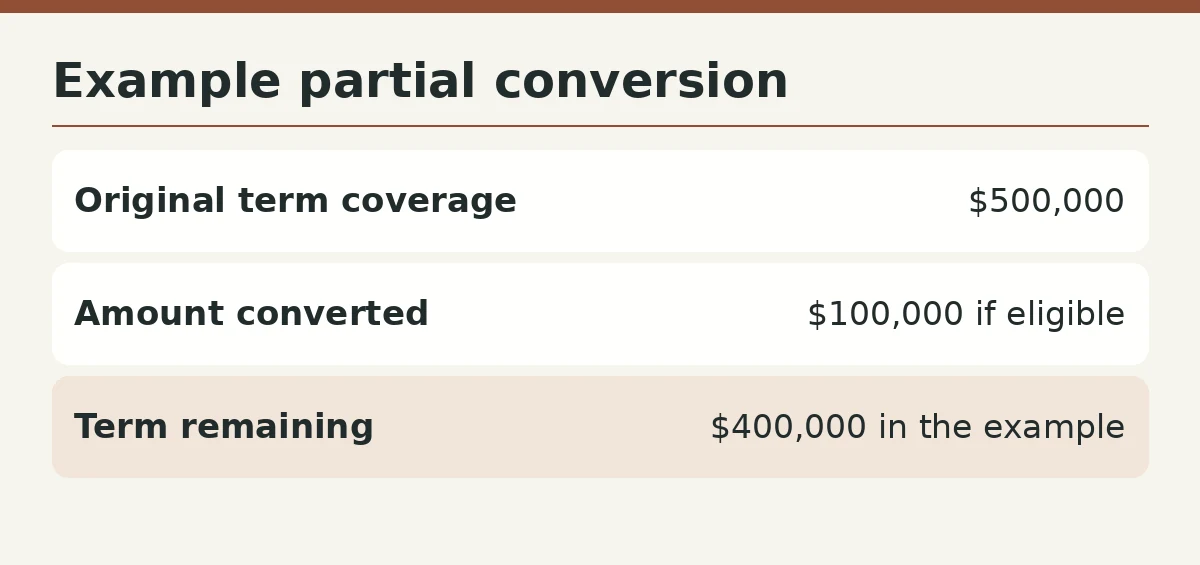
Suppose a policy has a $500,000 death benefit and the insurer confirms it would allow a $100,000 partial conversion. If the original term benefit is reduced by that amount, the remaining term would be $400,000 and the newly issued permanent policy would be $100,000. Ask which figures and dates would appear in the actual confirmations. Also ask whether riders or billing terms on the original policy would change. The contracts can have different owners or beneficiary documents, so check each one.
Ask the company for the new premium, the remaining term premium, and any required payments. Compare the total while both are active and the cost after the term ends. Ask whether coverage or premiums on the permanent contract are guaranteed, which amounts depend on assumptions, and what funding is required. If a document contains illustrated values, ask which figures are guaranteed. Record the separate benefits and prices in the years that matter.
Compare permanent life insurance conversion with a new term quote
Request a new quote based on the same intended benefit or term. Ask which amount is an estimate and which is the actual offer after underwriting. If your health or family situation changed, do not assume a preliminary quote will be issued on its original terms. Keep your old policy while you compare and confirm when a replacement becomes effective before deciding what to do with the existing insurance.
A conversion may be considered for a need that lasts longer than the term. Write down that need and compare the cost and coverage timeline. APK’s overview of Allstate life insurance in Warwick can help identify options to discuss with one carrier. For job-based coverage, use the Rhode Island employer life insurance guide because the conversion procedure can differ from an individual term contract.
Verify names and dates after a change
Compare the insurer’s written acceptance with the quote. Confirm whether the original policy remains, what amount was converted, the start date, and the next premium due for both. Request written confirmation of the primary and contingent beneficiaries on each policy. Keep the original contract next to the new policy, but label which coverage remains in force. If the insurer makes a correction, retain the dated version.
Do the review early enough to understand the options before the deadline. If you choose to keep the existing term, write down what you still need and what happens as the term ends. Keep the conversion schedule even if you do not act immediately. A later decision is easier when you know the actual eligibility date and the amounts you would be comparing.
Walk through a conversion deadline before the term runs out
Imagine the level premium on a policy lasts until the end of year 20. The contract says the conversion option ends earlier, at another anniversary or age. Ask the company to identify both dates and the paperwork it needs. Keep the exact date and delivery instructions rather than writing “before renewal.” Request which products and amounts are available now and ask whether those options change before the deadline. If you are exploring a new policy as well, track that application on a different timeline.
Ask what happens if you submit the application near the deadline and the carrier needs additional information. Ask where the paperwork must be received and whether you can verify its status. Save a receipt and the carrier’s written confirmation of acceptance, then confirm what policy is in force. Treat the existing coverage separately until you know the effect of the conversion. The premium due on the term policy and the first payment on another contract may both need action.
Model a permanent need without assuming the new terms
Suppose a household needs some coverage for 12 more years and a smaller amount for a longer obligation. Ask the insurer to quote a smaller conversion while retaining part of the term, if permitted. Then ask for a full conversion and a quote on any available alternative. Write the cost and benefit for every period, including after the term ends. If an offer shows values that depend on assumptions, ask which elements are guaranteed and what could change under different results.
Compare the total premium with your household budget. The same death benefit can have different funding, guarantees, or policy rights. Ask a licensed adviser or insurer to explain the actual form. If you use the benefit for a specific obligation, review how its duration and beneficiary fit that need. Check whether a partial reduction changes what other people expected the original policy to provide.
Use the correct policy record after the transaction
Ask each insurer to confirm the owner, insured person, benefit amount, and beneficiaries. If both policies remain active, keep separate billing details and documents. The Rhode Island beneficiary designation guide explains how to keep accepted forms with their policies. In the first months after conversion, verify that each payment posted to the correct policy and that the issue dates match the records you saved.
If you decline conversion, keep the contract and document the next review trigger. For an expiring term, check any renewal option and the cost. If you later apply for new insurance, ask when the carrier will actually make a decision, and confirm coverage before changing anything you still need. A plan built around dates and issued terms is easier to review than a note saying you asked someone about coverage.
Work through a price schedule that changes over time
Imagine a household compares keeping its current term at $440 per year with a partial conversion that would cost $1,150 per year for the new policy and $355 for the term remaining. The combined illustrative cost during the overlap would be $1,505. After the term ends, the household would review what permanent coverage still costs under the actual contract. Get those numbers in writing. Check which are guaranteed, how long any guarantees apply, and what happens if the household changes payment frequency.
Ask if the permanent option has features that matter to the household and whether any values used in an illustration can change. Check what premium and other conditions the contract requires for the benefit you expect to maintain. If the price is quoted for a different amount or policy type, put the offers on separate rows. Give each carrier the same coverage objective when evaluating an alternative.
Separate conversion, renewal, and replacement
Renewing term coverage generally means extending eligible term protection under its own terms, which may include a different premium. Conversion refers to a change available under a conversion clause. Applying for a new policy requires a separate decision by the issuing company. Ask whether the existing contract offers renewal and at what price. Then ask how buying or converting a different policy would affect dates and options. Do not put them under one label when comparing deadlines.
If you are shopping for a replacement, confirm the underwriting status and prepare for a possible different offer. Ask an appropriate adviser about any implications of replacing an existing contract. Give the insurer the facts about who owns it and why the coverage is needed. Confirm which date the new contract becomes active and how or when the existing one would change. Keep both written confirmations rather than relying on one initial quote.
Check the owner and beneficiaries after partial conversion
Suppose you decide to keep term coverage for a mortgage and convert a smaller amount intended for longer support. Ask whether the new and retained policies use the same ownership and beneficiary records. Check each policy’s number, amount, covered person, and payment information. If an insurer asks you to submit another beneficiary form, request confirmation for that policy. Ask what documentation helps keep the change clear to people who might later file a claim.
If one policy has a rider, ask whether it remains on the original contract, becomes available on the new one, or has changed. Verify the premium for each policy after issuance. If a payment is made automatically, verify that it posted as intended. Keep the carrier’s contact information and dates so you can revisit the decision if your circumstances change.
Set a calendar reminder before the last eligible date
Request the exact conversion deadline from the insurer and leave time to obtain paperwork and compare prices. Ask about the process if a submission is incomplete. Track what you sent and have the carrier confirm receipt and acceptance. If you decide against conversion, record which benefit you expect to keep and when the next decision is due. Use the actual policy term rather than the date someone gave you on a quote.
How insurers price a term life conversion premium
Ask the company which age or rate basis it uses and whether the price changes if you exercise the option later. Obtain a dated offer for a specific benefit and product. If a permanent policy displays projected values, request a clear explanation of which elements depend on assumptions. Ask what total premium is needed to keep the intended coverage and compare that with the household budget. Record when the first payment is due separately from the price shown for an ordinary year.
Compare the options if only part of the original benefit is still needed
A smaller household need may remain after a child becomes independent or a debt is repaid. Ask how the insurer prices retaining a smaller term amount, if available, and how that would affect the conversion option. Then compare the remainder if part is converted and part stays in place. Ask whether the original rider or premium changes, and check the insurer’s written acceptance before assuming the old policy has been reduced. Keep the price, duration, and intended use beside each benefit. Review the plan again when an obligation or beneficiary changes instead of treating the initial quote as a permanent decision.
If the replacement is issued on different terms from the original illustration, ask for a comparison before accepting the offer. The premium is only one item. Check the amount, coverage dates, and what the insurer can guarantee under the actual form.
Request a written term life conversion quote
Set the amount and date. Ask for the last day to convert, required paperwork or payment, eligible permanent products, and the amount that can be converted at the proposed date.
Compare the premiums by period. Request the conversion premium, the cost of any remaining term insurance, and which amounts are guaranteed. If you apply for new coverage, compare the actual offer after underwriting.
Confirm the contracts issued. Check effective dates, death benefits, remaining riders, owner and beneficiaries. Get confirmation from the insurer before changing any existing protection you intend to keep.
When conversion is an option, ask the servicing agency for the insurer’s exact receipt deadline and a written premium illustration for each eligible face amount. The Warwick agency contact guide explains how to identify the office on an existing policy when you need a carrier-specific answer.
Sources consulted
National Association of Insurance Commissioners, Life Insurance Buyer’s Guide and Life Insurance topic page.