Compare service line insurance in Warwick, RI. Check buried sewer and water pipe limits, covered causes, excavation costs, and applicable deductibles.
The most useful quote starts with a sketch of where the pipe runs and an answer from the utility about who would pay to repair each segment. Give all the insurers the same address, line type, and known information about the pipe. Ask each carrier to explain which portion it would cover, which failures qualify, and how much it could pay when a contractor needs to dig through a walkway or remove landscaping.
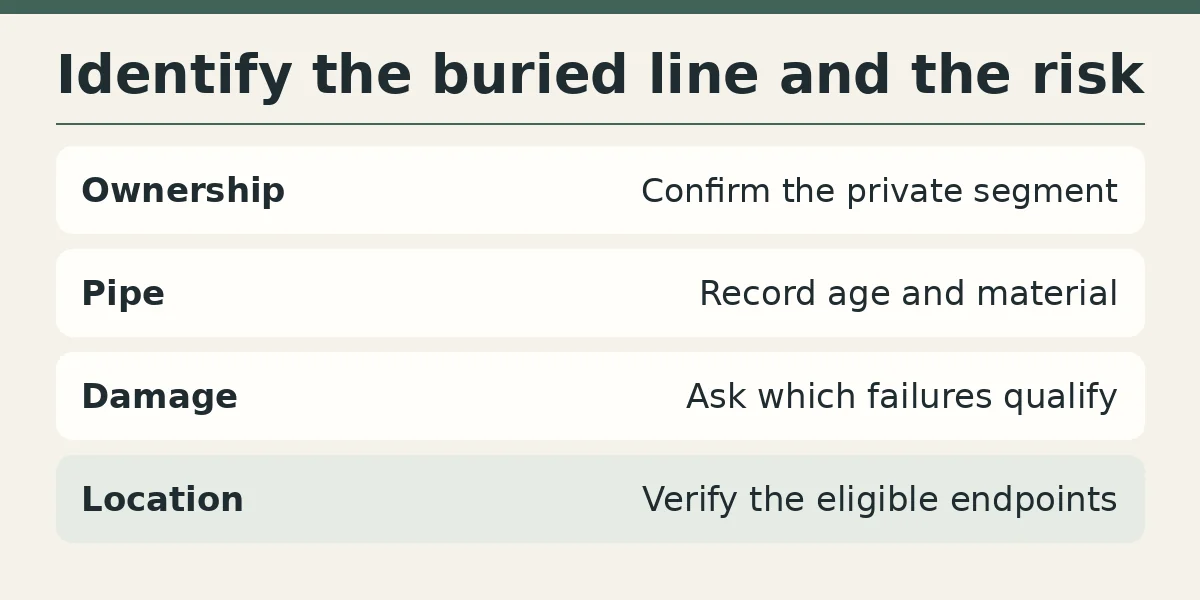
Establish who owns the line from the house to the connection
The Warwick Sewer Authority’s public information describes a homeowner’s responsibility for maintaining the privately owned sewer line from the home out to the property line. Have the authority confirm responsibility for a specific address, especially at a shared connection or where a different utility or association is involved. For a water line, ask the relevant water provider separately. The sewer description should not be applied automatically to a different utility.
If the line passes through a neighbor’s lot or an association’s common area, request the maintenance agreement or governing documents. An easement can give access to a line without resolving who is responsible for the repair. Ask the carrier whether it will insure the portion you must maintain and whether a shared line is eligible. A property inspection, utility record, or prior repair invoice may identify the materials, approximate age, and connection point. If the house is under contract, use the Warwick insurance checklist before closing to collect the carrier’s answer before closing.
Ask how a service line endorsement treats a shared connection
Give each carrier the diagram or agreement that describes who maintains the section serving both properties. Ask it to identify the eligible length and provide a sample calculation if only part of the repair is covered. Compare that answer against the deductible and policy price. If the same incident could damage your interior, review the Warwick sewer backup insurance quote guide separately.
Understand what a service line endorsement is intended to cover
A service line endorsement is a homeowners policy addition that can cover certain failures of a described underground line. Products differ in which pipes, wiring, causes, and locations they include. Ask whether the quote covers a sewer lateral, the incoming water line, gas piping, or electrical wiring, as applicable. Ask how the form treats fittings and connections. A property can need different answers for a line inside the foundation, an exterior pipe under soil, and a public utility’s part of the system.
Compare the definition of failure and any excluded causes. Request specific answers about root intrusion, corrosion, freezing, collapse, movement of soil, and ordinary blockage. If the line is functioning but showing signs of age, ask how the carrier describes preventive replacement. A contractor’s report should distinguish a blockage that can be cleared from a puncture, separated joint, or collapse. Have the contractor document what it observed before work destroys physical evidence, when you can do so safely.
Separate the pipe repair from the damage inside the house
A damaged pipe outside and a sewer backup inside can result in two different parts of the bill. The first includes detection, excavation, the section of pipe and restoration of the ground. The second could include cleanup and remediation of flooring, drywall, or belongings. Ask how the policy considers each part and whether separate endorsements, limits, and deductibles apply. Read the Warwick water backup insurance guide when comparing protection for interior damage.
Imagine roots damage a pipe near the house and sewage backs up through a basement drain. Ask each company which facts it would need to evaluate the failed pipe and the interior damage and whether it expects separate documentation. A shallow pool of rainwater that enters from the street raises a different set of questions. If surface flooding is a concern, consult the Warwick flood insurance guide and compare the forms for that exposure on their own terms.
Compare limits using an itemized excavation estimate
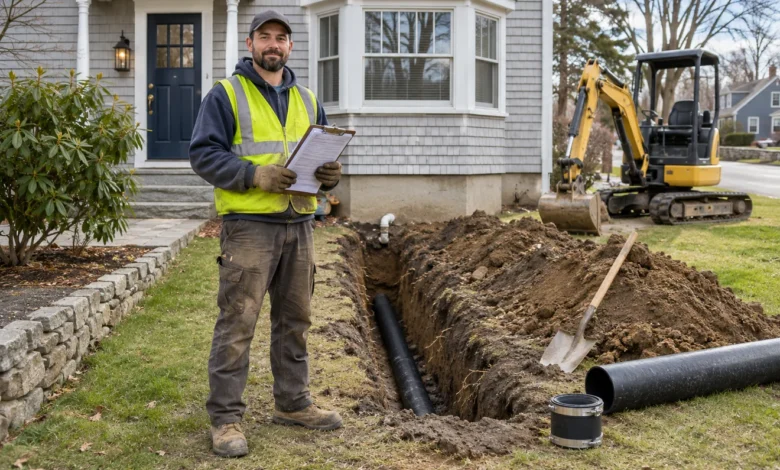
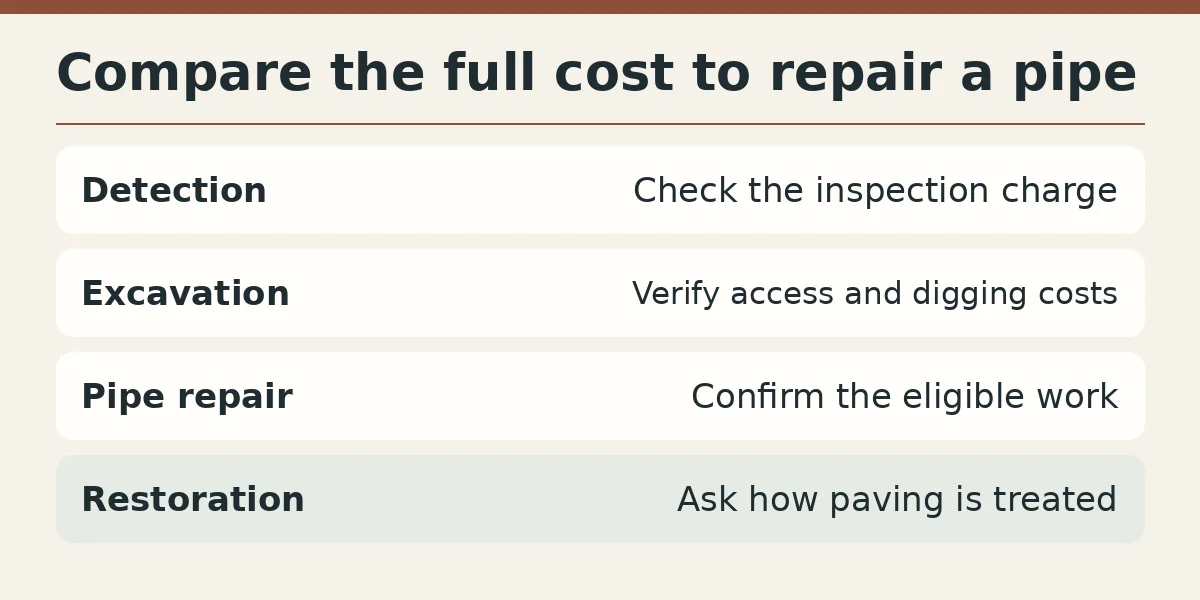
Ask a qualified contractor to distinguish locating the fault, work permits, site access, excavation, pipe replacement, backfill, and restoration. If your property has a long driveway, trees, or utilities close to the pipe, ask which steps add time and cost. Get the unit of work in writing. A proposal to replace three feet of pipe solves a different problem from one to replace the complete line. Ask the contractor to explain what additional damage could be discovered during the repair and how it would document that.
Here is an illustrative comparison. A $9,400 approved repair subject to a $500 deductible could leave an $8,900 payment under a $10,000 limit. A policy with a $5,000 maximum payment could leave you paying $4,400 toward the same work, assuming the limit caps the insurer’s payment after the deductible. Ask the insurer how its actual form applies that sequence. If a $2,000 driveway restoration bill is excluded, recalculate both options using only covered costs. The exercise gives you a clearer comparison than judging the options by headline limits and premium alone.
Read the landscaping, paving, and access terms
Ask each carrier whether coverage includes removal and replacement of paving, landscaping, walls, and similar structures disturbed to reach a covered line. Check for a sublimit, separate terms for expenses, or exclusions. A contractor may say an asphalt patch is enough to finish the dig while your bid assumes resurfacing the entire driveway. Ask which scope the company expects to approve and what proof it needs. If a local requirement would change the repair, document the requirement and ask how the insurer handles it.
If the yard also contains a private well or septic system, identify the part the contractor is repairing and confirm eligibility. Ask about shared sewers, pumps, and portions of a line that exit the property boundary. A quote summarized as protection for water or sewer lines can conceal wording about the origin, endpoint, or usage of the insured pipe. Compare the actual definition across companies and save the one that applies to your property.
Compare a homeowners add-on with a separate service agreement
A utility or service provider may offer a repair plan. Read its service agreement and compare the costs for a year, waiting periods, service call fees, exclusions, contractors you can use, and the maximum benefit. Find out whether the agreement arranges repairs, reimburses a bill, or uses both methods. Ask who responds if a pipe fails outside normal business hours and how the dispute process works. Request the agreement before buying because a brochure may mention only the most common situations.
Then compare the homeowners policy’s endorsement using the same line boundaries. Check whether either product excludes known prior damage or imposes a different limit for some pipes. Ask each provider how it coordinates with other coverage if you buy both. Another plan can add meaningful protection when it covers a different pipe or another type of expense. When both promise help with the same line, find out how they would coordinate the same invoice before paying twice.
Know which deductible will apply in a claim
Some policies list a deductible on the service line endorsement itself. Check the form against your homeowners declarations and ask how it would apply if water backup and a service line failure arise from the same event. When comparing homeowners insurance quotes with service line coverage, keep the base deductible and covered perils the same so the price change isolates the endorsement. The Warwick homeowners deductible guide explains how to keep other deductible changes visible when comparing the full policy.
Ask for the added price over the policy term, the standalone plan cost if you are considering one, and a written explanation of the process for a typical covered repair. A short line under open lawn and a long line under paving can have very different repair expenses. Compare how the maximum payment fits the job at this address, including the expenses it is intended to cover. Your preference of deductible should also take into account the cash you would need to pay the contractor before reimbursement.
Document a suspected line failure before repairs
If you suspect a failure, follow the utility and contractor’s safety instructions and keep away from contaminated areas. Notify the carrier through its designated channel and ask what work needs approval. Ask the contractor to record the location, suspected cause, and repair scope. Save camera inspection footage, photos, and invoices when available. Find out whether the carrier wants to inspect or retain a damaged pipe section, and follow its directions when doing so is safe and lawful.
Store the pipe invoice separately from bills for interior cleanup. If the insurer requests a report, give it the contractor’s observations and the utility’s determination of ownership. Record dates and the names of people you contact. For a disagreement over an estimate or a denial, use the Rhode Island home insurance claim dispute guide to match the decision to a particular policy provision.
Compare the price of sewer line coverage at different limits
Ask your broker to show the homeowners insurance quote with no service line add-on, with the lower offered limit, and with the higher limit. Request the deductible and any different sublimit for older pipe in each version. Keep the base dwelling limit, water backup endorsement, and standard deductible constant. Then you can see the cost of sewer line insurance rather than a change in the rest of your homeowners policy.
Imagine a $360 yearly service agreement with a defined repair service and a homeowners endorsement that adds $72 to the annual premium. The two prices only become comparable once you know which pipe and costs each would cover. A contractor who needs to dig through a concrete walk could leave the household paying a considerable amount in one version of the agreement. Ask whether the quote covers the actual water service line, a sewer lateral, or both, and write down the highest repair cost you could face.
Ask about older pipes and recent inspection results
The pipe’s age, material, and observed condition can affect which offers you receive. If an inspection identifies a defect or an earlier collapse, give the same report to each carrier. Ask whether there is a separate maximum benefit for lines beyond a stated age and how a partial replacement affects that classification. If the home has an old clay sewer pipe and a newer plastic repair section, ask whether different limits would apply to the sections and how an adjuster would identify the failed one.
If a utility plans to renew infrastructure in the street, ask whether its project reaches the private lateral and what costs or approvals remain with you. This is a useful time to obtain water line and sewer line coverage quotes using the actual location of the private connections. Ask how future planned work affects availability and what evidence would show that a later repair was complete. Save the location information for your buyer or the next person taking over the home.
Decide how to fund urgent work if insurer approval takes time
Find out whether a plumber requires a deposit before excavation, who secures the permit, and how the insurer handles work that must begin quickly. An agreement that dispatches a repair crew and an endorsement that reimburses approved work can create different demands on your cash. Request written directions for an urgent loss and identify how you would pay an initial deposit if the carrier has yet to respond.
Quote the same line with the same facts every time
Give companies the address, utility, line location, known material and age, and any disclosed inspection findings. Ask each to identify which pipe segment qualifies. Write down one example of a covered failure and one example of an excluded expense. Enter the limit, deductible, annual price, any waiting period, and the rule for hiring a contractor on a single sheet. Use the homeowners declarations page guide to make sure the coverage and effective date show up on the issued documents.
Revisit the comparison if extensive work will change the line, access, or responsibility. A permit, renovation invoice, or new association agreement can have details an underwriter would ask for. Save the accepted form in a place where another household member could find it during an urgent repair. When you know the line you own, the failure the form covers, and the cash you might need to finish the job, the quote gives you information you can actually use.
Sources consulted
Warwick Sewer Authority, Safety Valve and Homeowner Responsibilities. Maryland Insurance Administration, Buried Utility Lines Coverage, for a general description of endorsement and service agreement distinctions.