Compare Warwick flood insurance quotes by address. Check local FEMA maps, lender requirements, NFIP and private coverage, and policy waiting periods.
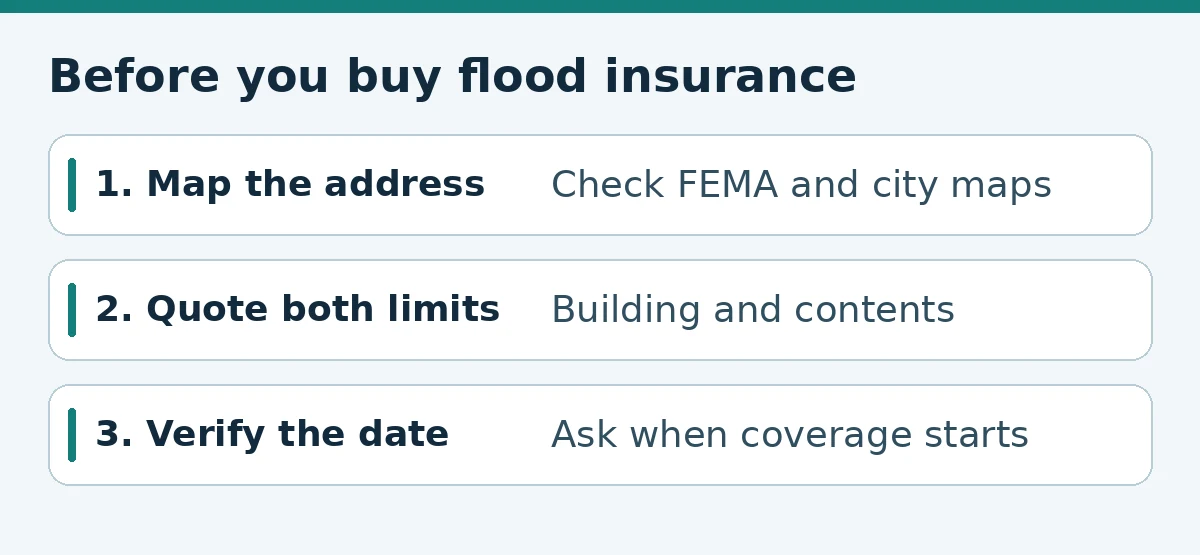
To shop for flood insurance in Warwick, Rhode Island, start with the property address. A home near the coast, a pond, or a river can have different exposures from a property a few streets away. Search the address at the FEMA Flood Map Service Center and check Warwick’s municipal GIS and FEMA map resources. Confirm that you’re looking at the building you want to insure, especially if the parcel extends into more than one mapped zone.
Find out what the lender requires
If the building is in a Special Flood Hazard Area and you have a government-backed mortgage, flood insurance is generally required. Your lender can tell you whether the requirement applies, which limit it needs, and what proof it accepts. Outside a high-risk zone, a lender may still impose its own requirement, and flooding can still occur. A FEMA map gives you a starting point for evaluating the address. Ask the seller or association about past flooding and look at the building’s elevation and drainage (National Flood Insurance Program eligibility guidance).
Compare a same-address NFIP and private flood quote
Ask both carriers for a sample payment calculation on one eligible building loss at the same property. Use the same building limit if available and record how the deductible, contents treatment, and basement restrictions affect each option. When you need a higher building limit, compare the separate Warwick excess flood insurance options before treating a larger number as equivalent protection.
Save the map details before requesting a quote
After finding the address, zoom in to locate the building footprint. If the map appears to place the home near a boundary, record the flood zone shown, the panel number, and the map’s effective date. Save a copy and ask the city’s floodplain contact or your lender how to resolve any uncertainty. A real estate listing’s map label may refer to a parcel or an older map. The location of the structure and the applicable flood determination matter when you’re checking a mortgage requirement (Warwick municipal map resources).
Write down what you know about the home before you request a flood insurance quote. Useful details include a basement or crawl space, the floor where the heating system and electrical equipment sit, and any elevation certificate or prior flood documentation the seller can provide. If you’re comparing a private quote with an NFIP option, give both providers the same building details and desired start date. That makes it easier to spot a difference in how the coverage works.
Compare building and contents coverage separately
An NFIP policy can provide up to $250,000 for the building and up to $100,000 for contents for a typical single-family home. Building and contents coverage generally have separate deductibles. A tenant can shop for contents coverage. A condo buyer should first ask what flood coverage the association carries and what protection is available for their own unit and belongings (National Flood Insurance Program coverage and purchase guide).
Ask each insurer how it treats a basement, equipment below ground level, and possessions stored downstairs. NFIP coverage below the lowest elevated floor or in a basement can be limited. Ask how the policy values building damage and belongings and whether it pays any extra living expenses if you must move out. NFIP policies generally exclude those additional living expenses. Private policies may have different limits, terms, and exclusions. If you have a lender, confirm it accepts the private policy before you buy.
For example, a homeowner can buy a building limit that satisfies the lender and still have no contents coverage on the flood policy. If rising water ruins furniture and electronics in a covered part of the home, the building limit does not reimburse those belongings. Compare the two coverages on the actual quote.
Compare two flood policies on a specific loss
Imagine that floodwater damages a furnace installed in a basement and ruins furniture stored nearby. Ask each insurer how its building coverage treats the furnace and whether any contents coverage applies to the furniture at that location. FEMA describes limited NFIP basement coverage for certain items, including eligible equipment. Many belongings kept in a basement fall outside that coverage. Ask how the policy defines a basement, especially if the space has been finished as a living area or has a walkout (FEMA guide to flood insurance coverage in a basement).
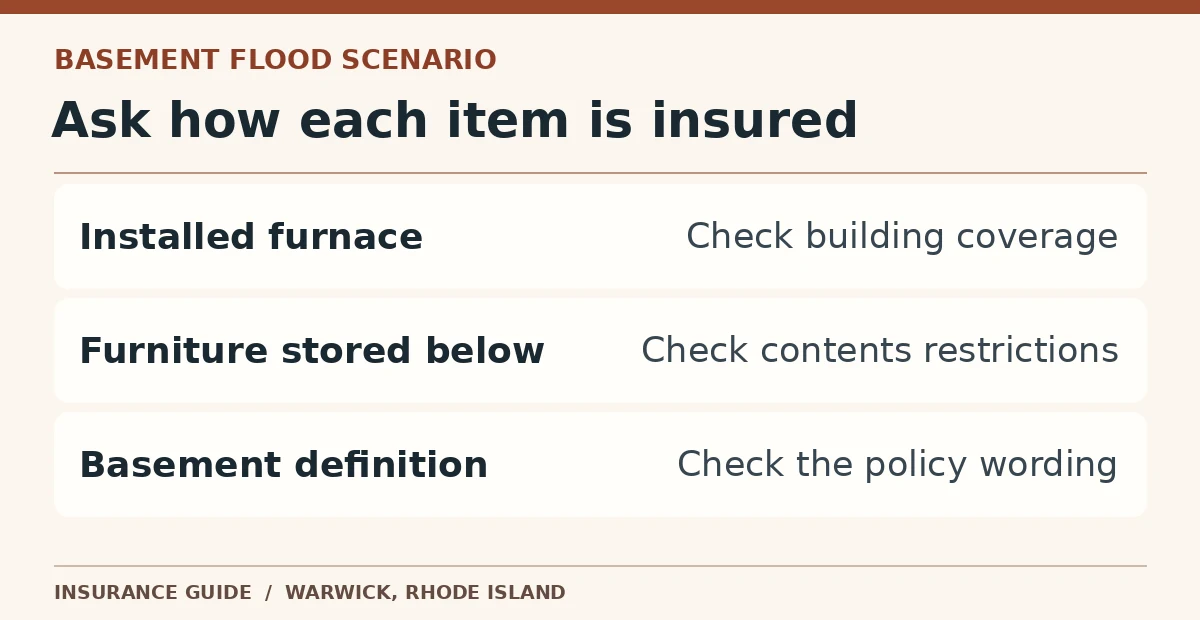
Write down the building and contents deductibles and check whether both could apply to the same flood. If one quote covers the building at a higher limit but excludes contents, compare the price after adding the contents coverage you actually need. Renters can use a household inventory to estimate how much of their own property might be exposed and ask which storage locations are covered. Condo owners reviewing their HO-6 coverage should confirm how the association’s flood coverage and any individual policy would apply to a loss involving their unit.
Ask about start dates as soon as you have a closing date, especially if the lender needs time to review the policy. Get the building address, limits, deductibles, and effective date in writing. If you are comparing renewal options, check the replacement effective date against the date your existing flood coverage ends. Keep both documents until the transition is complete.
Keep the final map panel, any written flood determination, and the policy declarations together. If the map changes or you add a finished space, send the relevant information to the insurer and ask whether it changes the quote or coverage. If you move equipment to another level or alter the way the lowest floor is used, update the building details when you renew so the insurer is working from the current layout.
Check the effective date before closing
An NFIP policy usually has a 30-day waiting period, with exceptions that include certain purchases tied to making, increasing, extending, or renewing a mortgage loan. Ask the insurer to confirm the effective date in writing. If you’re buying a home, give that date to the lender along with any other required documents (FEMA flood insurance basics).
When reviewing your homeowners policy, treat flood and water backup as separate questions. A water backup endorsement has its own terms and should be evaluated separately from a flood policy. The Warwick home closing insurance checklist can help you track both policies and avoid a last-minute document request.
Request NFIP and private flood insurance quotes on matching terms
Use the same building address, desired effective date, and building and contents limits. Ask how a basement is defined, which deductibles apply, and what the lender will accept. If the water risk you want covered is a backed-up drain, check sewer and sump pump coverage under the homeowners options separately.