
Review a Rhode Island total loss car insurance settlement. Check comparable vehicles, condition adjustments, contract deductible, and the loan payoff.
After a car is declared a total loss in Rhode Island, ask for the valuation report before focusing on the final check. The report can show which vehicles the insurer used for comparison, what it recorded about your car, and what adjustments it made. The settlement statement may also show your deductible, a lienholder payment, or a salvage deduction if you retain the car. Review the valuation and the payment calculation separately so you know which figure to question.
Ask what caused the insurer to classify the vehicle as a total loss
Request a copy of the repair estimate, any supplemental estimate, and the document explaining the total loss decision. Ask for the date on which the insurer valued the car and which condition it used. Rhode Island’s property and casualty claims regulation sets standards for auto settlements and addresses the circumstances in which an insurer may designate a vehicle a total loss. Ask the adjuster to identify the standard and the numbers it used for your claim. The version of the regulation and the policy terms applicable to the loss matter.
Ask who has the car and whether storage charges are accruing. Confirm what you can retrieve from it and what the insurer needs before the car moves. Photograph or save service records and equipment information if you have them. Ask what happens if you want to retain the vehicle, including how salvage value would affect the payment and what title or registration rules you would have to follow.
Request a replacement vehicle quote with the new VIN
Keep the insurer’s valuation report and loan payoff statement attached to the old claim. When pricing insurance on a replacement car, send the exact VIN and ask for written rates before taking delivery. Confirm the date the new vehicle would be covered and how the policy still treats the old car. Use the financed vehicle insurance guide if a lender sets the deductibles.
Compare the report with your actual vehicle
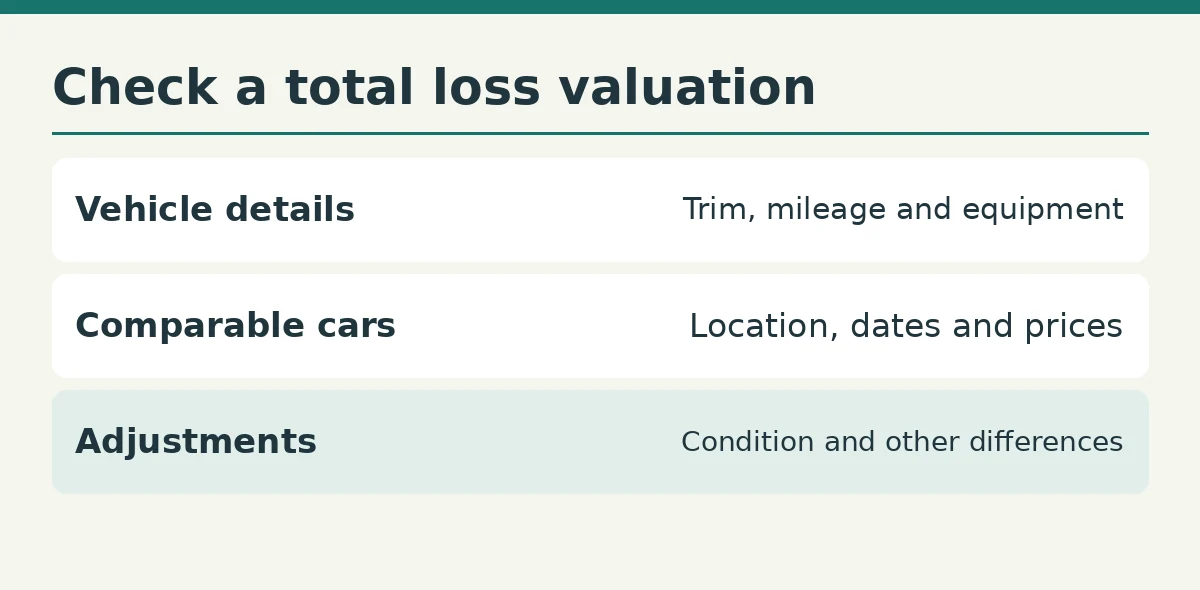
Check the vehicle identification number, model year, trim, mileage, drivetrain, and major equipment. A report can show the right model while missing an option package or listing the wrong mileage. Send the adjuster the relevant purchase document, window sticker, service invoice, or pre-loss photographs if they clarify a discrepancy. Ask how the carrier treated prior damage and ordinary wear. Recent maintenance may document condition, but a receipt is not automatically added dollar for dollar to the vehicle’s value.
Review the comparable vehicles one at a time. Note the date, location, mileage, trim, and listed price. A higher listing price may reflect lower mileage or a different equipment package. If you submit your own comparable, explain which features make it similar and where it differs. Keep a copy in case the listing changes. Ask the insurer to explain any adjustments for condition, equipment, mileage, or the source of the comparable.
Reconcile the valuation with the payment
Suppose the valuation is $16,800 and your own collision policy has a $500 deductible. Ignoring taxes, fees, salvage, and other adjustments for this illustration, the amount would be $16,300 before any allocation to a lienholder. Ask the insurer for an itemized statement showing the amounts included or deducted and the authority or policy provision for each. A claim made against another driver’s insurer can have different payment questions from a claim made under your own collision coverage.
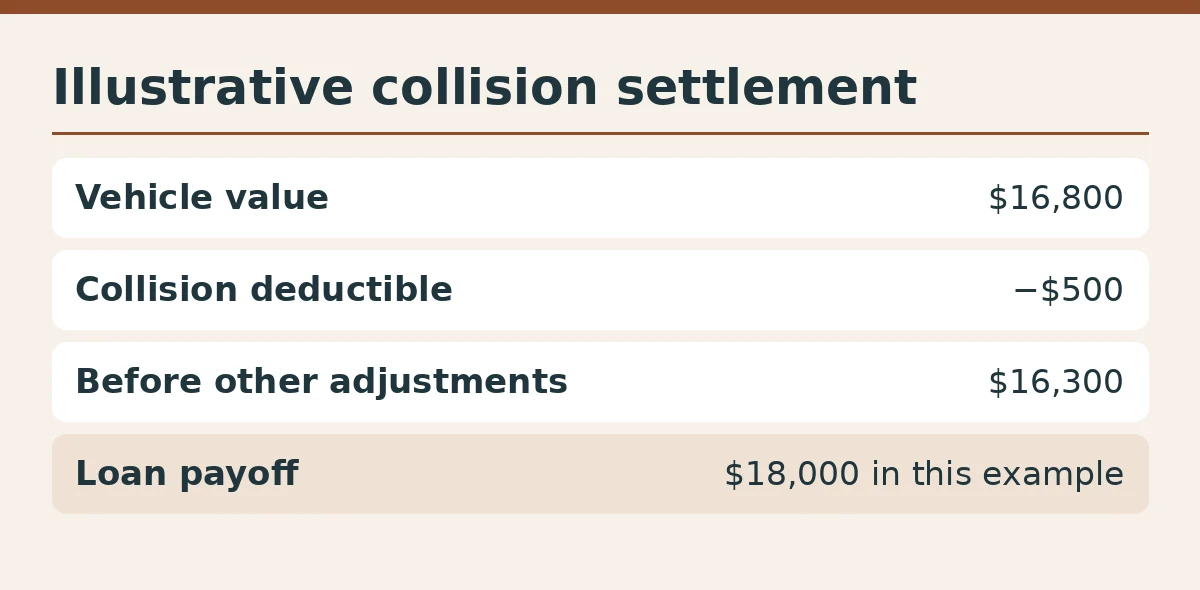
If you owe $18,000, the illustrative $16,300 leaves a $1,700 shortfall before any other adjustments or GAP terms. Request the lender’s current payoff amount rather than relying on the balance on an old statement. Ask the carrier how it issues payment when there is a lien and what it needs to release the title. If you bought GAP or have a lease waiver, find its contact information and ask what documents and deadlines apply. The financed car insurance guide explains how the loan and policy figures can diverge.
Keep rental and replacement costs on a separate timeline
While the valuation is being reviewed, ask for the authorized rental end date in writing. The rental benefit may end before you have bought a replacement car. If you use your own policy, read its daily and total limits and confirm how the total loss decision affects the benefit. Keep rental invoices and any written extension. See the rental reimbursement guide for a worked example of both caps.
Ask for a review in terms the adjuster can verify
Send a short written request identifying the exact line that you believe is wrong. For example, you might attach a service record showing mileage near the accident date and ask the carrier to recalculate the mileage adjustment. Distinguish factual errors from a disagreement about the insurer’s method. Ask for the revised report or a written explanation of why the company kept the figure. Keep the original report and any revised version so you can track the response.
Check any appraisal language in your policy before invoking it. Ask whether it addresses valuation, whether it applies to the claim you filed, and how costs would be allocated. If the issue concerns claim handling, the Rhode Island claim decision review guide explains how to organize your file and where the state Insurance Division fits.
Before closing the claim
Confirm who receives each part of the settlement, what paperwork releases the vehicle, and whether the insurer has written down the end date for rental reimbursement. If a loan balance remains, verify it with the lender after the payment is processed. Keep the valuation, settlement statement, and proof of payment together. Those documents are useful if you need to follow up on a deductible, a lien, or a GAP request later.
Separate a valuation correction from a payment correction
Suppose the carrier finds that it listed 92,000 miles when service records show 72,000 near the date of loss. Ask whether the correction changes the vehicle value and which adjustments were recalculated. If the new value is $800 higher but the payment to you changes by a different amount, compare the settlement statements. The lender’s payoff or another adjustment could have changed independently. Ask for the amount paid to each recipient and the date the payment was issued. A revised valuation report answers the first question, while a revised payment statement answers the second.
If you are asked to sign a title or settlement document before receiving the revised figures, ask what the form authorizes and whether it resolves any part of the claim still in dispute. Keep the carrier’s instructions with your signed copy.
Sources consulted: Rhode Island Department of Business Regulation, Unfair Property/Casualty Claims Settlement Practices, 230-RICR-20-40-2; Consumer Financial Protection Bureau, auto financing and GAP consumer guidance.
Compare the insurer’s total loss valuation with the settlement statement
Verify the VIN, trim, mileage, and comparable listings first. Ask which adjustments changed market value and which belong only to the payment calculation. If the claim involves a lender, use the Warwick auto loan payoff guide to check whether a lien release or updated payoff changes the paperwork.