Compare rental reimbursement coverage in Rhode Island. Check daily and claim limits, covered auto losses, rental billing, and the insurer’s stop date.
Rental reimbursement can help pay for temporary transportation while your car is unavailable after a qualifying insurance loss. For Rhode Island drivers comparing auto insurance quotes, the first questions are what starts the benefit, what amount it will pay per day, and when it ends. A quote may show $40 per day and $1,200 per claim. Those figures describe different limits. A nearby rental company’s price, taxes, and available vehicles can change how much you actually pay.
Find the loss that starts the benefit
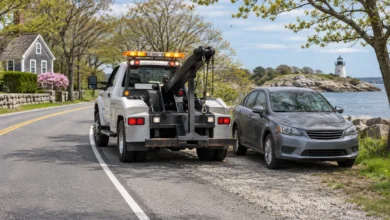
Ask whether rental reimbursement applies after covered collision and comprehensive losses and whether the coverage appears on each car you intend to insure. A car waiting for routine maintenance or a mechanical repair typically does not qualify under this coverage. A breakdown can involve a separate roadside service or vehicle protection agreement. If your policy uses wording like transportation expense, check how the benefit is defined and what proof is needed to use it.
A temporary rental after a claim is also a different issue from insurance for damage you cause while driving that rental. Before picking up a car, ask your insurer what liability and physical damage coverage extend to it. Check the rental agreement for its own charges or waivers and ask the provider who will pay each amount. Rental reimbursement for the cost of transportation tells you little about who pays if the temporary vehicle is damaged.
Compare rental reimbursement quotes by daily and claim limit
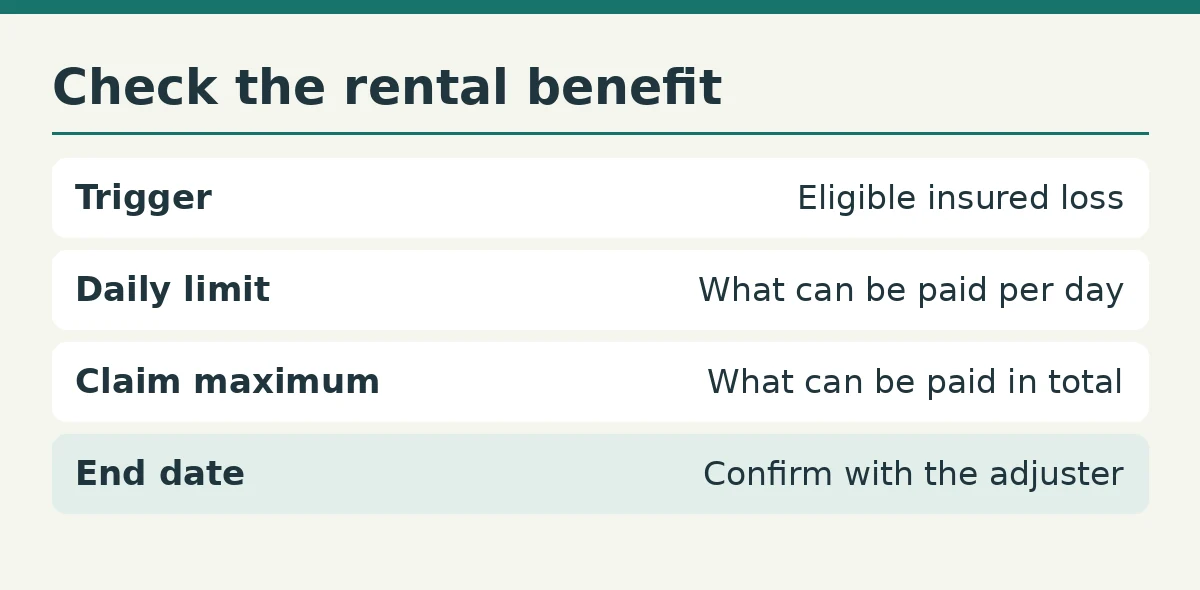
Record the rental rate you would likely pay and calculate a realistic full repair period. Ask both carriers to show what the daily limit and total maximum would pay during the same covered repair. Verify when the rental must stop, especially after a total loss. Use the Rhode Island rental car coverage guide for a separate decision about waivers on a rental contract.
Calculate the daily and total limits together
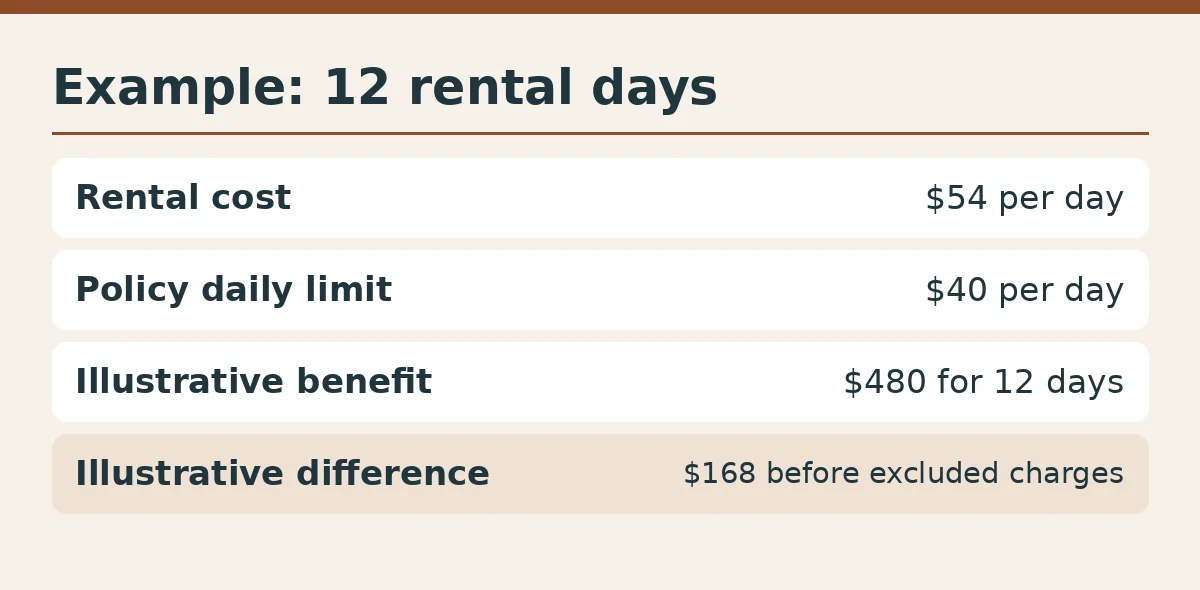
Consider a covered repair with a 12-day rental period and an eligible rental cost of $54 per day. With a $40 daily maximum, the insurer could pay $480, assuming the days qualify and the total limit is available. The difference is $168 before any charges the policy excludes. The $1,200 claim maximum does not allow you to move unused dollars from one day to another if the contract imposes a daily cap.
If a repair runs 34 days at $40 of reimbursable cost per day, a $1,200 claim maximum would be reached after 30 payable days. Ask how the insurer counts days and whether the maximum can be expressed in dollars, days, or both. If you compare two carriers with different daily limits, model your cost for a compact rental and for a vehicle you actually need to transport your household. Ask which charges the insurer treats as eligible, including taxes or fees.
Confirm when the rental starts and stops
After you file a claim, ask the adjuster to confirm when the benefit starts. An insurer may need to determine whether the car can be driven or whether repairs have been scheduled. Ask if the benefit would start when the vehicle enters the shop or on another date, and what happens if parts are back-ordered before repairs begin. Keep the shop’s scheduled intake date and the dates the insurer approves.
Ask separately how the benefit ends after repairs or a total loss. If the car is repaired, the insurer may use the date the shop says the vehicle is ready. If the insurer determines it is a total loss, it may use a different trigger set out in the policy. Before extending the rental, ask the adjuster for the authorized end date and written approval for additional days. The Rhode Island total loss guide covers what to request about a valuation while those transportation costs are still running.
Check direct billing, deposits, and documentation
Find out whether the insurer bills directly through a rental agency or reimburses you after you pay. Direct billing can still leave you responsible for upgrades, a deposit, or other amounts the insurer excludes. Ask the agency what it will place on your card and which charges could be collected when you return the vehicle. Take a copy of the rental agreement and keep the itemized invoice with your claim number.
If you plan to use taxis, rideshare trips, public transit, or a loaner from the repair shop, ask whether the policy recognizes those costs. Get the answer before spending the money. Ask if receipts must show a particular level of detail and how to submit them. If a rideshare or delivery business uses the damaged car, ask about any applicable restrictions. Personal transportation coverage and business-related losses can raise different questions.
When another driver’s insurer is involved
If you seek payment from the other driver’s insurer, ask what it has accepted about liability and how it handles reasonable temporary transportation. Availability, timing, and eligibility can differ from a benefit you purchased on your own policy. Before paying for a rental, ask what has been approved and whether you will have to advance the money. Keep communications from both carriers. If you submit expenses to one, explain what the other has paid or promised to avoid requesting the same reimbursement twice.
Compare the premium with the practical benefit
If an employer offers a loaner, your household has a second car, or public transit works for your commute, a modest benefit may meet your needs. If losing your car would require an immediate rental for a long commute, look carefully at the daily and claim limits. Use the Warwick car insurance quote checklist to price the same benefit across carriers. For an existing Allstate policy, check the Warwick claims guide alongside the rental section of your own policy.
Ask how the repair shop communicates delays
When the shop says a part will arrive late, ask for an updated completion estimate and send it to the adjuster. Separate the period the shop needs for the work from any extra time you expect to keep the rental for convenience. Ask whether the adjuster needs a written explanation from the shop before it will approve more days. If the daily cap will leave you with a balance, ask the rental company whether you can switch to a lower-cost car midway through the rental and what charges would change. Save the new agreement if the rate or vehicle changes.
When you collect your repaired car, confirm the actual return date and time for the rental. A bill can include a partial day or an extra day based on the rental contract. Keep the vehicle return receipt and ask the carrier how it classified any charges from that final day.
Sources consulted: National Association of Insurance Commissioners, Consumer’s Guide to Auto Insurance; Rhode Island Department of Business Regulation, Insurance Division consumer resources; Allstate, What Is Rental Reimbursement Coverage?
Compare rental reimbursement using a realistic repair timeline
Estimate the daily transportation cost and the number of days most relevant to your household. Ask the insurer for the daily limit, claim maximum, and end date after repair or total loss. For a waiver or damage liability on the rental itself, review Rhode Island rental car insurance options separately.