
Compare rental car insurance in Rhode Island before pickup. Check what your auto policy and credit card cover and what the rental company would waive.
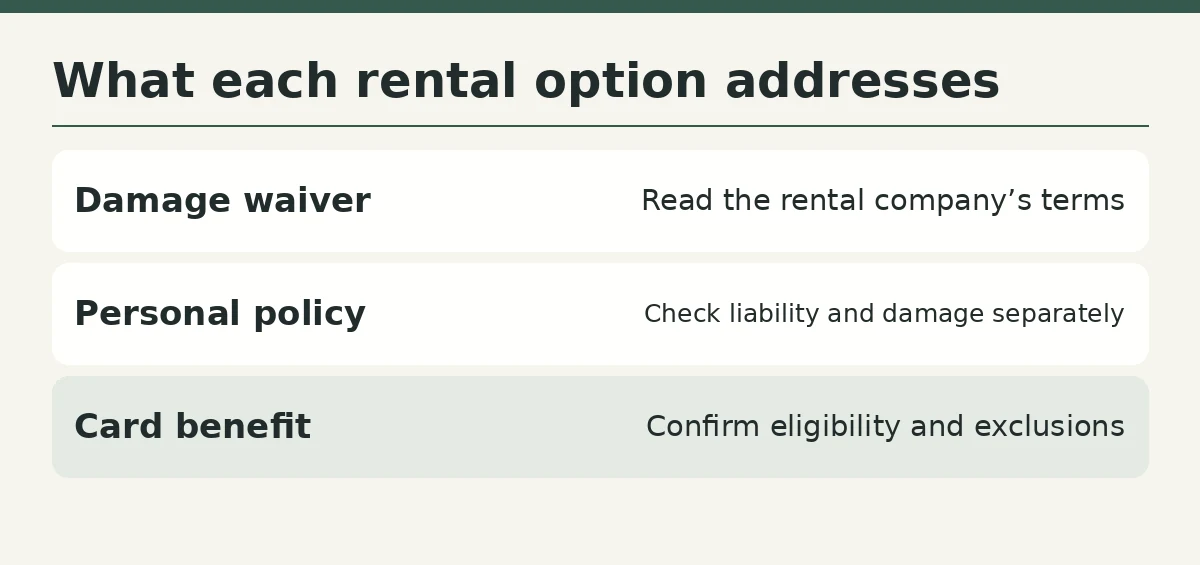
At a Warwick or airport rental counter, separate damage to the rental vehicle from injury or property damage to others. Ask your personal auto insurer and credit card benefits administrator what they cover, then read the rental company’s collision damage waiver and liability options. Your belongings and charges such as loss of use can raise separate questions. Get the rental agreement and benefit terms before you choose.
Compare rental car liability insurance and collision damage waivers
A collision damage waiver or loss damage waiver is an agreement offered by the rental company. Its scope depends on the contract and your compliance with it. Supplemental liability coverage addresses a different risk. Other counter products can relate to passengers or personal items. Ask for the written descriptions and identify the dollar limit, exclusions, and who would be expected to report a claim.
If the agent asks whether you are “covered,” describe the vehicle type and trip in practical terms. Tell your own carrier if you are renting for vacation, business, a long period, or travel across a border. Ask which drivers must be named and whether restrictions apply to where the vehicle may be driven. Give the benefits administrator the same facts. Ask each company which part of the rental contract it would review.
Compare the rental damage waiver cost for the full trip
Multiply the desk’s daily waiver price by the full rental period and ask whether an extension changes the terms. Confirm the vehicle category, authorized drivers, and the protection for damage or loss-of-use charges. Record liability separately. If you need a rental while a covered car is being repaired, check the Rhode Island rental reimbursement guide for the distinct expense of renting.
Does personal auto insurance cover a rental car?
Ask whether liability, collision, and comprehensive can extend to the proposed rental and whether any deductible applies. Liability protection can be different from coverage for damage to a rental vehicle. If you carry just liability on your usual car, ask whether you have any physical damage benefit for the rental under the policy rather than assuming it follows you. The collision and comprehensive guide explains how to find those separate lines.
Ask about charges the rental company might add, such as loss of use, towing, administration, or diminished value. Whether they are paid varies by contract. Get the carrier’s answer on each item. A $2,300 repair invoice and a $450 separate rental-company charge should be evaluated independently. A $500 collision deductible can affect an eligible repair payment. It does not tell you whether the other charge is covered.
Check primary or secondary credit card rental car coverage
Check whether the card actually includes a rental benefit, who administers it, and what is required to activate it. Some benefits require payment with the eligible card and declining a damage waiver. The length of rental, country, and vehicle type may affect eligibility. Ask if a spouse or additional driver is covered and how they must appear on the agreement. Card benefits usually address eligible damage to the rental or theft under their own terms. Verify liability separately.
Find out whether the benefit is primary or secondary for your actual trip. If it is secondary, ask what proof it needs from another insurer before considering a claim. If it is primary, ask which expenses it covers directly and where any exclusions appear. Use the benefits guide issued for the card in your wallet rather than a description for another card. The card number, rental location, and agreement should match the records you submit.
Compare the waiver price, auto deductible, and rental fees
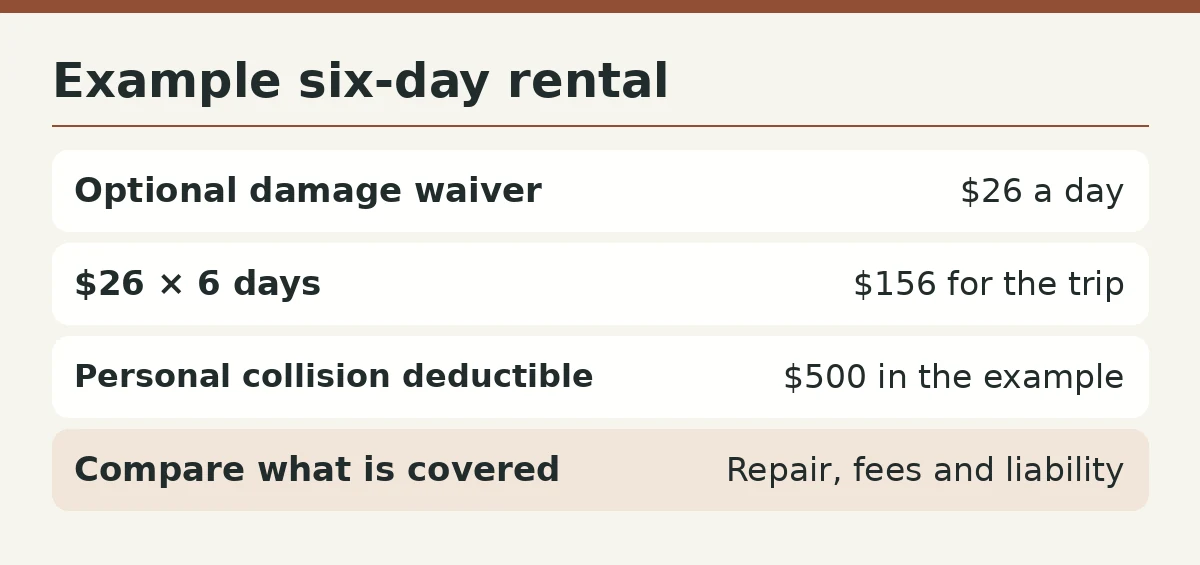
Suppose an optional waiver costs $26 per day for six days, or $156. If your insurer confirms coverage including a $500 deductible and the card benefit confirms a secondary claim process, compare what that arrangement requires from you. The waiver might remove certain responsibility for damage if its terms are met. Ask whether any fees remain. The $156 is a quoted purchase price, while $500 is a possible deductible on a qualifying loss. They measure different costs.
Check how the rental company handles a damaged vehicle when you return it. Ask which documents it will give you, whether it charges your card first, and whom it expects to receive the payment. Walk around the car at pickup and return, record any existing damage, and save the return receipt. Keep the rental and card records separately from the documents for your own vehicle.
Distinguish a trip rental from rental reimbursement
If an insurer authorized a rental while your car is repaired, rental reimbursement addresses eligible rental expenses such as the daily charge. Check liability and damage to the temporary car separately. An adjuster authorizing a certain daily rate does not determine whether a collision damage waiver is included. Confirm which expenses qualify and who will pay them.
If you rent regularly and do not have a vehicle, use the Rhode Island non-owner insurance guide to review occasional-use liability options. Ask about physical damage separately. A rental decision is easier when you already know what terms apply to your own policy, the card, and the agreement at the counter.
Work through a rental repair invoice
Assume your rental car gets a dent on a personal trip. The company sends a $1,900 repair charge, $240 loss-of-use charge, and $150 administrative fee. Your auto insurer says eligible collision damage is subject to a $500 deductible. If it approves the full repair amount, a simple example leaves $1,400 potentially paid for the repair. The remaining $500 and the two other charges raise separate questions. Ask the carrier which amounts it recognizes and on what terms. If your card provider is secondary, ask whether it needs the primary decision before it can evaluate the deductible or remaining expenses. The combined response may be different from what a counter representative describes before pickup.
Read the waiver for the same example. Ask which charges would be waived when the renter followed the agreement and which conduct or circumstances could invalidate it. If any fees or deductible remain under a particular waiver, note them separately. A waiver can simplify some claims only to the extent its terms address the costs in question. Save the agreement rather than assuming the advertising name covers every expense.
Test a separate liability claim against your real policy
Imagine you damage someone else’s parked car while driving the rental. The rental vehicle’s bumper and the other car’s repairs are separate losses. Ask which insurer would review your liability, which limit applies, and whether the rental company’s supplemental option changes it. The Rhode Island car insurance requirements guide explains how property damage and bodily injury limits are presented on a personal auto policy. For a rental, ask about the actual agreement and the applicable terms in the place you drive. The card’s damage benefit may answer the question about the rental’s bumper without addressing the parked car.
If multiple people will drive, check who must be authorized by the rental company. Tell the insurer and card administrator if a second driver pays or if the reservation is under another name. Ask whether the benefits track the cardholder, the renter on the contract, or authorized drivers. Resolve those details before pickup. A shared itinerary and a family relationship do not necessarily create coverage under a written agreement.
Compare unfamiliar rental arrangements before you book
A traditional rental, a peer-to-peer platform, a cargo van and a long rental can have different terms. Ask whether the auto policy and card benefits recognize the vehicle or rental arrangement. Get the answer based on the length of the agreement and specific use. If a trip crosses a border, ask about territory and paperwork before you take the car. Check a business trip with the employer or business insurer as well. An employer agreement could change who is responsible for charges and which coverage the traveler should use.
Ask how to submit documentation if you receive a bill after return. Save the rental agreement, dates, return condition, card charge, and written communications. Get a copy of any repair estimate or settlement statement, and do not let the deadline pass while waiting for another company to respond. Check each company’s written requirements and tell it which records you still need. Keep enough detail to reconcile any charge paid directly to the rental company.
Ask for the rental details before you get to the counter
Request the rental terms for the location, vehicle, length of trip, and all expected drivers. Ask whether a waiver can be bought for only part of the period or must apply for the whole agreement. If you extend the rental, ask both the rental agency and benefit administrator whether that changes eligibility. Keep the original dates as well as the extension. A card benefit might list a duration exclusion, while the rental company prices by day.
Record the rental company’s deposit and refund conditions separately from its insurance options. If the agreement asks you to pay first after damage, ask how the documentation will be delivered and whether the company uses a particular contact. Confirm how a claim affects any amount held on your card. Those steps matter if your own insurer and the issuer ask for different records.
Confirm how the vehicle will be used
Ask if a business trip changes the contract even when you pay personally. An employer might provide coverage through an arrangement with a rental company. Ask what it covers and which dates, drivers, and locations apply. If you are renting a moving truck or specialty vehicle, check whether that type is eligible under the card or personal policy. A benefits guide for passenger cars may describe different limits from the agreement at the truck counter.
If you are renting as a replacement after a claim, ask if the rental company accepts the carrier’s direct billing and which charges still go to you. Ask about an additional driver, an upgrade, fuel charges, or moving the return date. Save the approved rental period from the adjuster. The auto declarations page guide explains how to locate your own physical damage and optional transportation provisions before calling.
Simple questions to take to the counter
Can my credit card replace liability insurance? Ask what the card benefit actually covers. A benefit for eligible damage to the rental or theft answers a different question from who pays a liability claim. Ask your insurer and rental company about covered drivers and liability limits before declining or buying an option.
What if the rental company charges me after I leave? Ask for an itemized invoice, notice of damage, and available photos. Compare the bill with the agreement and return record. Give the relevant papers to the companies that need them and confirm deadlines and receipt. Keep an itemized record of what you paid and what others reimbursed.
Does a no-deductible waiver always include everything? Review the eligible damage and fees, conditions, and exclusions in writing. Confirm which drivers and locations qualify. A product’s name does not establish what the company will waive in a claim involving facts outside the agreement.
Check the coverage again before a return at a different location
A one-way rental can have a different return procedure or deadline. Confirm that the agreement lists the intended location and that the insurer and card administrator accept the itinerary. Ask for the written return policy if the office will be closed when you drop off the car. Save a dated record and the final receipt. If the company bills you after the agreement ended, check which dates the insurer uses. A delayed invoice is not necessarily the date of a loss. Ask each company when notice is due and how it wants you to submit supporting records. Keeping the pickup, return, and claim dates distinct makes it easier to show whether the rental was in an eligible period.
Three questions for the rental counter
What does the daily rate buy? Get the full trip cost for the collision damage waiver or loss damage waiver and identify the charges it would waive. Request the price and limit of supplemental liability coverage separately.
What would your own insurance pay first? Ask whether collision extends to the rental and which deductible applies. If you intend to use a credit card benefit, verify eligible payment, vehicle, drivers, and rental duration.
Who handles a damage bill? Ask which provider would review towing, administrative fees, or lost rental income. Save the contract and find the claim deadlines for each provider before you pick up the car.
If the rental desk also offers a roadside package, ask which breakdowns and driver mistakes it covers. The Warwick roadside assistance plan comparison explains what to confirm about towing, eligible vehicles, and service limits before adding another charge.
Sources consulted
National Association of Insurance Commissioners, Consumer Auto and rental car insurance guidance; the renter’s card benefits guide and rental agreement.