Compare uninsured and underinsured motorist coverage in Rhode Island. Check bodily injury limits, property damage coverage, and any written elections.
When another driver causes an accident and has no liability insurance, uninsured motorist coverage may respond to a qualifying claim under your own policy. Underinsured motorist bodily injury coverage addresses a different problem: the other driver is insured, but their liability coverage is too low for the injury damages you are legally entitled to recover. On a Rhode Island auto insurance quote, start by locating the bodily injury and property damage lines separately (Rhode Island General Laws § 27-7-2.1).
How Rhode Island sets the bodily injury limits
Rhode Island’s rules call for uninsured and underinsured motorist bodily injury coverage to be offered at limits equal to your bodily injury liability limits. The named insured can choose lower limits in writing, generally subject to the state minimum. When purchasing only the compulsory minimum coverage, the named insured can reduce the bodily injury coverage to zero by signing the required advisory notice. Ask for a copy of any election before you sign it and verify the selected limit on the final declarations page (Rhode Island uninsured and underinsured motorist regulation).
For example, a quote with $100,000 per person and $300,000 per accident in bodily injury liability may show the same figures for uninsured and underinsured bodily injury. If you elect lower UM/UIM limits, the savings on the quote reflect a change to the protection you have for your own covered injury claim. Read the Rhode Island car insurance minimums if you want to see how the per-person and per-accident limits interact.
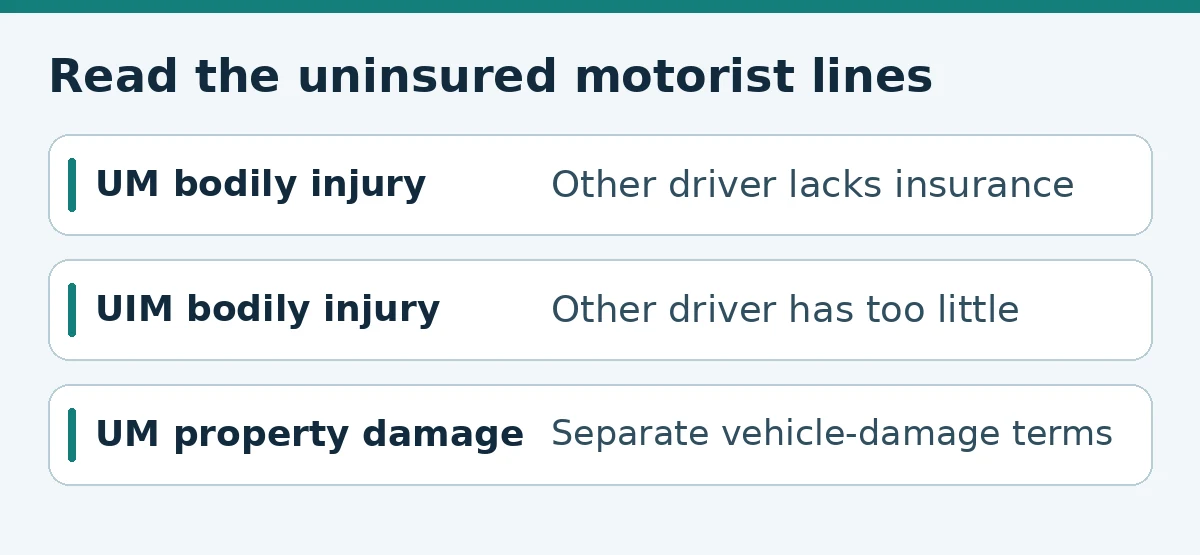
Ask for two UM and UIM limit combinations in writing
Have each carrier show how uninsured and underinsured motorist coverage would change when you increase the bodily injury liability limit on the same cars. Ask which selections, exceptions, or written elections affect the quote. List any property damage coverage in its own row. The Rhode Island declarations page guide shows where to verify the limits after issuance.
Follow an underinsured injury scenario
Imagine a driver causes a crash in Warwick and has $25,000 in bodily injury liability coverage per person. Your documented injury damages ultimately exceed that amount. The other driver’s policy limit tells you the maximum generally available to you under that person’s bodily injury coverage for the accident. It leaves a separate question about recovery under your own underinsured motorist bodily injury coverage. Give your insurer the other carrier’s information and ask what it needs to evaluate a claim.
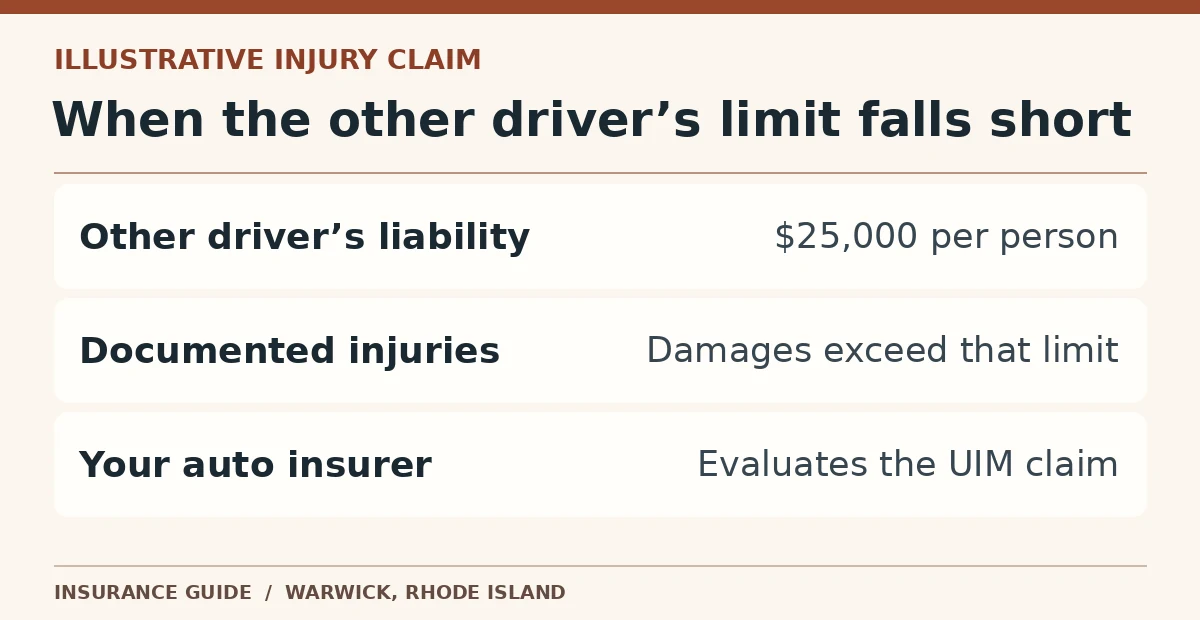
Your UM/UIM limit is one part of that evaluation. The facts of the crash, the damages you are legally entitled to recover, any other insurance and the applicable policy terms can affect the outcome. Before you sign a release, ask your insurer how the release might affect its rights and your claim. Keep copies of medical bills, provider notes, records of time missed from work, and any communication about the other driver’s limits or proposed settlement. The Rhode Island uninsured motorist statute describes the coverage and addresses an insurer’s recovery rights.
What to ask about damage to your car
Rhode Island treats uninsured motorist property damage separately. The state regulation requires insurers to offer it at a minimum of $25,000. If your policy includes collision coverage, you can leave uninsured motorist property damage off without submitting a written rejection. If you do not buy collision, the regulation requires a written rejection to omit it. Ask what your collision deductible is, what applies under uninsured motorist property damage, and how the insurer verifies that the other driver is uninsured. Injury and vehicle damage claims can have different requirements.
Rhode Island enacted a change requiring insurers to offer underinsured motorist property damage coverage for private passenger vehicles. The law takes effect April 1, 2027. When shopping around that transition, ask the insurer to identify what the quote offers and when it applies to your policy (Rhode Island Public Laws 2026, Chapter 388).
Compare vehicle damage options using the same repair estimate
Imagine that an identified, uninsured driver damages your parked car and you receive a $3,200 repair estimate. Ask the insurer how it would evaluate the damage under collision and uninsured motorist property damage if you carry both. Give it the same estimate and facts for each coverage question. Compare the deductible, any documentation required to establish that the driver was uninsured, and how each coverage treats related expenses such as loss of use. Rhode Island’s regulation provides for a waiver of the statutory property damage deductible in certain circumstances, including a qualifying collision with a legally parked, unattended vehicle. Ask the insurer whether those conditions apply to the actual claim (Rhode Island uninsured motorist insurance regulation).
If the driver cannot be identified, take particular care with the property damage terms. Give your insurer any available witness details and photographs and ask what the coverage requires when the other car left the scene. Collision and uninsured motorist property damage can have different triggers. The presence of an uninsured motorist bodily injury line on a declarations page does not tell you what will pay for repairs to your own car.
Ask your insurer who qualifies for injury coverage if a household member is riding in someone else’s car. Then ask which forms explain the treatment of your vehicle when you are claiming property damage. Keep a dated copy of your declarations and any election forms so you can review the terms in effect on the accident date.
What to do after a crash
After addressing immediate safety and medical needs, notify your insurer and keep a copy of the crash report if one is available. Save contact and insurance information, photos, repair estimates, and claim correspondence. If the at-fault driver left the scene, tell the insurer and ask what evidence and reporting deadlines apply to the coverage you’re claiming. Check with your insurer before signing a settlement or release with the other driver’s carrier because it can affect recovery rights. Allstate policyholders can also follow the Warwick guide to filing an Allstate claim for that carrier’s reporting steps.
At renewal, ask for your UM/UIM selections in writing and compare them with the liability limits on the same page. If you previously declined property damage coverage because you carried collision and now plan to drop collision, review that decision before the renewal takes effect.
Compare Rhode Island UM and UIM limits before signing a quote
Ask carriers to state bodily injury and vehicle damage separately and confirm any written choice or rejection they would use. Get the premium for two liability and UM limit combinations using the same other terms. If you have no car of your own, ask how the protection applies under a Rhode Island non-owner auto insurance quote.