
Compare loss of use and additional living expenses in Warwick, RI. Estimate short-term housing costs and review time limits and receipt requirements.
Loss-of-use coverage can help pay certain additional costs when a covered loss makes your home unfit to live in. On a Warwick homeowners policy, it may appear as Coverage D, additional living expenses, or another term. Before choosing a policy, ask what would activate coverage, how the carrier measures an additional expense, and when the benefit ends. The limit is useful only alongside the policy’s conditions and your expected relocation costs.
Separate extra expenses from bills you normally pay
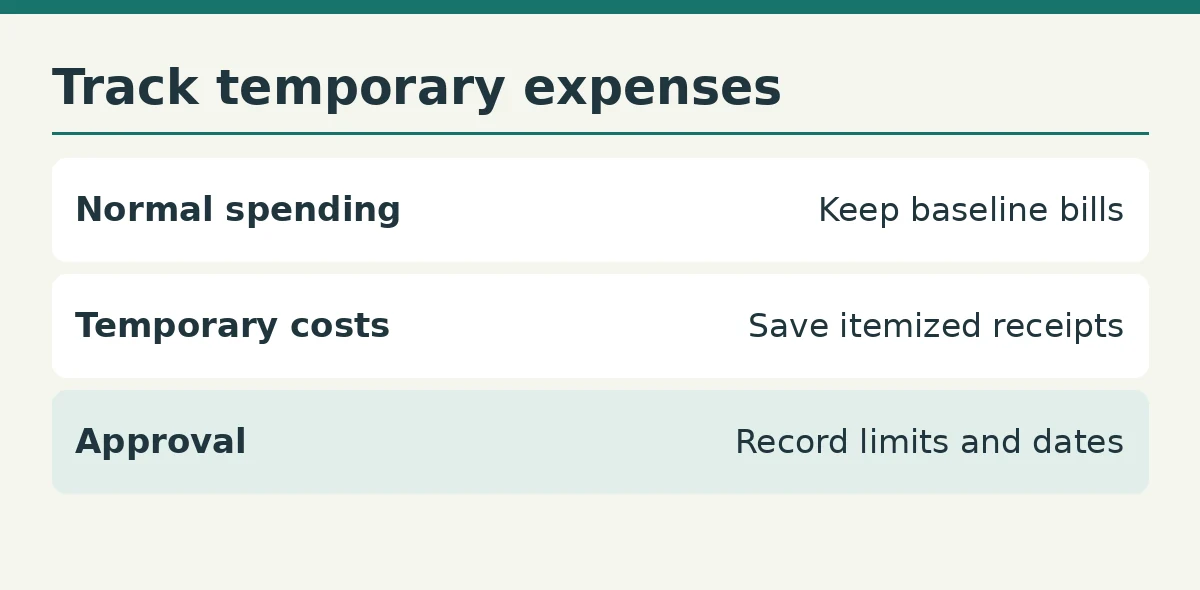
Additional living expenses often start with the difference between what it normally costs your household to live and what you spend after the loss. An insurer may ask what you usually spend on housing, food, or transportation. Ask whether a mortgage or rent you still owe changes the calculation. Save normal bills along with the temporary expenses so both amounts can be reviewed. If you are a renter, start with the Warwick renters insurance guide and find the loss-of-use limit on your own policy.
Imagine you typically spend $500 per week on housing and continue to owe it while repairs are underway. A temporary unit costs $850 per week. Ask the adjuster how the policy treats the temporary charge given that your normal bill continues. In another situation, a landlord might suspend rent after a covered event. Then the comparison can be different. Ask for the insurer’s calculation in writing before using an illustrative budget to commit to a rental.
Check the additional living expenses limit against your actual budget
Estimate the extra cost of a temporary rental, meals, and transport after subtracting ordinary expenses that would still be paid. Ask what the proposed policy considers an eligible increase and check its end date and maximum. When the move involves flood, review the Warwick excess flood guide to see why the temporary housing question also belongs on a separate flood quote.
Estimate a weekly relocation budget
List a place to stay, the change in meal costs, and any extra transportation or laundry expenses. If the temporary place has a kitchen, your food bill may look different from a hotel stay. If you need boarding for a pet or storage for belongings, ask whether the policy recognizes those expenses. Check accessibility, school, and work requirements before assuming the lowest nightly rate is a practical option for your family.
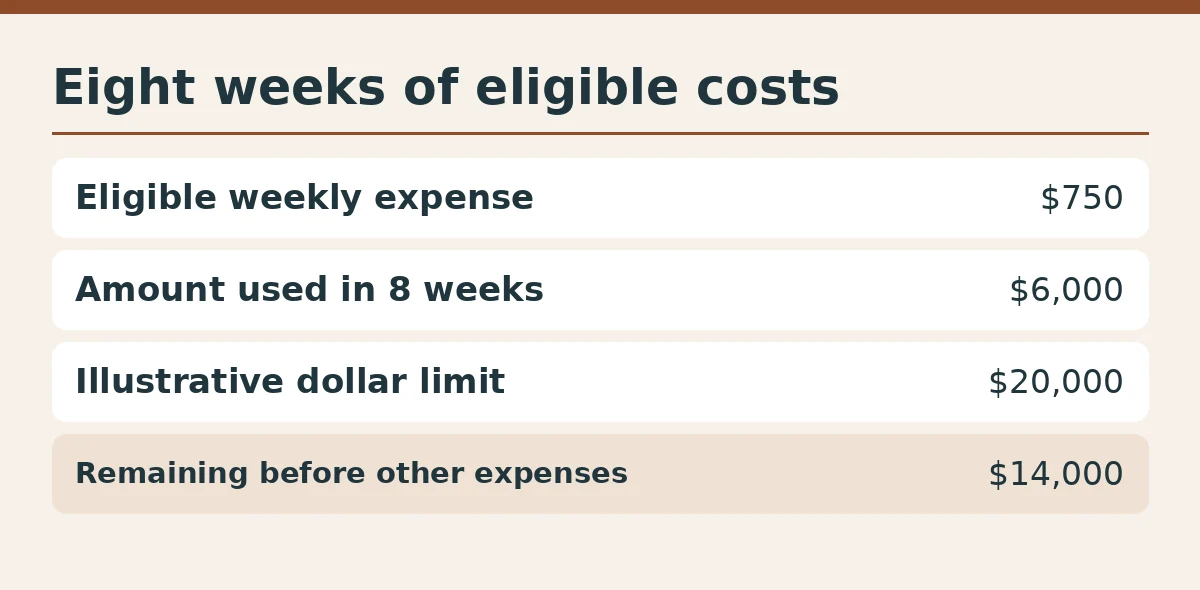
For illustration, suppose the insurer agrees that eligible additional costs total $750 per week. Eight weeks would use $6,000, leaving $14,000 under a $20,000 dollar limit if there are no other paid expenses. A time limit or repair-period condition can still affect coverage even if money remains. Ask how the insurer measures both limits and what happens if repairs take longer because of materials, permits, or contractor availability.
Ask when the benefit starts and when it ends
The insurer may need to determine whether the home is unfit to live in as a result of a covered loss. Ask what documentation it uses and whether it will authorize expenses before that determination is final. Keep any communications from the city, contractor, building manager, or insurer that explain when occupancy stopped and why. If an authority bars access, ask whether the policy addresses that situation and under what conditions.
Request the approved period in writing and check how it will be reviewed. An insurer may consider the time reasonably needed to repair or replace damaged property under the policy. If you decide to relocate permanently or repair unrelated problems while the house is open, ask how that decision affects the claim. For a condominium, contact both the unit insurer and the association so you can document the schedule for shared and individual repairs.
Keep records that make reimbursement easier
Create a log with the date, category, amount, explanation, and receipt for each expense. Add the claim number and indicate whether you have already submitted the item. For a longer temporary rental, save the lease, invoices, and proof of payment. Ask which costs require prior approval and how the insurer handles deposits. If it pays a provider directly, ask how those amounts appear in the remaining benefit.
Ask for a written balance periodically on a long claim. Separate approved charges from estimates and pending items. If the amount differs from what you expected, ask which receipts the carrier has counted and how it treated your normal expenses. You can use the Rhode Island insurance claim review guide to prepare a request if you need clarification or reconsideration.
Compare loss of use when buying or renewing
Open the homeowners insurance declarations page and record the stated dollar limit or how it is calculated. Check the policy for the qualifying cause, the payment period, and the information the insurer may request. Ask each carrier to quote the same dwelling limit and then compare loss-of-use terms separately. For a coastal or low-lying property, ask whether the loss you are modeling would involve a separate flood policy. Federal flood insurance generally does not pay additional living expenses, so the cause of loss matters to the relocation budget.
Plan for the first few days away
Save the claim number and emergency contact details where someone in your household can access them. After a covered loss, ask the insurer what it can approve right away. Keep the first receipts even if you have not yet received the company’s preferred form. Check in before extending a stay. A short written record of what was approved, for how long, and under which limit can prevent confusion during the repair.
Compare the costs of two temporary places
A hotel may offer a nightly rate that seems manageable until you add extra meal costs or parking. A longer stay in an apartment may require a deposit but allow you to cook. Ask which expenses the insurer would recognize and which need preapproval. Compare the expected duration as well. If the repair timeline is uncertain, ask how the insurer would handle a change from a hotel to a monthly rental and what proof it would need. Get the temporary housing terms in writing before agreeing to a cancellation charge or a longer commitment.
Record whether the carrier is paying the provider directly or reimbursing you. If the carrier pays only part of the invoice, ask the provider to itemize the remainder. Save correspondence about any deposit separately from receipts for expenses already incurred. This makes it easier to distinguish an amount you advanced temporarily from an amount the insurer says it will not reimburse.
Sources consulted: National Association of Insurance Commissioners, Consumer Homeowners and What You Should Know About Settling a Homeowners Insurance Claim; FEMA National Flood Insurance Program, flood policy coverage guidance.
Compare loss of use limits with a realistic temporary housing budget
Use the same covered loss and number of weeks on different quotes. Ask which extra costs are eligible, how the insurer calculates the repair period, and whether a dollar or time limit ends the benefit first. If you live in a rental, compare those terms against the Warwick renters insurance limits guide.