Compare excess flood insurance in Warwick, RI. Check where the second layer starts, what the underlying policy pays, and how lenders review the terms.
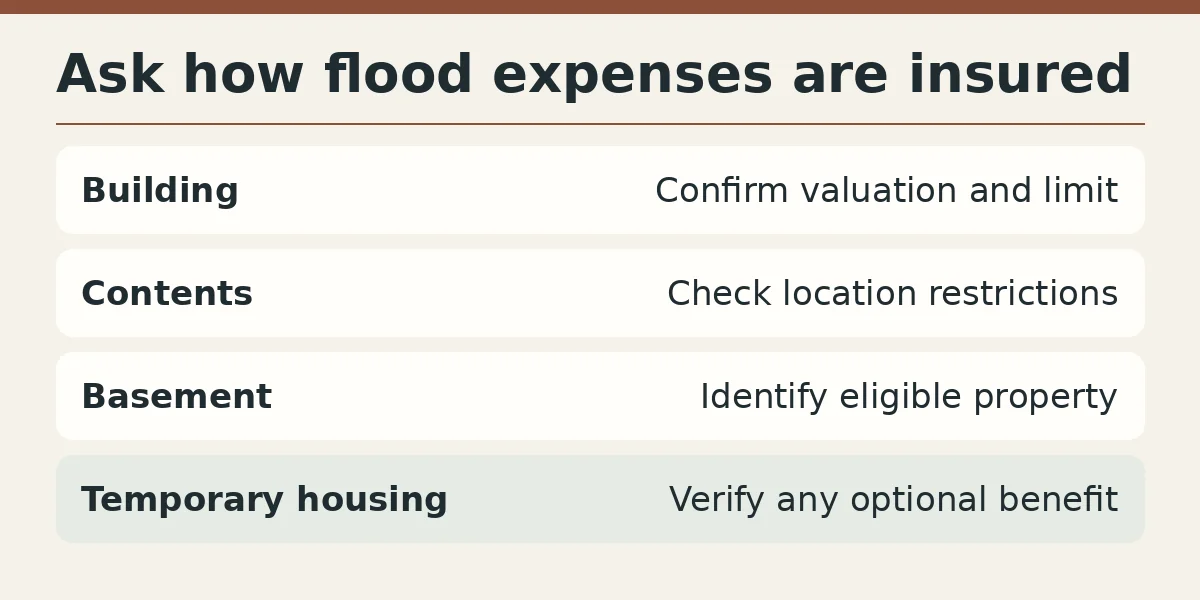
Start with the underlying flood proposal, current rebuild estimate, and any lender instructions. Then ask whether the second policy would fill the specific shortfall you identified. A headline limit can be misleading when the primary policy ends at one amount and the second layer starts higher. Keep building, contents, and temporary housing in separate rows so each quote shows which expenses could remain yours.
Find the building amount you want to compare
The National Flood Insurance Program offers up to $250,000 for a qualifying home’s building and up to $100,000 for contents when that coverage is purchased. Those are maximum limits for the residential example, subject to the applicable policy. A home can cost more to repair or reconstruct than its building limit. Use a documented estimate of building cost, accounting for labor, materials, and relevant features. A home’s purchase price or tax assessment can reflect factors such as land that do not measure the amount needed to rebuild.
Get the latest building estimate from the insurer or a qualified professional and review which assumptions it uses. Compare the flood building definition with what is included in the estimate. Use the Warwick home replacement cost estimate guide for the inputs to a rebuild estimate and the Warwick flood coverage guide for the differences between NFIP and primary private flood options.
Confirm whether changing your primary flood policy affects the excess quote
Before replacing the primary policy, send the proposed declarations and form to the excess carrier. Ask which limit, deductible, and policy types it accepts and whether the attachment remains the same. If a lender is involved, request its written acceptance of the primary proposal. The Warwick NFIP and private flood comparison can help you compare the base policy at the same address.
Compare excess flood insurance with a single private policy
Excess flood coverage is built to apply above a specified qualifying level of loss or primary coverage, as defined by the contract. A primary private flood policy with a higher limit can give you a different structure. Get proposals for both when they are available, using the same address and effective date. Compare who handles claims and how the policies apply to the same property and loss type. Ask whether the quoted excess layer can sit over an NFIP policy, a private primary contract, or only particular insurers or coverage forms.
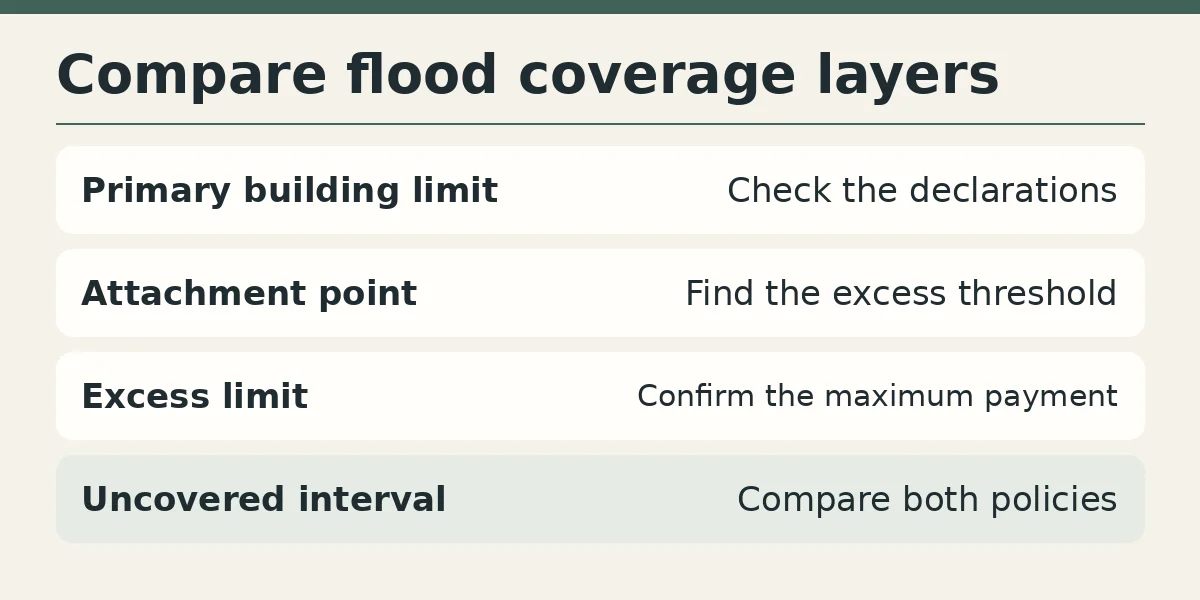
Request the actual attachment provision, which describes where excess coverage starts. Ask whether the excess insurer requires you to buy and maintain a specific amount of underlying insurance. Check if actual payment or another condition must be met before the excess insurer considers the portion above the attachment point. If your primary insurer pays less than expected because a part of the loss is excluded, ask how the excess form would determine its own obligations.
Test the attachment point using two hypothetical losses
Suppose a house has a $250,000 underlying building limit and a $200,000 excess limit with an attachment point at $250,000. For a covered $360,000 building loss, a simplified illustration with matching forms and no separate deductible above that threshold would put up to $110,000 into the excess layer before any other contract adjustments. The primary amount, excess amount, and any retained costs need to be calculated under the actual wording.
Repeat the exercise with a quote whose excess coverage begins at $300,000. If the primary limit still stops at $250,000, the structure can leave a $50,000 interval before the second layer even starts. Ask both companies to model the same loss if amounts differ, and ask what happens when the primary deductible reduces payment. A second test with a loss that stays below the primary limit shows how much the homeowner would owe without triggering the excess coverage at all.
Review basements and contents as separate decisions
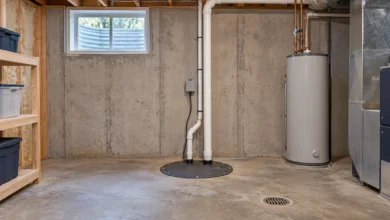
NFIP basement coverage is limited. Ask about the room’s construction and elevation in relation to surrounding ground, and about each kind of property you expect to insure there. Installed building equipment and movable personal belongings can receive different treatment. A second policy may use its own basement exclusions or may follow the underlying policy for certain terms. Get an answer for flooring, finished walls, heating equipment, laundry appliances, and stored contents as applicable. Give each insurer the same building description to keep the comparison fair.
Make a room-by-room contents list and compare its estimated value with each quote’s contents limit. A high building limit tells you little about how a policy handles furniture and electronics. Ask whether an excess contents option is offered and, if so, what underlying limit and valuation it requires. The Warwick home inventory guide explains how to record belongings. Include their locations because where property is kept may affect a flood coverage determination.
Ask which costs apply while the home is uninhabitable
The Standard Flood Insurance Policy generally excludes additional living expenses. Ask a private carrier whether its proposal includes any coverage for a hotel, rental, extra transportation, or similar expenses. Request the maximum amount, time limit, and covered circumstances. The terms can be particularly important for a flood cleanup that delays access to a house even when the affected area is small. Compare any such protection separately from homeowners loss-of-use coverage and ask what peril must trigger it.
For a straightforward budget, estimate the household’s typical and temporary housing costs and what could be paid out of savings. If a private policy includes coverage, ask if it reimburses extra costs above ordinary spending and which receipts it requires. The Warwick additional living expenses guide explains how homeowners policies commonly document a covered displacement and can help you organize the questions to ask about a separate flood policy.
Confirm what the lender will accept before switching
If your mortgage lender requires flood insurance, request its proof-of-coverage instructions before switching policies. Federal banking regulators have issued guidance on lender acceptance of private flood insurance for loans subject to the federal requirement. Ask the lender to review the actual binder or declarations and tell you what it accepts, including the limits, deductible, carrier, and mortgagee details. An excess policy can be useful for household protection even if the lender primarily reviews a separate layer when determining compliance.
Check the old expiration date, the new policy’s effective date, and any waiting period. Ask whether a change in lender or servicer requires a revision to the policy record. Ask for written confirmation from both the lender and the insurer before scheduling a cancellation. If you are buying the property, use the Warwick closing insurance checklist to keep the flood review and regular homeowners proof on the same closing calendar.
Look beyond the annual price if the contracts differ
For a comparable quote, record the covered address, occupancy, amount of building and contents coverage, deductibles, and policy periods. Add one column for the underlying requirement and another for any separate excess conditions. Write down whether each option is replacement cost or actual cash value for the relevant part of the property, and confirm whether the policy pays for associated expenses or only direct insured damage. Separate annual premium from a down payment, broker fee, or an installment charge.
If a single private policy costs more but quotes higher protection for contents or temporary housing, use one example to see the difference. If you get an NFIP policy and an excess policy, compare both premiums and both sets of conditions. Ask whether the excess carrier would offer the same form and price after the primary renews. Some carriers may want notice when the underlying policy changes. Ask for the form number and save the example calculation with the quote.
Prepare a claim file the two insurers can use
If a flood occurs, follow local safety instructions and the claims instructions for every applicable policy. Ask each carrier what notice it requires and whether the second insurer wants immediate notice even while the primary estimate is being prepared. Document the loss when it is safe to do so. Save house and contents records, estimates, and the underlying carrier’s written position and payment details. Record dates and deadlines separately because they can differ.
Ask both insurers how to handle costs that have not yet been allocated to one part of the claim, or damage that a contractor expects to discover during work. If the second carrier needs the primary settlement, find out which records it accepts and how it handles a change to that settlement. Use the Rhode Island insurance claim documentation guide for ways to organize an estimate or coverage dispute, then apply the actual procedures in your flood contracts.
Compare private flood insurance quotes for a waterfront address
Give carriers the same address, building use, foundation description, and any elevation documentation you have. If a quote includes a flood map zone, note how the lender determined it and ask what other property details the insurer uses. Existing elevation records, a survey, or details on low equipment can help you answer underwriting questions. Ask for one quote oriented toward the lender’s requirement and another built around your desired protection.
If the house is near the bay, ask the broker to show how the policy’s definition of a flood applies to the scenario you want to insure. In one example, storm surge could affect the entire neighborhood. In another, heavy rain might enter a low area where only one building is affected. Let the insurer know the facts it should use, and request the form rather than relying on a broad sales description. A separate homeowners policy may have a hurricane deductible or wind coverage that requires its own review.
Compare the cost of higher limits without changing the deductible
A carrier might offer a lower total premium when you accept a larger flood deductible. Isolate that difference before deciding how much excess flood insurance to buy. Ask for an excess flood insurance quote comparison with the same underlying policy, the same attachment point, and two limits. Then request a separate quote at one selected limit with two deductibles, if available. This shows the added price of buying more insurance and the price of retaining less loss.
If a sample two-policy package lists $1,200 for the primary layer and $620 for additional building coverage, its combined annual cost is $1,820 before fees. Compare a single private option using the same insured amounts and building terms. If the single policy costs $1,740 but doubles the applicable deductible in the loss you used for comparison, record both numbers. Decide which quote you could fund after a claim and ask the lender to review the chosen structure.
Keep coastal flood coverage and sewer backup quotes separate
A basement drain backing up and water moving onto the property from outside may raise different coverage questions. The cause, extent of water, and policy wording matter. Request the Warwick sewer backup endorsement checklist and discuss one example at a time with the insurer. Confirm whether any private flood form treats backup in conjunction with a covered flood differently from an isolated pipe problem. It can be worth paying for both protections when each covers a meaningful expense under its own terms. Put the separate limit and deductible on the same comparison sheet so you can see what each premium buys.
Recheck the layers after a renovation or renewal
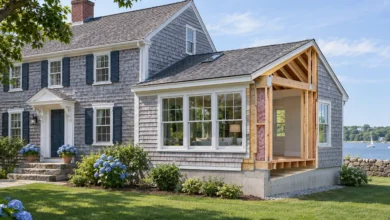
A raised mechanical system, new addition, or change in use can alter both the expected repair costs and underwriting information. Review material facts with each insurer. Check policy term and coverage limits again when replacing the primary carrier, even if the preferred excess carrier stays the same. Ask what it would take to keep the two policies in step and request confirmation before the new period begins.
The final comparison should show which policy would contribute at a low, medium, and high level of covered building loss. Record separately how each option treats basement property, contents, and displacement. A quote based on the same building description, dollar amounts, and conditions is useful even if you decide that the primary limit already meets your needs.
Sources consulted
FEMA and FloodSmart, Buy a Flood Insurance Policy and Standard Flood Insurance Policy Commentary. Federal banking agencies, Interagency Questions and Answers Regarding Flood Insurance. National Association of Insurance Commissioners, private flood insurance reporting guidance.