
Compare term life insurance quotes in Warwick, RI. Match the death benefit, term, underwriting class, renewal prices, and any policy conversion terms.
Term life insurance quotes are easier to compare once you set the same death benefit, term length, and underwriting assumptions. A Warwick household can start by asking what bills another person would need to cover if the insured died during the term. Compare the cost of insuring that need across carriers, then check whether the premiums are guaranteed for the full period and what happens at the end.
Estimate the expenses the policy should address
List the obligations you want the death benefit to help with. These might include household income support, a mortgage, childcare, education expenses, or other debts. Check how long each need would last and what assets are already available. A household with two incomes might need to replace some earnings and also pay for work that a family member currently does without pay. Write down the purpose of each amount before adding the figures.
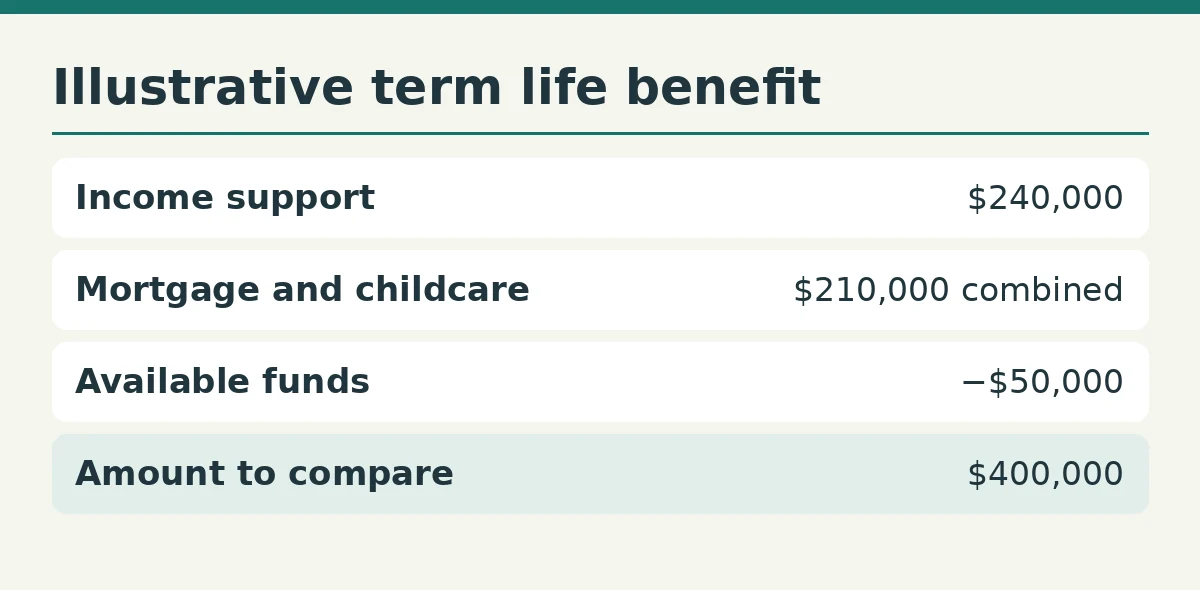
For example, a household estimates it needs $240,000 for income support, $150,000 for an outstanding mortgage, and $60,000 for childcare or education. If it chooses to offset that $450,000 total with $50,000 of available funds, it can compare a $400,000 benefit as one option. This is an illustration. Ask how the estimate changes if savings must remain available for other needs or if coverage from an employer may end when you change jobs.
Compare level term life insurance rates on two durations
Ask each insurer to price the same death benefit with two term lengths using identical underwriting assumptions. Record the guaranteed level premium period and how the written offer changes after underwriting. If you are already covered, check whether a term life conversion option would preserve part of the benefit you may still need.
Match the term to the period of need
A 20-year term may be worth pricing when the household expects a major need to last around 20 years. Ask for a shorter and longer term if the expected timeline is uncertain. Check whether the premium is level for the full term and what the policy charges after the level period if it can be renewed. Find the date the coverage ends and whether additional evidence of insurability would be required to replace it.
Some policies offer conversion to a permanent policy under specified terms. Ask for the conversion deadline, eligible products, and the price basis. If conversion is important to you, read the contract’s terms rather than relying on a summary from the quote. The site’s overview of Allstate life insurance options in Warwick covers one carrier to include in the comparison. Confirm the terms of the policy actually offered.
Compare the same underwriting assumptions
Ask for the same death benefit, term, premium guarantee, and payment frequency. Check the underwriting class assumed in each quote and whether the estimate requires a health exam, records review, or other information. The issued price can change when underwriting is complete. If one offer assumes a different class or tobacco status, ask for a comparison based on the same information.
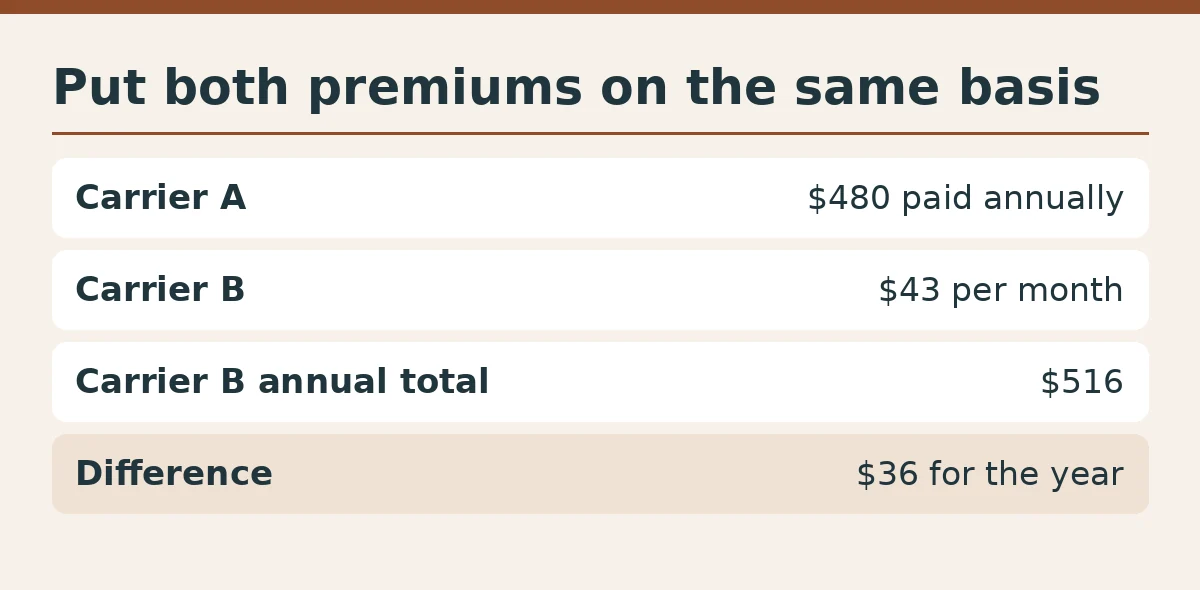
Suppose Carrier A offers $480 per year and Carrier B offers $43 per month for comparable coverage. Twelve monthly payments total $516. Ask both carriers to quote the payment schedule you plan to use and note any difference in total annual cost. Then check the first payment date and any conditions that must be met before coverage is in effect. Keep the final offer with the quote so you can confirm the actual payment amount.
Review beneficiaries and optional provisions
Identify the primary and contingent beneficiaries and confirm the company’s form accepts the shares you intend. Ask how the company handles a beneficiary who dies before the insured and what happens when a minor is named. Consider who will own the policy and who can request changes. The Rhode Island beneficiary designations guide explains what to record and revisit after a life change.
If a quote includes a rider, request its cost and conditions separately. Ask what event would allow you to use it and how it affects the death benefit if it pays early. Consider whether the option addresses a specific need for your household. Ask the insurer to identify which features are part of the base policy so you can compare the right items between carriers.
Confirm the issue and start of coverage
When you receive the policy, check the insured person, owner, benefit amount, term, premium, and beneficiary confirmation. Ask when coverage becomes effective and whether any initial payment or other requirement is outstanding. If you already have life insurance, review both contracts and confirm that any replacement is in force before taking action on the existing policy. Review any rights to examine or return the policy and note the applicable dates.
Save a comparison for future review
Keep a simple record with the cost, term end date, conversion deadline, and name of the company that issued the policy. Make sure someone you trust knows where to find the policy information. Review the amount if your household takes on a mortgage, changes income, or has new dependents. If you update a beneficiary or payment method, save the carrier’s confirmation with the policy.
Compare the premium guarantee with the renewal option
A quote may display an attractive monthly amount for the level period. Read what happens when that period ends. If the policy is renewable, ask for the schedule that shows later premiums and the age at which the renewal option ends. If it is convertible, ask whether conversion can apply to the entire benefit or only a portion, and which deadline comes first. Get the relevant terms for the policy you are considering rather than treating conversion as a promise to keep the same rate.
A household with several needs may want to price alternatives. For example, you could compare one policy sized for the longest need with separate policies that end when different obligations are expected to change. When comparing two policies with one, check the combined premium, underwriting, renewal terms, and how easy it would be to keep both policies in force. Compare actual written quotes using the same assumptions about the needs you want to cover.
Review employer benefits without double counting
Ask your employer for the current benefit amount and the rules that apply if employment ends. If the benefit can be continued or converted, ask what that costs and what deadline applies. Decide how much of the employer coverage you want to count in your estimate. Keep it as a separate line in your household calculation so you can revise the estimate when your job or benefit changes.
Sources consulted: National Association of Insurance Commissioners, Life Insurance Buyer’s Guide and Want to Purchase Life Insurance?; Rhode Island Department of Business Regulation, Insurance Division consumer resources.
Match death benefits, premiums, and renewal terms before selecting a quote
Request quotes with the same term, benefit, premium guarantee, and underwriting assumptions. Ask whether the quoted price is preliminary or approved. If a quote includes conversion to permanent insurance, note the deadline and compare it with the Warwick term life conversion guide before deciding what the option is worth.