Compare jewelry insurance quotes in Warwick, RI for rings, watches, and valuables. Check the theft sublimit, deductible, and accidental loss coverage.
A homeowners or renters policy may show a high personal property limit while limiting payment for some jewelry theft losses. Look up the specific theft sublimit and ask about a scheduled personal property endorsement or standalone jewelry insurance. Compare what happens if a ring is stolen at home, a watch is damaged, or a piece goes missing during travel.
Check the jewelry theft sublimit on homeowners or renters insurance
Find the section describing particular categories and causes of loss. Ask whether a jewelry limit is per item, per loss, or shared across a category. A limit for theft does not necessarily answer how the policy treats damage from a different covered cause. The Warwick home inventory guide shows how to record the item and estimate a comparable price. Keep any description, photos, and purchase record in a secure place.
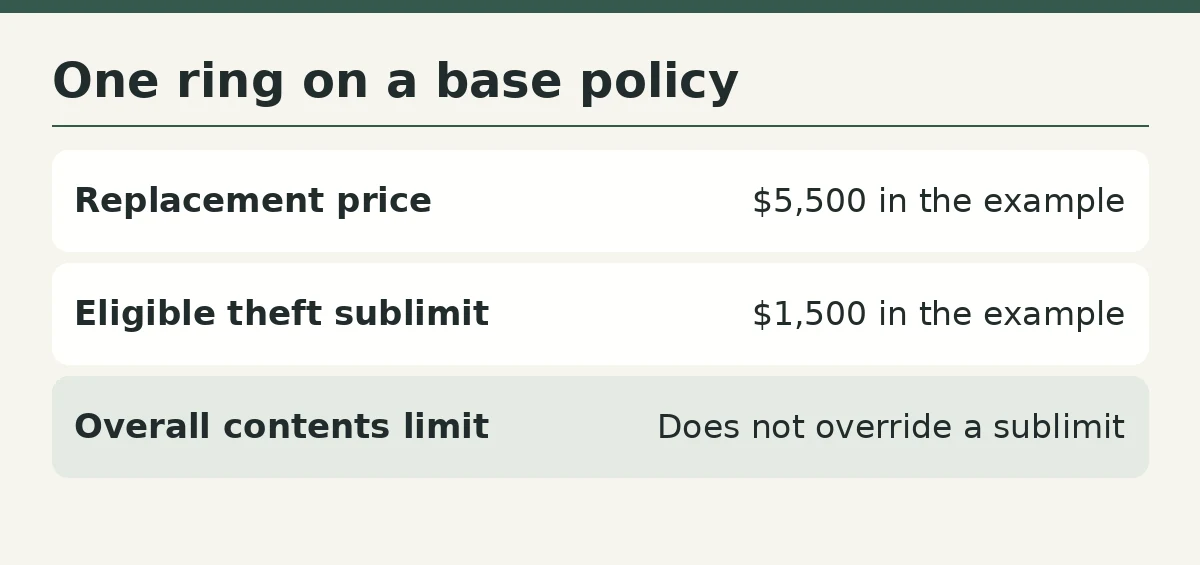
Suppose a ring would cost $5,500 to replace and a hypothetical base policy limits eligible theft of jewelry to $1,500. A $35,000 overall belongings limit would not remove that special limit. Check how the deductible interacts with it and what cause would trigger any payment. Ask which amounts the company would use and keep the answer separate from the jewelry’s current value.
Compare an engagement ring insurance quote on the same appraisal
Send each insurer the same description and valuation. Ask how it would settle an eligible loss, whether it can select a replacement supplier, and whether an updated appraisal is required. Compare that with a scheduled personal property endorsement and check its deductible and where the item is protected. Keep a copy with your home insurance inventory.
Scheduled personal property versus standalone jewelry insurance
A schedule or floater can identify an item and a value and may offer materially different coverage from the base policy. Ask whether the quote covers theft, accidental damage, or unexplained loss, and which exclusions apply. Ask whether the coverage follows the item away from home or when you travel. Compare the deductible, covered territory, and approach to claims with any standalone product you are considering.
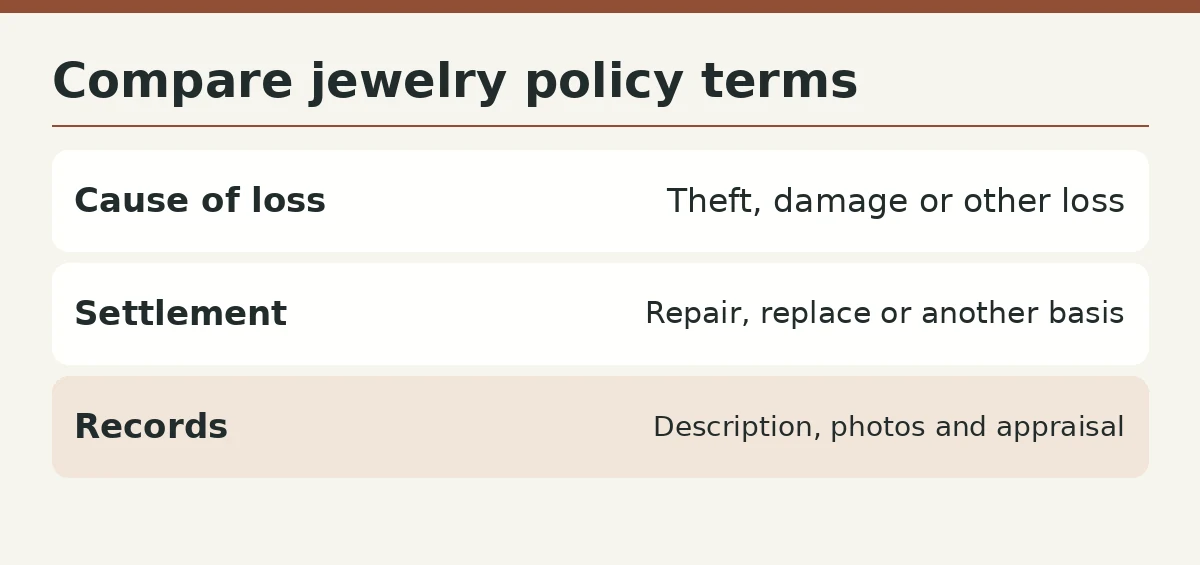
Ask how the insurer would settle a covered loss. It might repair or replace an item, reimburse an eligible cost, or use a particular valuation method. Check whether you can choose a jeweler and whether the policy considers a replacement sufficient if it has comparable materials. In a partial loss, ask about damage to a setting or one piece of a pair. An appraisal supports identification and value; the contract governs how the insurer uses it.
Get the appraisal and item records for a jewelry insurance quote
Ask whether the insurer accepts a sales receipt or needs a recent appraisal. Record the date on the document and where you got it. If an item was inherited, ask what documentation can establish details and ownership. Do not put sensitive valuations or serial numbers where they can be seen publicly. Keep an accessible private copy. Update the insurer if you change or sell a scheduled item.
Tell the insurer if the jewelry is generally kept in a safe, bank box, or another location. Ask whether discounts or coverage terms depend on that arrangement and how the policy treats times when an item is worn. If you plan to leave it with a jeweler for repairs, ask what protection applies while it is in someone else’s custody. Read the jeweler’s receipt and insurance instructions separately.
Review the rest of the policy after buying a schedule
Renters should still choose an adequate belongings limit for ordinary items. Use the Warwick renters limits guide to compare replacement cost and actual cash value. Homeowners can find base limits and endorsements on their homeowners declarations page. Ask whether the schedule appears on a separate page or a separately issued policy. Keep the renewal details and record which company would receive a claim.
After a loss, follow the reporting terms. Preserve whatever documentation the insurer reasonably asks for and note the date and circumstances. Request a written explanation of the settlement calculation. When you replace a piece or update an appraisal, confirm whether a new item requires a fresh listing. A new receipt in your file does not automatically change the record the company insured.
Run the same ring through three loss scenarios
A ring is stolen at home. Another time it slips off while traveling. A third scenario involves damage to the setting while it is being worn. Ask the base policy, schedule provider, and standalone carrier about all three. Write down which losses are covered, which documentation is needed, and how a repair or replacement would be valued. A theft sublimit may only answer the first scenario. A policy marketed as jewelry insurance still depends on the exact coverage and exclusions.
For the $5,500 ring example, suppose a standalone quote charges $82 for the year and a schedule costs $67. Check the deductible, location restrictions, and settlement process before deciding that one is cheaper. If one provider would use a trusted jeweler or a comparable replacement rather than cash, ask how it selects the replacement. If you care about a particular design or stone, document the features and ask whether they will appear on the policy.
Decide which items merit a separate estimate
Sort your list into ordinary items and pieces that would be difficult or expensive to replace. Ask whether the company wants one record for each piece or accepts a collection under a blanket limit. Read any per-item limit and the maximum for the collection. If you own two valuable watches and a ring, check the loss you want to model. An overall jewelry amount may not allow the full value of any one piece. Compare adding items individually with the policy’s blanket terms if both are offered.
Ask about items you buy or receive after taking out the policy. A form may require reporting within a specified period or may treat a new item differently until it is listed. Give the carrier the purchase date and any appraisal. If you replace a piece after an insurance settlement, ask whether the new item has to be insured afresh. Keep the policy schedule and invoice together to avoid confusing the old and new entries.
Maintain a private claim file that can be found after a loss
A useful row contains a description, current value, appraisal date, item location, and the relevant insurer and policy. Keep photographs and detailed identifiers in a secure file. If you need a jeweler to inspect damage, record which item was examined and where it is kept. Ask the insurer what documents it wants before replacing or sending an item away. Store receipts and claim communications separately from the appraisal used to buy the policy.
If personal property is insured under a homeowners or renters policy and a jewelry item uses another policy, confirm notice requirements for both. Ask whether each carrier needs a copy of the other decision. Avoid submitting overlapping expenses without explaining the other coverage. After renewal, check that each scheduled description and limit remains accurate. A valuation change can affect the premium and may also lead you to adjust the amount.
Compare an appraisal figure with the amount you would pay to replace the item
A current appraisal can describe the material, setting, and quality of an item. Ask what kind of valuation the insurer wants and how it uses the appraised amount at settlement. Check whether it can repair or replace the item and how it chooses a comparable piece. If an old appraisal describes a mounting that was changed, have the description updated. Use photographs to supplement, not substitute for, the written details the carrier asks for.
Suppose a ring is scheduled for $5,500 and a comparable replacement costs $5,100 at the time of a claim. Ask whether the policy would provide the scheduled amount, the replacement, or another payment under its terms. Ask what happens if the price is higher than the scheduled limit. Review any deductible and compare how the base policy and separate product handle the same loss. Avoid assuming a figure on an appraisal is the amount available as cash after a claim.
Consider ownership and use when another person wears or keeps the item
If a family member owns or usually wears a piece, explain that when requesting insurance. Ask who should appear on the policy, who is insured, and what happens if the piece is loaned, gifted, or sold. Check whether an insurer needs to know if it stays at a different residence. Ask about coverage in transit or while stored elsewhere. If the person using the item has their own renters or homeowners coverage, ask each carrier how the policies would coordinate rather than relying on the one with the larger limit.
If the item is taken for repair, get the jeweler’s receipt showing what was handed over and when. Ask whether the provider has terms for items away from home or in the care of a business. Keep the repair receipt and the policy description in the same file. When you get the item back, update photos if the appearance changed. Notify the insurer if you insure a replacement or make a substantial alteration.
Compare jewelry insurance premiums, deductibles, and settlement terms
Get a written premium for the schedule and for a standalone policy, using the same item details and a comparable set of risks. Read how each quote treats accidental loss and damage, theft, and travel. Check the deductible and how the insurer would select a replacement. If one quote covers fewer of the events you asked about, write down the difference. Ask how amendments and cancellations are handled if you sell or transfer items during the term.
Compare each scheduled amount with the household’s unscheduled belongings coverage. The base policy still governs the property that is not individually listed. Keep the paperwork for both. Before a renewal, review the insured values, appraisals, and locations. A separate quote is useful only if it still describes the item and how it is used. Put an update on your calendar if the insurer requests a new appraisal after a specified period.
Build a private record if you own several pieces
Group the items by carrier and policy number, with a short description and approximate date of purchase. Keep higher-detail photos and documents in a secure location. Record who can retrieve the information after a loss. If you have a premium receipt but no issued schedule, request the actual policy. Compare the names and item descriptions with your documents before you treat it as confirmed coverage.
Ask what protection applies to items that are on loan or temporarily away
If an item is loaned to a family member or temporarily kept outside your home, check whether the provider needs to know. Give the actual location and who has it. Ask if loss during transit is handled differently from loss at the home or location named on the policy. For a piece kept in a bank box, ask what happens when you take it out to wear or leave it with a jeweler. Request the terms in writing and revise the item record if the usual arrangement changes. Confirm which carrier would consider a loss if another policy for that household also includes valuables.
If a watch or ring is one of several inherited items, ask the insurer what evidence it needs to establish ownership and value. If family members are still deciding how to divide the property, explain the current arrangement and where each piece is stored. Request written confirmation of who is covered before choosing the amount. When a piece is later transferred, update the schedule and keep the prior record.
Quote the same ring or watch with each provider
Match the piece and its price. Give both insurers the same description, appraisal date, storage location, and amount. Ask whether the amount on the schedule limits payment or sets another basis under the form.
Match the causes of loss. Check theft, accidental damage, unexplained loss, and travel separately. Ask what happens while someone else has the piece for repairs or safekeeping.
Match deductibles and claim choices. Have each provider explain whether it can pay cash, repair, or arrange replacement. Compare the annual premium only after you know which loss each policy would pay for.
If you rent, ask whether your proposed jewelry coverage must be added to a renters policy or can stand alone. The Warwick Allstate renters quote checklist explains which contents limits and special limits to compare on the underlying policy.
Sources consulted
Insurance Information Institute, insurance for jewelry and valuables; National Association of Insurance Commissioners, Consumer Homeowners.