
Review Rhode Island life insurance beneficiary designations. Check primary and contingent names, shares, minor children, and records for each policy.
A life insurance beneficiary designation tells the insurer who should receive the death benefit under the contract. For a Rhode Island household, the most useful starting point is the form accepted by the carrier, along with its written confirmation. Review the names, shares, and fallback instructions. Then make a plan to revisit the designation after a change in the family or the ownership of the policy.
Identify the primary and contingent beneficiaries
A primary beneficiary is generally first in line to receive the benefit under the policy. A contingent beneficiary generally serves as a backup if no primary beneficiary qualifies to receive it. If you name several people, ask the insurer how its form handles the death of one primary beneficiary. The result may depend on the designation, the company’s wording, and applicable law. Ask whether the form lets you specify what happens to that share.
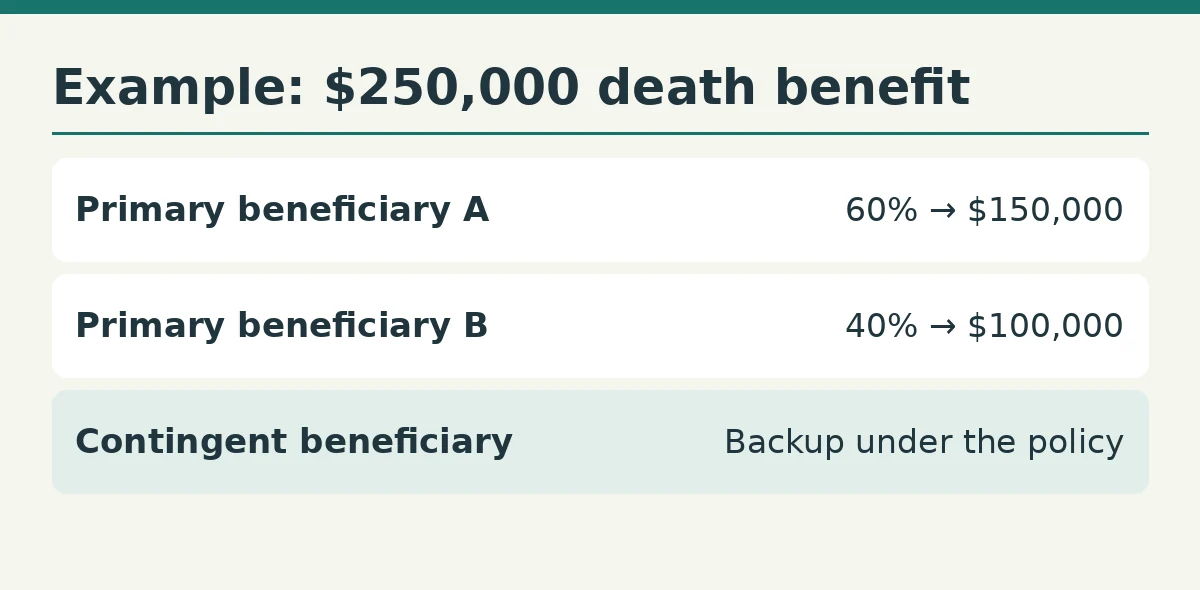
Consider an illustrative policy with two primary beneficiaries, named for 60% and 40%, and one contingent beneficiary. On a $250,000 benefit, the stated shares would be $150,000 and $100,000 if both primary beneficiaries qualify. If one dies before the insured, ask how the accepted form treats that share. A contingent beneficiary may receive nothing while another eligible primary beneficiary remains, depending on the terms.
Confirm beneficiary designations on a replacement life policy
If you are shopping for a new term life insurance policy, keep a copy of your current beneficiary designation and ask where the new insurer shows its accepted record. Verify primary and contingent names and percentage shares in the issued policy’s records. Keep the existing policy details available until you confirm the replacement timing. For an employer change, review the group life portability and conversion comparison.
Check the form before submitting it
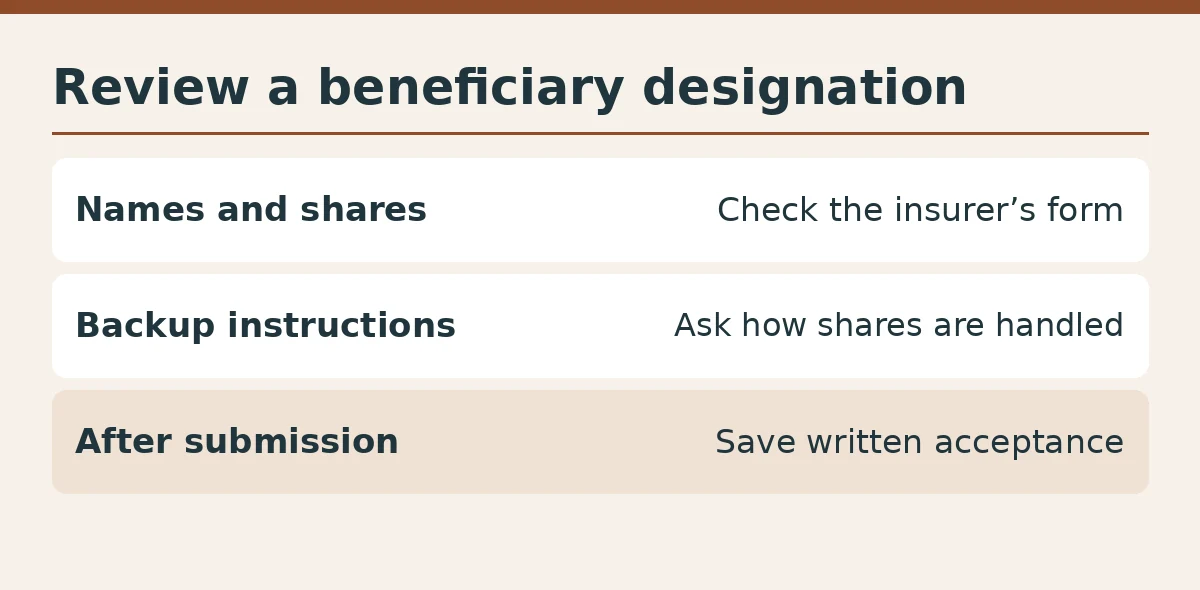
Use the insurer’s current form or secure process. Enter names accurately and supply identifying details only through the channel the insurer provides. Confirm who has authority to make the designation and whether any existing designation is irrevocable or otherwise restricts changes. If you name multiple beneficiaries at the same level, check that the shares add to the percentage the form requires. Keep the date of submission and the insurer’s written acceptance. A completed form in a personal folder does not show that the insurer received it.
If the carrier offers options for descendants or alternate distributions, request an explanation in writing. Ask how the choice would apply to a specific example involving your own intended shares. The labels on different carriers’ forms can differ. If the intended arrangement is complex, a Rhode Island estate-planning professional can help you evaluate the consequences and prepare the designation for the carrier.
Ask about minors, trusts, and the estate
Naming a minor can require a way for someone to receive or manage the proceeds. Ask the insurer what it requires before paying a minor’s share. If you are considering a trust, custodial arrangement, or designation to an estate, get advice about how the arrangement would work in Rhode Island and use the exact wording accepted by the insurer. A designation to an estate can involve a different administration process from a designation directly to an individual.
Do not assume a will, a divorce agreement, or another document automatically changes the beneficiary the insurer has on file. Ask how the policy and applicable law treat the situation and whether any consent or court document is required. After any approved change, request the carrier’s written confirmation and compare it with what you submitted.
Review coverage from work and individual policies separately
If you have employer life insurance and a personal term policy, check each beneficiary designation. An employment benefit can have a separate record and process. Ask what happens to the coverage if you leave the job and whether you need to complete a new form if you obtain replacement coverage. The Warwick term life insurance quote guide explains how to compare an individual policy’s benefit, term, and premium.
For a policy associated with a family business or shared financial obligations, verify the owner and the insured person on the issued policy. Those roles can matter when a beneficiary change is requested. Ask what documents would be required if ownership changed. If Allstate issued your policy, the site’s Allstate life insurance overview can help you locate the kinds of policy questions to ask, while the contract and carrier confirmation govern the actual designation.
Leave enough information for someone to find the policy
Keep the name of the insurer, policy number, and a way to contact the claims department in a secure place. Tell a trusted person where to find those details. The file can also hold the date of the last designation and the confirmation from the insurer. If you inherit responsibility for someone else’s records, check for policies through employment, individual insurance, and any paperwork the person retained. The Rhode Island Insurance Division and NAIC provide information about locating a lost life insurance policy.
Set a specific review trigger
Review the designation after marriage, divorce, birth, adoption, the death of a beneficiary, or a significant estate planning change. Read the current record before you fill out a replacement. If the insurer changed its form, ask how the new format treats any special instructions. Save the accepted version with your other policy records and remove outdated personal copies from any place someone might use to file a claim.
Verify each beneficiary when the policy is transferred or replaced
If you replace a policy, do not assume the new carrier copied the old designation. Review the form associated with the new policy number and confirm the shares after the carrier accepts it. If the change was only a transfer of ownership, ask whether it affected the existing designation or who may change it. Request a fresh confirmation if there is any doubt. Write down which record belongs to each policy so beneficiaries do not have to sort through conflicting paperwork later.
Ask the insurer what a claimant would need
Ask for the claims contact and the usual documents for a death benefit claim. Keep the contact information with the policy while avoiding unnecessary exposure of Social Security numbers or other private details. A beneficiary may need to make a separate claim even when other people listed on the policy already contacted the carrier. Confirm the process with the carrier and note where the form can be found. If you share information with a trusted person, give them enough to identify the policy and carrier without distributing every record in the file.
If someone cannot find a policy, collect the insured person’s basic identifying details through an appropriate secure process and check official policy locator guidance. Employers and prior employers may also have information about coverage they provided. The goal is to identify the insurer so the person seeking benefits can follow the correct claim procedure.
Sources consulted: National Association of Insurance Commissioners, Life Insurance Buyer’s Guide and life insurance beneficiary consumer guidance; Rhode Island Department of Business Regulation, Insurance Division consumer resources.
Confirm beneficiaries before replacing or converting a life policy
Ask the carrier which form it has accepted, what happens to a share if a beneficiary dies, and whether a new designation is required for the replacement contract. Ask for an updated confirmation on each plan. Review the employer life insurance exit checklist if one benefit is ending with a job change.