Compare rideshare and delivery insurance quotes in Rhode Island. Match the covered app periods, vehicle use, coverage terms, and collision deductible.
A passenger rideshare driver can move from personal use to waiting online to an accepted ride in one afternoon. Delivery apps can use separate coverage periods. Read the platform’s certificate alongside your personal auto policy and any rideshare endorsement. The comparison should show when liability applies, which policy could pay for your vehicle, and the deductible or other conditions for that stage.
Rideshare car insurance while waiting online or on an accepted trip
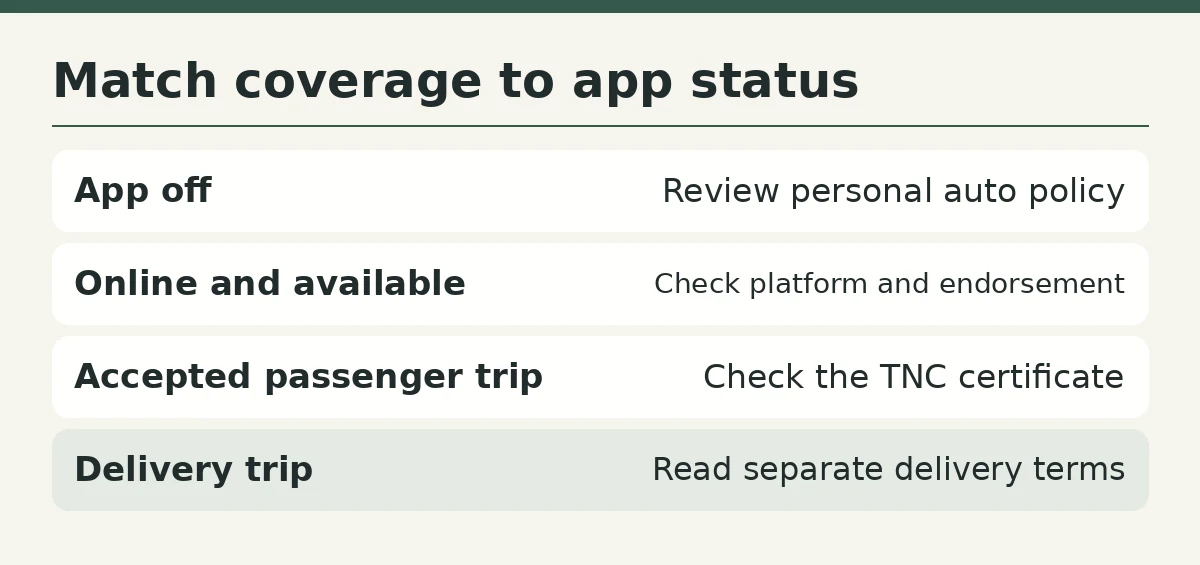
Rhode Island’s transportation network company law establishes primary auto insurance requirements for covered passenger rideshare operations. It distinguishes being logged in and available for requests from providing a prearranged ride. Find the app’s definition of the relevant points, including acceptance, pickup, drop-off, and going offline. Ask what happens if a passenger cancels or if you keep driving after the app stops recording a trip. Document whether these questions concern liability, physical damage, or another protection.
State law also allows a personal auto carrier to exclude coverage for certain periods during TNC activity. Check the policy you own and tell the carrier how you use the vehicle. Ask whether it offers a rideshare endorsement for Rhode Island, which periods it addresses, and how it coordinates with platform coverage. A quote for a regular commuter has no reason to account for paid passenger trips unless you disclose them.
Compare rideshare endorsements when you use multiple apps
Give every carrier the apps used, the type of work, and which activities can overlap. Ask how the policy treats a trip when one app is available and another has accepted a job. Request written terms for rideshare and delivery if both matter, then compare premiums on the same liability limits. For the underlying selections, use the auto declarations page guide.
Compare rideshare collision coverage and deductibles
An app certificate may list liability limits prominently. Find the separate provisions for collision and comprehensive, if offered. Ask whether the app’s coverage depends on you carrying similar protection on the personal policy and what deductible would apply. Check whether the terms cover waiting online in addition to accepted trips. Use the collision and comprehensive guide to identify the protections you currently carry before discussing an endorsement.
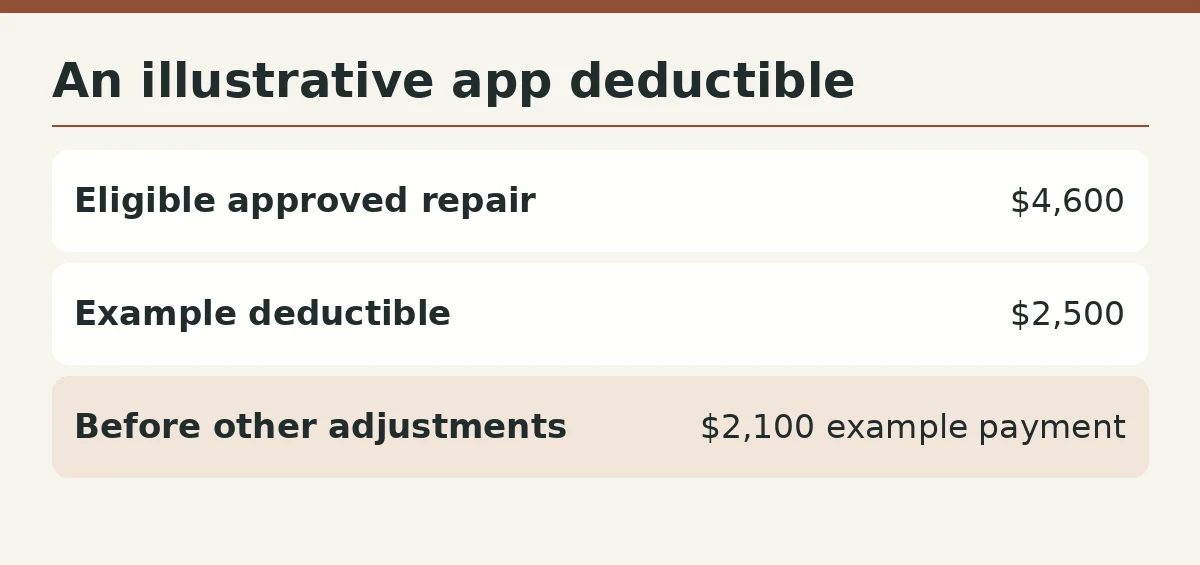
Suppose your personal collision deductible is $500 and an app document shows $2,500 for contingent physical damage during an eligible stage. On an approved $4,600 repair in that stage, a simplified payment would be $2,100 before other changes. While waiting for a request, the certificate could use another rule or provide no own-car coverage for that stage. This is an arithmetic example. Get the actual policy terms and verify eligibility before using the amounts to budget.
Car insurance for food delivery and package delivery
Delivering food or packages and carrying passengers are different activities. Tell the carrier which platforms you use and what you transport. Since passenger TNC rules describe passenger rides, check the actual coverage that a delivery company says applies. Ask when a delivery starts and stops, whether driving back after drop-off is included, and how deliveries organized independently are treated. If the wording is unclear, request it in writing.
If you use multiple apps, explain whether you could be online in more than one at once. Ask each company how it determines which coverage it will review and what records it needs. Save the enrollment material and certificate rather than relying only on an informational screen. Compare off-app, waiting, accepted, and completed stages using the same vehicle. If there is a gap you cannot resolve with a personal endorsement, ask about available business auto coverage based on the actual operation.
Check loan, lease and umbrella terms
Read whether the lender, lessor, or rental company limits commercial use. Evidence that the car has liability insurance does not tell you whether the vehicle can be used for trips under the finance agreement. Ask how to provide proof for the activity. If the car is financed, confirm which policy would be reviewed after a total loss and keep the payoff information current. Check the deductible the lender accepts compared with any app deductible.
If you carry an umbrella, disclose the paid driving and confirm whether the umbrella would address it. The Rhode Island personal umbrella guide explains how to verify underlying terms. Ask what changes would apply to the rest of the household when a personal car is also used for work, such as a driver who borrows the vehicle when the app is off.
Collect what an adjuster may request
In an accident, meet safety and reporting requirements first. Keep available proof of coverage for the relevant activity. Save trip timestamps, app status, vehicle information, and the certificate in effect on that date. Notify the appropriate insurer or platform under its reporting terms and ask what other party needs notice. Keep the personal and platform claim numbers distinct. If the vehicle is unavailable for work, ask which expenses and periods the applicable policy actually recognizes. Document the answer and estimate the cost of transportation separately.
At renewal, verify the address, type of driving, and insurer’s written approval. If you stop working on an app, ask what action is needed to remove an endorsement or change the quote. If you start delivering for a new company, revisit those terms before making the first trip. Compare quotes with the same activities using the Warwick car insurance quote checklist.
Trace one shift through four changes in app status
Suppose you leave home with every app off, log in near a busy part of Warwick, accept a ride, and later log off after dropping off the rider. Ask the platform or insurer what timestamp it uses for each transition and what record it retains. Liability while available for a request can be addressed differently from liability on an accepted ride. Check own-car protection separately at each stage. If a crash happens just after a ride ends, ask whether the next status is waiting for a new job or personal use. The answer could depend on what the app records and how the coverage defines that status.
Write down the evidence available at each stage. During personal use, keep the insured vehicle and effective dates visible on the declaration. While working, retain applicable certificates and trip records. If a claim happens, give the relevant facts accurately to the companies that ask. Do not speculate about app status when a record can establish it. Ask which insurer needs the report and confirm it received the documents.
Compare the premiums with the costs you would retain
Suppose a quote adds a rideshare endorsement for $18 per month. Ask which gaps the endorsement addresses and whether it changes a deductible. Compare that expense with a quote for another available policy that addresses the same stages. If the platform uses its own deductible, check whether the endorsement covers a portion of that difference or only changes coverage for a stage. Read the Rhode Island declarations guide to check that the endorsement appears on the issued policy with the correct vehicle.
Estimate a week of vehicle downtime. A personal rental reimbursement line and app or commercial terms can cover different losses. Ask if a replacement car can be used to continue paid work and whether the rental company permits that use. Calculate transportation needs and any work income concerns separately. Ask which contract, if any, recognizes those expenses rather than assuming they are covered because repair is approved.
Test a trip you complete for delivery rather than passengers
A driver picks up one food order while still logged in to a passenger app. Ask both platforms how they describe the time and what records support it. Ask the personal carrier how it treats food deliveries and overlapping app use. If the contract applies only during a defined delivery period, find out what happens while waiting, driving to pickup, and after dropping off. If you work directly for a shop using your own car, ask the shop what insurance applies and how it handles accidents. An employer or platform may have arrangements that protect it under different terms from your own auto coverage.
Record which kinds of driving an accepted quote covers. An insurer may ask for the estimated miles for each activity, who operates the car, and whether a second vehicle is involved. Keep those facts updated when you add a platform or drive regularly in another state. When asking for a commercial quote, give the same facts to each agent and compare liability, own-car coverage, and deductibles separately.
Establish what is insured before adding a second driver or vehicle
If another member of the household begins driving for a platform, ask the personal carrier whether that person and the vehicle can be insured for the use. Ask the platform what approval and proof apply to the new driver and car. Keep the current certificate for the actual account and drive only within the platform and policy terms. The insurer’s answer for the first driver may not include a second person or vehicle.
Review whether a recently acquired car has been accepted on the personal contract and the platform record. A policy summary listing one vehicle is a useful way to catch a mismatch. If the new car is leased or rented, ask which contract permits the activity. A personal auto endorsement may apply to one car while the agreement for the other places separate restrictions on usage.
Look at liability and personal injury protection as different questions
Ask which insurance would be evaluated if another road user claims you caused damage during an accepted ride. Then ask which provision would be considered for your own injury and which for damage to your car. Review bodily injury, property damage, and uninsured motorist protections separately. The APK guide to Rhode Island uninsured motorist coverage explains why a title on a quote should be matched to its exact coverage.
When you review the carrier and platform certificates, mark the applicable dates. Ask what happens when a platform changes insurers or sends a new version. Keep older declarations for an accident during the earlier term. Make the insurance contact information available outside the app if you need to call after an incident. Use the actual terms for the trip instead of relying on an overview you saved months earlier.
Questions to ask before you turn on the app
Do I need a rideshare endorsement if the platform says I am insured? Ask the personal carrier to review the exact periods and exposures. A platform’s required liability protection may differ from the property damage coverage you expect for your car. Ask how the insurer describes waiting for a trip and whether it can cover a gap in the activity you plan to perform.
Can I use a rental while my own car is repaired? Ask the rental company, platform, and insurance provider. An insurer approving reimbursement for transportation does not grant permission to use the replacement for paid driving. Check all agreements before using the vehicle for a trip.
What if I drive in a neighboring state? Share the intended territory with the insurer and platform. Ask how their terms, requirements, and records apply there, and request proof for the states where you will operate. A Rhode Island certificate summary does not establish the rules for a trip elsewhere. Verify those rules before counting on a particular policy.
Compare rideshare endorsements and commercial auto insurance quotes
If you ask an agent for business auto insurance, list miles spent taking passengers, delivering items, or driving for another job separately. Request the terms for the actual vehicle and drivers. Check whether personal errands remain insured on that arrangement and how the lender will receive proof. A lower premium can be based on fewer miles or a narrower description of work. Have the insurer verify that its quote names what you do before deciding which price is comparable.
What to include in a rideshare or delivery insurance quote request
List the paid activities. Give the agent each platform, whether you carry passengers or make deliveries, and your estimated mileage for each activity. Describe any period when you use two apps at once.
Ask for the coverage periods in writing. Check liability, collision, comprehensive, and any deductible during personal use, waiting online, and an accepted trip. Disclose any lender, lease, or rental agreement that restricts paid driving.
Price the gap you need to cover. Ask whether an endorsement is available and which app periods it insures. If it leaves out a delivery activity, ask what business auto insurance would cost using the actual vehicle and drivers.
If you also want usage-based insurance quotes, ask whether the program accepts your car’s commercial mileage and how the insurer treats that mileage. Request written confirmation of the rideshare or delivery endorsement separately from the telematics price.
Sources consulted
Rhode Island General Laws §§ 39-14.2-14 and 39-14.2-15; Rhode Island Department of State, Rules and Regulations Governing Transportation Network Companies.