Compare vacant home insurance in Warwick, RI before a sale, renovation, or new tenancy. Check covered losses, vacancy dates and inspection conditions.
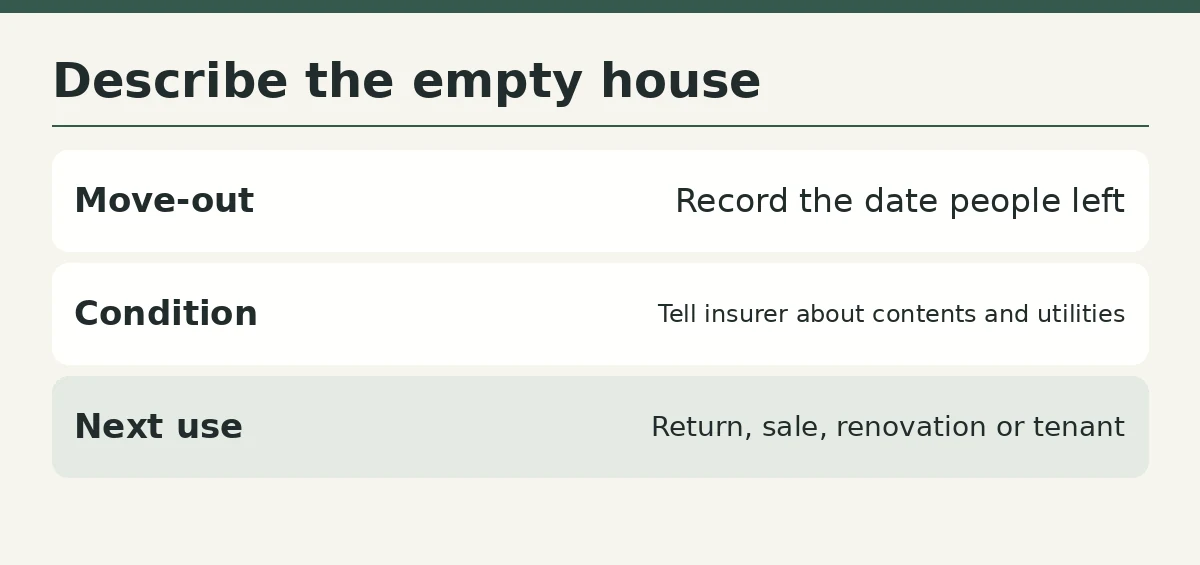
Tell the insurer when residents left, whether the home is furnished, and when you expect the sale, renovation, or next tenant. Policies can define vacant and unoccupied differently. Ask if the carrier offers a vacancy endorsement or a separate policy, which causes of loss are covered, and when the new terms would apply.
Vacant versus unoccupied home insurance in Warwick
Tell the carrier whether the furniture is removed, utilities are on, repairs are underway, or anyone sleeps at the property. Ask how it classifies a furnished house temporarily without residents and an unfurnished house awaiting sale. If the home is a rental, describe when the old tenant leaves and how long a new lease could take. Use the Warwick landlord insurance guide to review rental exposure before and after an empty period.
Get the effective date of any change in writing. Ask how long the insurer can continue the current form, what it requires from the owner, and how an extension can be obtained. If the carrier offers a vacancy endorsement, confirm whether it changes certain causes of loss or replaces the policy with different terms. Write down whom to call if the return or closing date slips.
Price a vacant dwelling policy through the next occupancy date
Tell each insurer when the home was last occupied and when it will next be used. Compare policy length, inspections, and any conditions during that period. Ask whether coverage changes when someone moves in or the house is sold. If the property is between leases, use the landlord coverage quote guide to compare the policy needed once it is occupied.
Compare vacant home insurance for water damage and vandalism
Ask about fire, water damage, theft, vandalism, and glass breakage. A particular form can exclude or restrict losses after a specified vacancy period. Read the definition and the provision that lists the causes to which it applies. Ask how the insurer would treat damage from a pipe break on the date you anticipate the home being empty. If water backup matters, compare the wording with the Warwick water backup guide and check whether an endorsement survives the occupancy change.
Check settlement terms and deductibles on a replacement option. If it pays actual cash value rather than replacement cost, the premium may not tell you how much more you would pay after a covered loss. Ask what claims are affected and whether another policy can match the terms you were carrying. A lender may still require proof of a certain dollar limit even if the house is being marketed.
Check the vacancy period and property inspection requirements
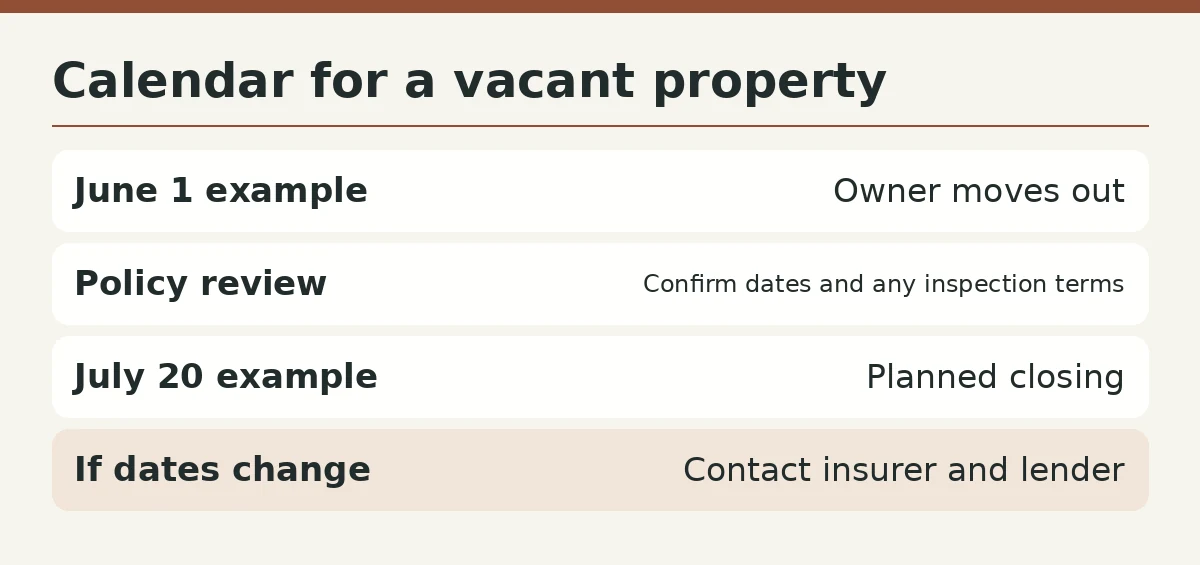
Suppose you move out on June 1 and plan to close on July 20. If the insurer tells you a condition changes after a certain number of days, calculate the date together and record what happens if closing moves. Count from the date the carrier confirms, using the condition in the actual contract. Request a written response. Ask whether your records need to show utility status, who visits, or work done by a property manager.
If the policy requires checks, ask what they should document and how often they must occur. Give your contact or manager instructions for reporting a problem. Keep a dated record if you need to show the insurer what happened. A log helps identify when damage appeared and who saw it; it does not change a policy exclusion on its own. Ask before relying on a visit schedule as proof of occupancy.
Tell your lender and check planned work
Confirm the lender’s proof requirements if you still have a mortgage. Provide the actual policy or endorsement and dates. If the house undergoes major work while empty, discuss both conditions with the insurer. Ask about protection for the existing structure and construction materials. The Warwick renovation insurance guide explains how the two policies may need to coordinate.
When a buyer takes ownership or a tenant moves in, notify the insurer and verify when the old or vacant policy should end. Keep the updated declarations and proof accepted by the lender. If a cancellation or nonrenewal notice arrives while you plan the transition, use the Rhode Island nonrenewal checklist to confirm the date and options.
Compare two different empty-home timelines
An owner leaves a furnished home for six weeks of travel and plans to return. Another removes furniture before listing a house and will never move back in. Tell the insurer which facts apply and ask how its form classifies each situation. Find out when it counts the first day and whether the condition applies to all losses or only certain causes. Avoid using a universal number of days. A vacancy limit from someone else’s policy does not establish the wording that applies to your property.
If a sale is scheduled but no one has moved in, ask whether a vacant-home policy or endorsement can be issued through the closing date. Confirm its term and ask how an extension would work if closing moves. If it has a longer minimum term than you need, ask about cancellation and any return premium. Ask the mortgage company which evidence it will accept until the sale is complete. Keep the buyer’s and seller’s insurance arrangements separate.
Give the insurer facts it can use to compare the options
List whether the home is heated, has working water, is occupied overnight, or is undergoing work. Explain when someone last lived there and which rooms still have furnishings. If a property manager checks it, provide the dates and ask whether the policy has further requirements. If you expect a tenant to move in, give the carrier the lease date and ask which policy should start once the arrangement changes.
Compare two options by a specific loss, such as vandalism or water escaping from a pipe. Ask if the event is covered, what terms would apply, and which deductible or valuation method is used. Suppose one quote keeps replacement cost but excludes the water event you are concerned about; the other offers water coverage subject to a lower limit and a large deductible. Ask each company to describe exactly what would be considered. A lower quoted premium cannot identify which risk stayed with you.
Coordinate checks with the people who can respond
If an inspection condition applies, write down how often someone must visit, what to document, and to whom a problem should be reported. Ask the carrier how to handle a changed visit schedule. Keep records that show the condition of the home on each visit. A dated photo or meter observation may help establish when something changed. Check safety from outside first if conditions are uncertain and let qualified professionals address any hazards.
If a calendar date moves, contact the insurer early. A manager might know an updated sale date while the policy still uses the original one. Tell the lender when replacing insurance and keep its acceptance with the documents. After a tenant moves in or you return, ask the insurer when the ordinary occupancy terms take effect. Check the first declarations and bill after the transition.
Compare vacancy, sale and renovation on one timeline
Imagine an owner moved the furniture out on June 1, the house is listed for sale, and a contractor starts small repairs on June 12. The inspection is scheduled for early July and a buyer might postpone closing. Give the insurer the planned dates and the facts about who stays in the house, what utilities remain active, and which work gets done. Ask which event it will use to mark the beginning of a different coverage term. A scheduled listing or a property visit may not match the date the contract uses.
Ask whether one insurer will address the entire period, or whether it expects an endorsement or separate policy. Find out who will send proof to the lender and what happens if closing moves beyond the authorized term. Keep the written conditions accessible. If someone moves into the property temporarily, ask how it changes the situation; do not assume moving a piece of furniture back is enough to establish occupancy. Obtain the carrier’s response to the actual facts.
Map two possible losses to the available protection
A ruptured pipe and a broken window can require different questions. For each, ask which policy would evaluate it, whether the time the house was empty matters, and how the deductible and valuation apply. Check other causes such as vandalism or theft if they matter. If a quote limits what it will pay for damage to contents, list only the items you actually expect to keep on the property. If you need separate flood insurance, review its own occupancy, terms, and effective dates rather than assuming the replacement coverage includes it.
Consider whether an insurance option would reimburse normal repair cost, account for depreciation, or impose a separate cap. Ask for the written language. Suppose an illustrative quote has a $2,500 property deductible and a qualified $7,000 repair. The arithmetic would leave up to $4,500 before other adjustments, only if the loss is covered at that point. On a vacancy form, the first question is whether the event qualifies. Getting a higher limit does not solve a specific exclusion.
Ask the person checking the house for documented observations
If a friend or manager visits, tell them what information the insurer asks for and how to report a concern. Save the date, observations, and any photographs they can safely obtain. If the water or heat status changes, tell the insurer if required. Keep relevant service records and any contracts for managing the house. Separate the steps the carrier requires from additional practical maintenance you decide to arrange.
A notice of damage should include when it was first observed, who found it, and the condition of the property. Ask which emergency actions the insurer wants documented before beginning ordinary repairs. If a sale is pending, keep its legal and payment steps separate from the claim. Coordinate notices with the carrier and lender as needed rather than assuming a closing will resolve an insurance question.
Switch from vacant property insurance after move-in
Ask when the vacant-home coverage should end and which replacement policy begins. If you become a landlord, send the carrier the lease date and occupancy details. If you return, tell it when the property becomes your residence again. Review the revised declarations and mortgagee information. A change in occupancy can mean the insurer will issue a different form with a new effective time. Keep the past record if you later need to know which form applied while the house was empty.
Ask how to handle a house inherited by several people
Tell the carrier the owner has changed or the estate is controlling the property, as applicable. Ask who may request proof or purchase coverage and which named insured information it needs. If siblings plan to visit periodically, describe those facts without calling the property occupied unless the insurer confirms that classification. Ask who will keep utilities and inspections current. Review the lender’s instructions if there is outstanding debt. Save all insurance responses and ownership records together because a quote based on the former owner may need to be revised. For a long probate or sale period, ask what the available term is and when another review becomes necessary.
If a property manager is asked to handle a last-minute change, confirm how it will contact you and the insurer. Keep their authorization, the current policy, and a copy of all notices. Ask whether proof of keeping heat or other services on is needed for a particular loss, and what the form requires before you leave the property.
Before buying a quote for an empty house
Ask for the date the vacancy terms begin. Give the carrier the last occupied day, utility status, expected return, and whether work is underway. Ask what happens if the closing or move-in date shifts.
Model a loss you care about. Ask about a burst pipe, vandalism, or a broken window with the same timing on both quotes. Compare covered causes, deductibles, replacement cost terms, and any condition about inspections.
Check acceptance and end dates. Ask the lender what proof it will accept. Get the policy term and extension process in writing, and confirm what policy applies once the property is occupied.
If a sale is pending, ask the current insurer about the period before transfer and have the buyer confirm the date its coverage begins. The Warwick homeowners insurance closing guide explains when to request written proof for that purchase.
Sources consulted
Insurance Information Institute, vacant home insurance consumer guidance; National Association of Insurance Commissioners, Consumer Homeowners.