Compare teen driver car insurance quotes in Warwick, RI. Check when to add a learner, which car the teen drives, and eligible driver safety discounts.
Adding a teen to car insurance in Warwick starts with a call before the teen begins driving. Tell the carrier when the permit or license will take effect, who owns the cars, and which vehicles the teen will actually use. Ask when the company needs to list the teen and when a premium change would apply. If you compare insurers, use the same driver and vehicle information. Two quotes can differ substantially because one company assumed the teen would drive a different vehicle.
Ask about the permit and provisional license separately
Rhode Island uses a graduated licensing process for younger drivers. The Rhode Island DMV’s permit guidance says that applicants proceeding through its limited provisional process generally must document at least 50 hours of supervised driving, including 10 hours at night. Confirm the rules that apply to your teen’s age and permit directly with the DMV. A driver licensing rule and an insurer’s reporting requirement are different. Ask the insurer whether it wants the driver reported as soon as a permit is issued and what changes when the teen becomes licensed.
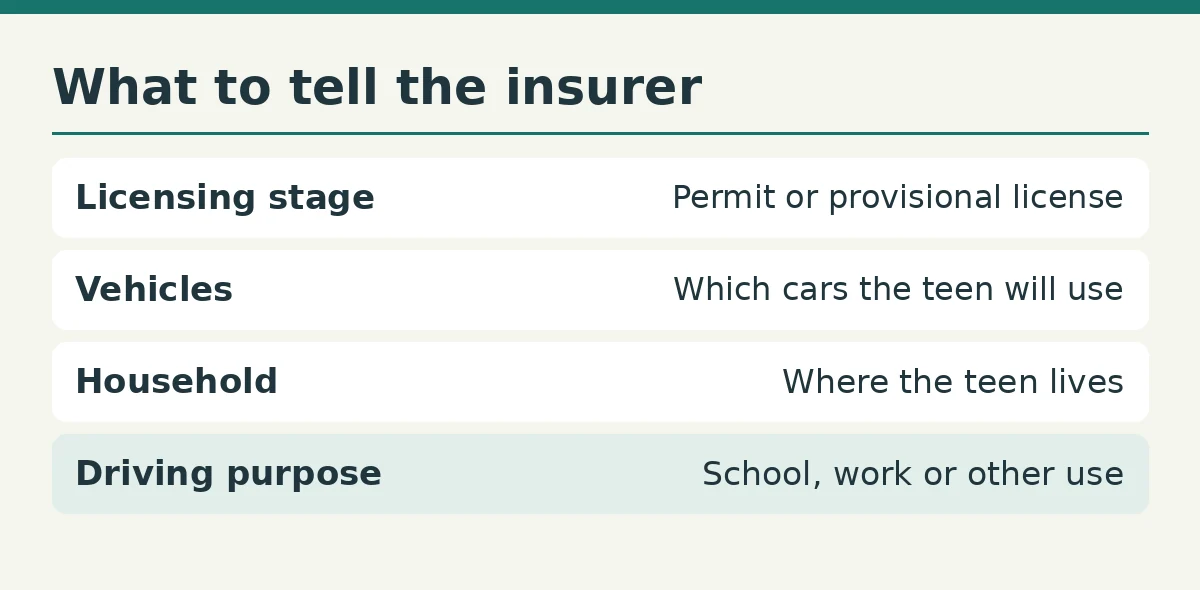
Explain whose car the teen will use for supervised practice and whether the household has more than one policy. If the teen divides time between homes, tell the insurers where the teen lives and which cars are available. Ask each carrier how it handles household membership and access to vehicles. Save any written response. Confirm the date coverage begins if the carrier issues a change to an existing policy.
Ask how vehicle assignment changes teen driver insurance rates
Ask for quotes under the actual car and driving arrangement your teen will use. If two cars are viable, have the agent price both versions without changing the household’s liability limits. Confirm any student or monitoring discount separately and ask what proof it requires. The telematics comparison explains questions to ask if one proposal includes driving monitoring.
Compare quotes with the same driver and car assignments
Request quotes for the same limits, deductibles, term, garaging address, annual mileage, and actual use. Tell each carrier whether the teen will use the car for school, work, or another purpose. A carrier may assign or rate drivers differently across vehicles, so ask how it calculated the quoted premium. Use the Warwick car insurance quote comparison guide to keep each version of the quote and track any changes.
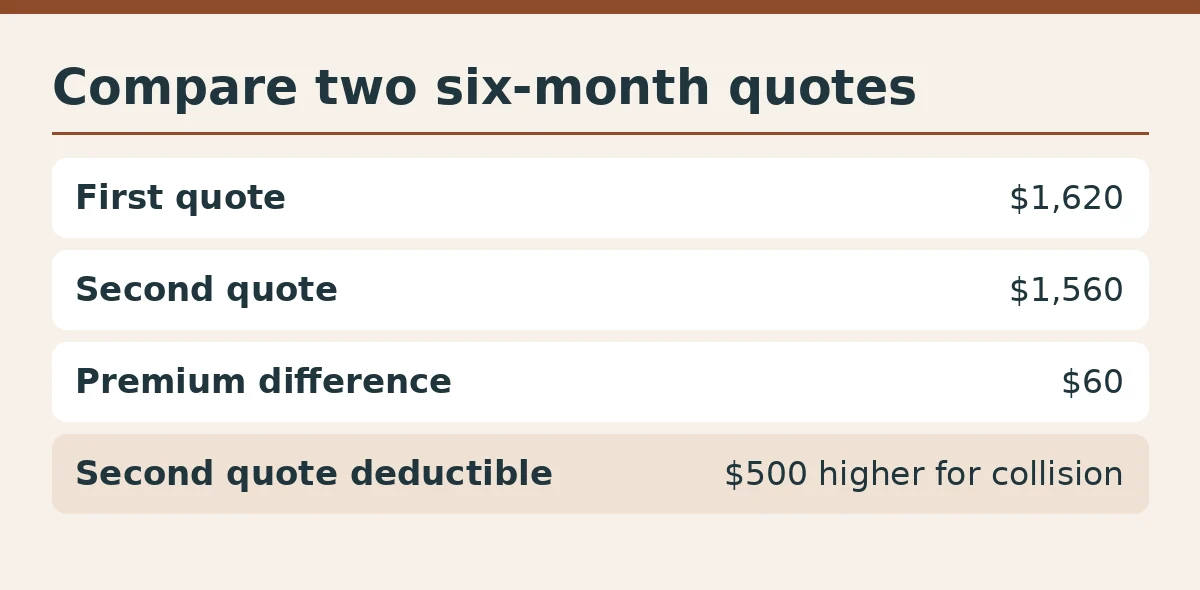
Suppose your current premium is $1,100 for six months. One insurer quotes $1,620 for the same period after the teen is added, while another quotes $1,560 with a collision deductible that is $500 higher. The second quote is $60 lower as written, but would leave up to $500 more of a qualifying collision claim with your household. Ask both insurers to rerun the quote using the same deductible and the same drivers. Then check whether the premium includes a temporary credit.
Check available discounts and the evidence required
Ask about a good student discount, approved driver education, or a discount for a student who lives away from home and has limited access to the family car. Ask what records the carrier accepts and when it needs updated proof. If an insurer offers a driving monitoring program, find out whether every driver must enroll, what information it collects, and how the program can affect renewal pricing. Request a version of the quote without the program so you know its effect on the initial bill.
The site’s overview of Allstate discounts in Warwick can help you identify questions for one carrier. Ask the insurer to confirm actual eligibility and the discount on your own quote. Programs can vary by insurer, household, and policy.
Review the limits before choosing a premium
A teen driver can make it worth reviewing how much liability protection your household carries. Ask for a separate quote showing the cost of higher bodily injury and property damage limits. Check the uninsured and underinsured motorist selections as well. The Rhode Island car insurance requirements guide explains how per-person and per-accident limits differ. If you have an umbrella policy, notify the umbrella insurer and confirm what it requires from the underlying auto policy.
Review the car’s age, value, financing, and replacement cost to the household when choosing physical damage coverage. If the teen drives a car you rely on for work, ask whether you could pay the deductible and still manage temporary transportation. When financing is involved, verify the required coverages and maximum deductible before making changes.
Confirm the change in the issued policy
After the insurer processes the change, check the auto insurance declarations page for the correct drivers, vehicles, and effective date. Confirm that any discount you documented appears on the bill or ask how it was applied. If the teen later takes a car to college or starts driving for paid work, call the carrier again before assuming the original quote still describes the risk.
Keep a record of the first six months
Record the date your teen was reported to the insurer and the premium for the policy term after the change. Save the driver education or school documentation if you used it to request a discount. At the next renewal, ask whether the premium change reflects a new rate, a discount adjustment, a new driver classification, or a change in the vehicles. A baseline from the first term makes it easier to spot which part of the quote changed.
Compare a driver change with a vehicle change
If you are also buying a car for the teen, request two written prices. First add the teen to the household’s current vehicles. Then add the proposed car with the same driver assumptions. That shows how much of the difference comes from the new car. Obtain the VIN for the actual vehicle, because trim, model year, and equipment can affect the quote. If you have not bought the vehicle yet, ask how long the quote will remain available and which details the carrier still needs.
Check the premium and deductible for each car individually. A cheaper used vehicle can have a smaller potential insurance settlement but may still cost money to repair or replace. Ask what it would cost to insure the same vehicle with higher liability limits and without changing its physical damage deductible. A price comparison is easier to interpret when each request changes one choice at a time.
Write down what the insurer agreed to
Prepare a short record with the name of the person you spoke with, the policy number, and the dates the company gave you. If the insurer asks you to call back when the teen reaches another licensing stage, note what evidence it needs then. Review the policy again after the change appears on the bill. A payment amount alone cannot tell you whether the driver was added on the intended date.
Sources consulted: Rhode Island Division of Motor Vehicles, New License Permits; National Association of Insurance Commissioners, Consumer Auto.
Request comparable teen driver quotes before changing your policy
Give carriers the same licensing stage, vehicle assignment, use, address, and annual mileage. Match liability and collision deductibles and request confirmed discounts separately. If an insurer offers driver monitoring, compare the premium with and without the telematics program.