Compare windshield replacement insurance in Warwick, RI. Review glass deductibles, camera calibration, and which services a full glass option covers.
Start with the year, make, model, trim, and vehicle identification number. Two versions of the same SUV can use different glass because one has a head-up display and the other has a different forward-facing camera. With those details, request an itemized estimate from a repair shop and use the same estimate to test each insurance quote. A comparison based only on the price of the windshield can miss a substantial part of the bill.
Find which part of your auto insurance handles glass
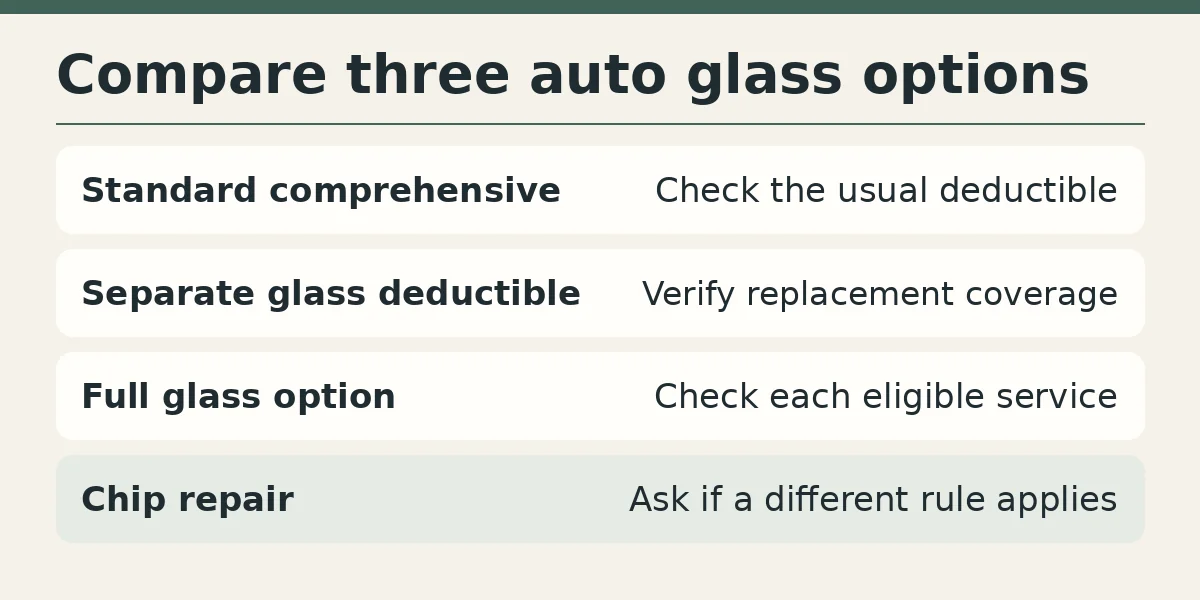
The Rhode Island Division of Insurance explains that comprehensive coverage may cover broken glass, including windshield damage. It also says comprehensive is optional by law. A lender or leasing company can separately require physical damage coverage. Check the declarations for the specific vehicle and read its comprehensive deductible and any glass endorsement. Some policies have a separate glass option, while others use the ordinary deductible or handle chip repair and replacement differently.
The cause of damage matters. A stone thrown up by another vehicle, vandalism, or a falling branch can present a different question from glass broken in a collision. Describe the event accurately when requesting a coverage determination. For a broader comparison of what each part of the policy handles, read collision and comprehensive car insurance in Warwick. Ask for the form number if a comprehensive auto insurance quote lists a separate glass endorsement.
Test a full glass coverage quote on your highest-cost windshield
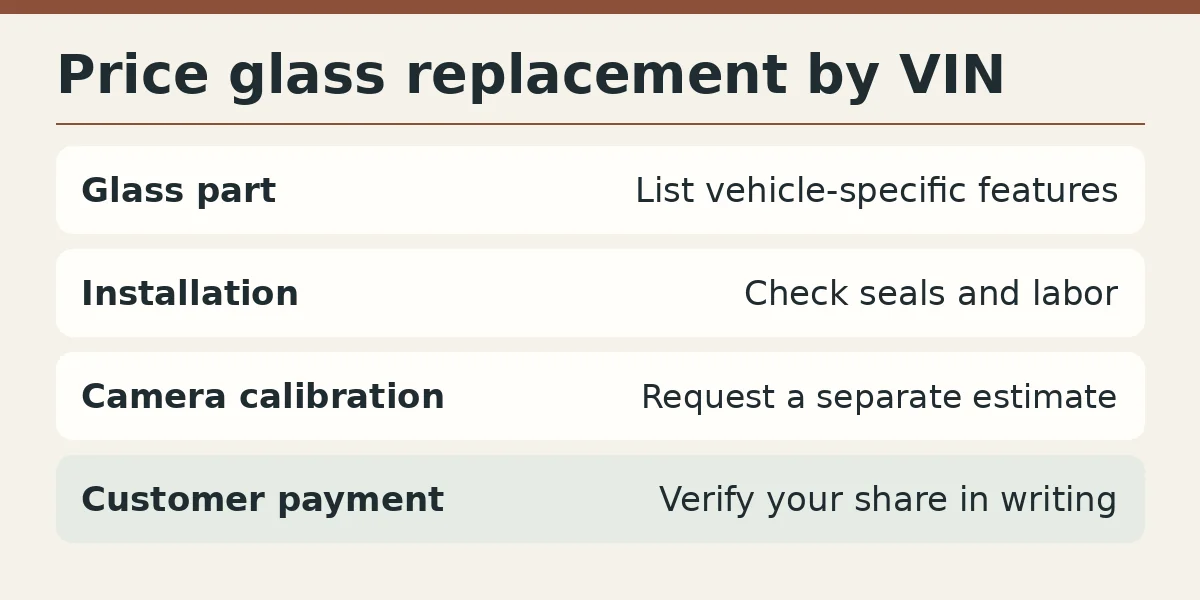
Request a shop estimate by VIN with the glass, installation, and required calibration itemized. Send the same estimate to each insurer and ask what would be eligible, which deductible applies, and what you could owe after approval. Keep the result alongside the premium difference. If the policy has a separate comprehensive deductible, see the Warwick guide to physical damage coverage.
Read the full glass option before comparing its premium
Ask what the insurer means by full glass coverage. Find out whether it applies to replacement, repair, or both and whether it includes side windows, rear glass, and a panoramic roof. Confirm whether the deductible applies to an entire glass claim or changes depending on which glass broke. If a quote lists a waived deductible, ask the company to identify the provision and provide the quote again with the coverage on the desired VIN.
Check how the insurer handles installation labor, molding, clips, disposal, taxes, mobile service, and calibration. Request an example of the calculation if the shop estimates more than the insurer approves. A zero deductible on eligible glass can still leave you responsible for an approved-rate difference or a part the policy treats separately. Ask the shop what you would owe if the insurer declines one invoice item.
Decide whether a chip can be repaired
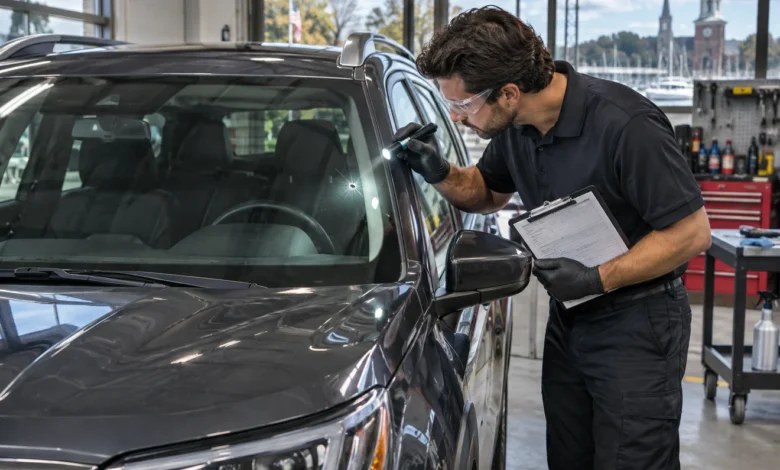
Ask a qualified glass technician to assess the damage, including its position, depth, and proximity to the edge or the driver’s view. Location can matter even when the chip looks small. If the damage obstructs your view or the vehicle displays a safety system warning, ask the shop about safe transport before driving. A repair may cost less than replacement and might qualify for different deductible treatment. Get both options in writing when the technician considers both appropriate.
Document the damaged area with a close image and an image showing the position on the vehicle. Note when you first noticed it, whether you can identify the cause, and whether work was already started. If you are changing carriers, accurately report any preexisting damage the application asks about. An endorsement you add after the windshield cracks is for future eligible losses under its terms.
Compare quotes with and without a glass deductible
Suppose a shop’s approved glass replacement estimate is $1,180. On a hypothetical comprehensive claim with a $500 deductible, the insurer could pay $680. A separate $100 glass deductible could bring the hypothetical payment to $1,080. If the glass option costs $48 more per year, the extra premiums total $144 over three years at that same rate. Facing one covered replacement during those years, you would have paid $256 less overall with the lower deductible. With no paid glass claims during the period, you would have paid $144 more. The assumptions are for comparison only. Ask for written numbers on your own insurer’s forms.
Calculate the same scenario with a low-cost repair. If the shop charges $125 and the policy uses a $500 deductible, the entire amount could be yours. A carrier that waives the deductible for an eligible chip repair might produce a very different result. Ask whether the quoted premium covers the full policy term, and whether one or all of the cars on the policy get the change. For the rest of the policy comparison, use this Warwick auto insurance quote worksheet.
Ask about the camera and sensors before agreeing to replace glass
Some vehicles have a forward camera behind the windshield or rely on sensors and components mounted nearby. Manufacturer instructions can require calibration or a confirmation procedure after glass replacement. The right process depends on the model and equipment. Ask the shop to look it up by VIN and tell you whether it performs the required work in house or sends it to another location. Request a separate estimate line for calibration and documentation of completion.
Ask the insurer to confirm whether the work is included in the approved estimate and, when needed, how the shop requests a supplement. Find out how the carrier treats glass options that support acoustic insulation, heat, a head-up display, or a specific camera mount. Ask the shop to list the part number and explain its fit and warranty. If it proposes original-equipment or alternative glass, compare the policy conditions, the vehicle specifications, and your potential share of the bill before authorizing the work.
Compare two shops using the same work order
Send both shops identical vehicle details and photos. Have each specify glass, installation parts, labor, calibration, time required, and warranty on both workmanship and parts. Ask how the shop will tell you about a change in price. If one offers a lower rate through mobile installation, ask which steps can be done there and where any follow-up will take place. If you need transportation in the meantime, see how rental reimbursement works in Rhode Island and ask whether this particular loss would qualify.
The Rhode Island Insurance Division has reminded carriers about consumer choice of auto body repair facility. If a claim representative recommends a shop, ask how selecting a different facility would affect payment, billing, or the approval process for your work. Get that answer in writing and ask the shop how it works with your carrier. Compare the guarantee the business offers and the price you may owe if the parties disagree about a procedure.
What to do before opening a windshield claim
Find the policy in force on the date of the damage. Confirm the vehicle ID, applicable deductible, current address, and how the carrier wants the damage reported. Ask whether it uses a separate glass claims team and how promptly you should provide photos or an inspection. If a shop offers to bill the insurer directly, find out whether signing the work order means you are also agreeing to pay an uncovered balance. If the damage is small, you can check your deductible and ask how to obtain an estimate before deciding how to proceed.
For a paid claim, record the claim number, approved parts and services, and the amount due from you. If the shop finds additional damage after removing the glass, ask who approves a supplement and when. Keep the invoice and warranty as well as the insurer’s payment statement. If an approved estimate excludes a service your shop says is required, compare both written explanations and use the Rhode Island auto claim dispute guide to organize your questions.
Review the declarations after adding a glass option
Find the vehicle line and confirm the effective date and any revised premium. A new display of the comprehensive deductible can be easy to confuse with the separate endorsement, especially if it appears only on a forms list. Ask the insurer to send the actual form. Use the Rhode Island auto declarations guide if you need help matching the vehicle, coverage code, and policy term.
Recheck any glass endorsement when you replace a car. Your next vehicle may have different options, a different windshield design, or a lender with different deductible requirements. Report the changed VIN and request a fresh comparison before pickup. Check whether the old car and new one have any overlap in coverage and ask which deductibles apply during the transition.
Questions to settle when price is almost the same
Ask which policy would reimburse a repaired chip on the driver’s side, which would pay for a later replacement, and whether the form defines eligible glass differently. Ask about a window broken during a theft and a windshield damaged in a crash. You are using each situation to reveal how the policy divides the claim and which deductible it references. If the carrier describes a term verbally, ask for a policy excerpt or a sample form so you can apply it accurately.
If one glass package costs just a few dollars more a month, calculate the change for the full term and for all eligible vehicles. Then check your savings set aside for repairs. A household that can absorb a $500 deductible might value a different coverage improvement. A household for which an unplanned $500 payment would disrupt essential bills can compare a lower deductible with its ability to self-fund that amount. Both should verify the coverage and the estimate before deciding.
Compare full glass coverage quotes when you insure several cars
A household with two cars can ask for three bids. Price the standard deductible on both vehicles, full glass on both, and a lower glass deductible only on the car with the more expensive windshield. Let the broker know which vehicle has the camera, heads-up display, or heated glass, and have it identify the coverage differences by VIN. A single package price needs a vehicle-level breakdown if one car has inexpensive parts and the other routinely produces a much higher glass estimate.
For an accurate auto glass insurance quote, keep bodily injury liability, collision, comprehensive, and all other endorsements constant while changing the glass option. Ask whether the glass deductible applies per claim and whether different vehicles need different endorsements. A comparison of full glass insurance cost can then show the incremental price for each vehicle. Ask whether a change would take effect midterm and how much the carrier would charge for the remainder of the term and for a full new term.
Evaluate the difference between dealer and independent shop estimates
An independent shop may include calibration and an applicable warranty in one quote. A dealership may list the two charges separately or refer the glass job to another facility. Ask each quote to show who performs the work, where the calibration happens, and what records you receive. Confirm that both estimates include applicable taxes and necessary supplies. If either provider needs the vehicle for more than a day, add the cost of transportation to your comparison.
Before picking the replacement deductible, ask the insurance company to show the amount the customer could owe if the preferred part or work falls outside its estimate. For example, if the carrier approved $900 of a $1,180 estimate, $280 would be outside that approval. Depending on the policy, any applicable deductible could be additional. Request the reason for the difference and an estimate of the final amount you may owe. Use that number with the annual premium to compare the quotes.
Prepare a one-page comparison before accepting a quote
Use one row for each company. Write the VIN, comprehensive deductible, separate glass deductible, repair rule, replacement rule, and yearly amount added by the option. Record the amount a shop estimates for a replacement that includes the services your vehicle actually needs. Calculate the amount you would pay for an approved chip repair and a replacement. Mark anything the insurer has yet to confirm, especially parts and calibration. Save the quote and a copy of the form with your other vehicle records.
At the next renewal, get the price both ways again if the premium changes. Check whether the company changed the deductible, revised the listed endorsement, or updated the vehicle record. Use the result to compare total coverage rather than a glass-only rate. The right comparison ends with two useful numbers written down clearly: what the protection costs for the term and what you could owe for an approved glass claim.
Sources consulted
Rhode Island Department of Business Regulation, Division of Insurance Consumer Auto Insurance Resources and Industry Alert 2025-02 on auto body repair facility choice. Vehicle manufacturer windshield and camera calibration technical guidance filed with NHTSA.