
Check Rhode Island car insurance requirements and 25/50/25 liability limits. Compare higher limits and get the proof you need before car registration.
Rhode Island’s standard split limits for auto liability insurance are $25,000 in bodily injury coverage per person, $50,000 in bodily injury coverage per accident, and $25,000 in property damage coverage per accident. On a quote, those figures usually appear as 25/50/25. State law also provides for a $75,000 combined single limit. A Warwick driver shopping for a new policy can use those figures to check the liability section before comparing premiums (Rhode Island General Laws § 31-47-2).
How Rhode Island’s 25/50/25 limits work
Imagine a crash you cause injures two people in another vehicle. Their covered bodily injury damages are $32,000 and $15,000, and damage to their vehicle is $19,000. Under 25/50/25, the first person’s injury claim reaches the $25,000 per-person ceiling even though the two injury claims together are below the $50,000 accident limit. The second person’s $15,000 and the $19,000 property claim sit within their respective limits. This simplified example leaves $7,000 in injury damages above the applicable limit. Actual payments depend on the facts and the policy.
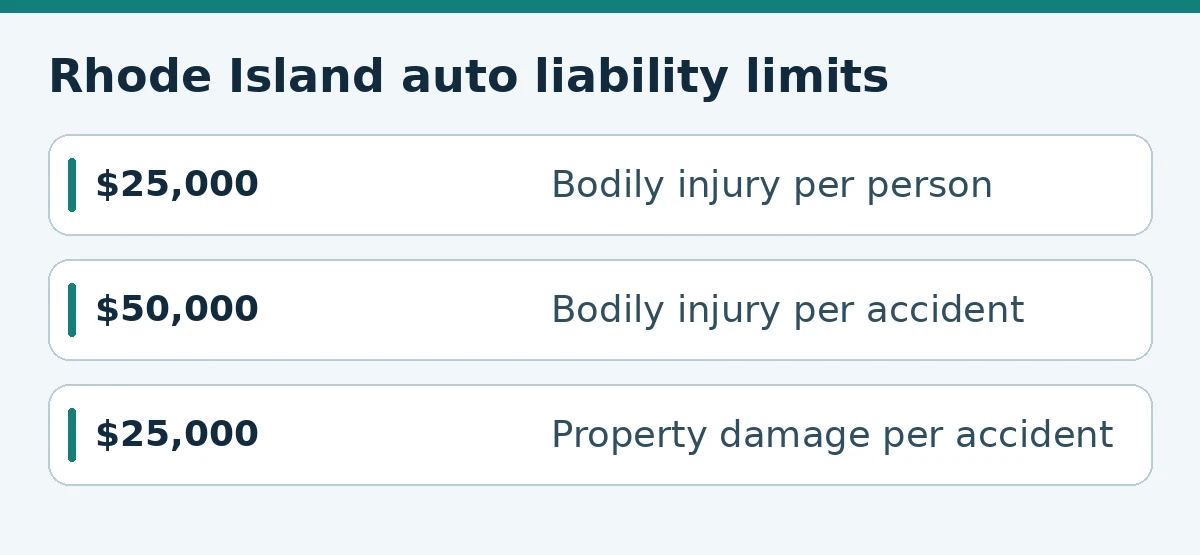
The three numbers are separate caps. A combined single limit instead gives covered bodily injury and property damage claims one shared pool for the accident. When a carrier offers both formats, ask it to put the terms in writing so you can see how the available dollars are divided.
Price Rhode Island liability insurance above the minimum
Ask each insurer for one quote that meets the required limits and another at the higher limits you are considering. Keep identical drivers, vehicles, and other protections. Get the cost difference in dollars for a full term and check the uninsured motorist selections separately. Use the Rhode Island UM and UIM guide to compare those options before accepting the quote.
Test the property damage limit against a multi-vehicle crash
The property damage figure in a split-limit quote applies per accident. It can have to cover several losses from a single crash. Suppose you rear-end a car stopped at a light and push it into a second car. The first vehicle has $18,000 in covered damage and the second has $16,000. A $25,000 property damage limit leaves $9,000 above the cap in this simplified example. That total also leaves out possible damage to things like a fence or storefront. Ask your agent what property losses your policy can cover and how a limit is applied when there are multiple claimants.
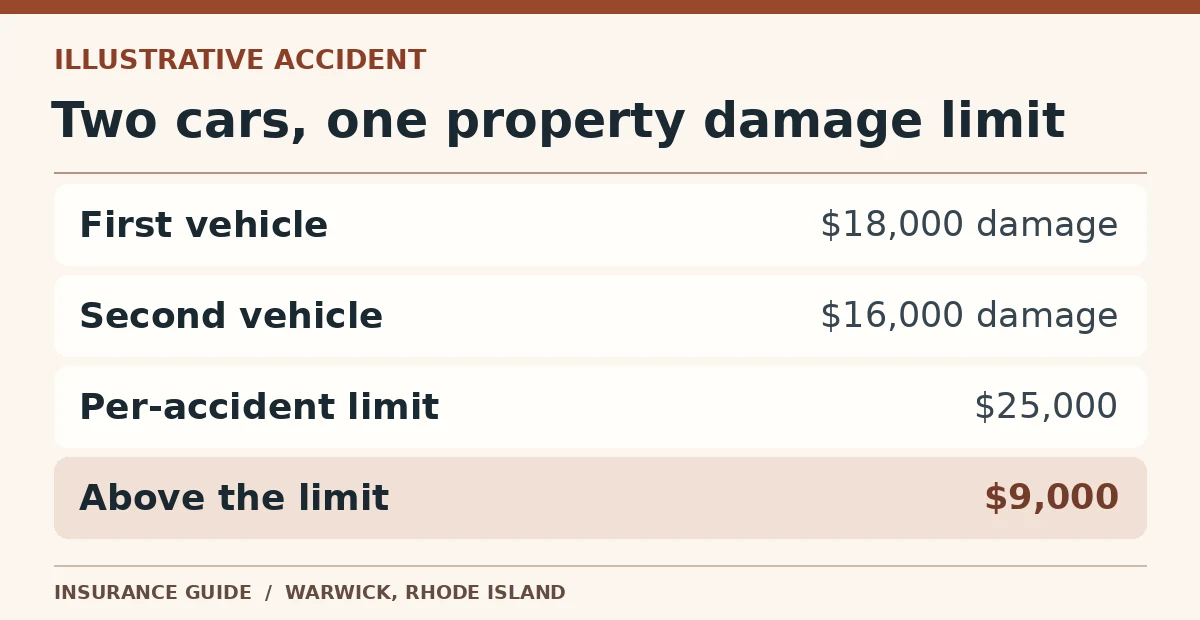
Request a second quote with a higher property damage limit while keeping the other coverage the same. Then ask the insurer to price a separate increase in the bodily injury limits. You’ll see what each change adds to the total premium. Write down the amount by policy term so a six-month price difference can be compared fairly with an annual one. If you want to compare with a combined single limit, have the insurer provide the actual figure and explain which claims would draw from it.
What to check beyond liability
Liability coverage applies to covered losses you cause to others. Look for separate lines for repairs to your own car, injuries involving an uninsured driver, and optional services. The choices can include:
- Collision coverage for qualifying crash damage to your car, subject to a deductible.
- Comprehensive coverage for certain non-collision losses, such as theft or hail, subject to the policy terms.
- Uninsured and underinsured motorist coverage with separate terms for injuries and vehicle damage. The Rhode Island uninsured motorist guide explains the elections that can change those lines.
- Rental reimbursement and roadside assistance, which have their own eligibility and limits if you add them.
If you finance or lease a car, read the agreement for required physical damage coverage and any maximum deductible. Those contract terms matter even when a quote already satisfies state liability requirements.
Check the vehicles, drivers, and uses on the quote
On a multi-car quote, verify that the correct VIN is attached to each coverage selection. An older car may have liability coverage while a financed car on the same policy has collision and comprehensive. Check the deductible for each vehicle individually and confirm that you understand which drivers the insurer has rated or listed. If a teen in your household has started driving, or a family member takes the vehicle to college, ask how the company wants that driver and location recorded. A change in the vehicle’s usual garaging address can matter even if the registration still shows the same mailing address.
Explain any delivery work, rideshare driving, or other business use before the policy starts. Ask whether the proposed coverage applies while you’re using the car for that purpose and whether you would need an endorsement or a different policy. If the answer is given by phone, ask where the relevant language appears in the quote or policy documents. See the Rhode Island Division of Insurance consumer resources for its auto insurance guide and state contacts.
Before accepting an offer, put your declarations page, registration, and any finance agreement side by side. Match the VIN and start date across the paperwork. Check the three liability limits and any separate selections for uninsured motorist coverage. If your lender needs proof of collision and comprehensive, send the document it accepts and save its confirmation. A short document check can catch a wrong vehicle or missing coverage while there’s still time to fix it.
Proof of coverage when you register or switch policies
Check the effective date, vehicle identification number, and name on the insurance card or declarations page against your registration. The Rhode Island DMV says newcomers generally have 30 days after moving to obtain a Rhode Island title and registration. It also says their insurer must be licensed to do business in the state. If you get a verification letter, follow its instructions and have proof available for the date the DMV identifies (Rhode Island DMV registration guidance and Insurance Verification Program).
When changing companies, confirm the replacement policy is in force before you cancel the old one. If you’re retiring a car and want to stop paying for it, check the DMV’s plate and registration cancellation instructions first. Liability coverage or other financial security must be maintained while the vehicle remains registered.
If you have an Allstate renewal in front of you, use it as one quote in the comparison. The site’s guide to factors that affect Allstate auto insurance rates in Warwick covers the premium side. Ask each insurer to quote the same liability limits so you can see the price difference without changing the protection you’re comparing.
Compare higher liability limits against the legal minimum
Ask for premiums at the required limit and at a higher limit for the same vehicle, drivers, and deductible. Confirm whether the quote uses split limits or a combined single limit. If you just arrived from another state, use the Rhode Island move and registration checklist to align proof and effective dates.