Compare homeowners insurance quotes before closing in Warwick, RI. Check your insurance binder, mortgagee clause, prepaid premium, and escrow deposit.
If you’re closing on a home with a mortgage in Warwick, your lender will typically need proof of homeowners insurance before it funds the loan. Start shopping once you know the address and can share the property details. Ask the lender for its insurance requirements and the deadline for proof. That gives you time to compare quotes, confirm the dwelling limit, and deal with a separate flood policy if required (CFPB guide to mortgage closing).
Give each insurer the same property information
Gather the square footage, construction type, approximate age of the roof, heating system, and any updates to the plumbing or electrical systems. Ask for a dwelling replacement cost estimate based on the cost to rebuild the structure. A purchase price includes land and location. If your purchase price is $460,000 and an insurer estimates rebuilding at $340,000, ask it to show the construction assumptions and tell the lender about the proposed limit. Different assumptions about the structure can change the estimate.
Review Coverage A, the standard deductible, any hurricane deductible, and roof settlement terms. Ask whether the policy pays replacement cost or actual cash value for roof damage and whether an endorsement changes that. Use the Warwick homeowners insurance deductible guide to check what a percentage deductible means in dollars. If the lender requires flood insurance, price it and verify the start date as a separate step (NAIC homeowners insurance guide). If you’re considering Allstate, its Warwick homeowners coverage guide lists coverage options to discuss with the agent.
Ask for a revised homeowners insurance quote if closing moves
Give the agent and lender the new date and ask for revised proof showing when coverage would take effect. Check whether a paid premium, escrow worksheet, or mortgagee clause must be corrected. Ask how a days-long delay would affect the existing binder and the payment due. If your lender also asks for a flood policy, use the Warwick flood insurance quote guide to confirm its effective date separately.
Use the inspection to check your insurance quote
If the inspection identifies older wiring, a roof nearing replacement, or an issue with a heating system, tell the insurer what the report says. Ask whether the information changes the quote, whether the company needs photos or other records, and whether any repair or inspection condition applies after the policy starts. If the seller says an update was completed, ask for the date and documentation you can share with the insurer. Get the insurer’s written response before relying on an earlier quote.
When two quotes estimate different rebuilding costs, check the inputs before comparing premiums. Review the finished area, number of stories, attached structures, and construction materials. If one estimate includes a finished addition and the other omits it, ask for an updated quote. Review endorsements for rebuilding expenses that may matter to the property, such as the costs of complying with updated building codes after a covered loss. Ask how any limit applies and whether it is included in the premium you’re comparing.
Send acceptable proof before closing day
Ask the lender whether it accepts a binder, declarations page, or another document from the insurer. A quote estimates price and terms. A binder or other accepted evidence documents coverage as specified. Confirm that the document uses the correct buyer names, property address, lender or mortgagee information, and effective date. If the closing moves, ask the insurer and lender to confirm the start date again.
Find the insurance charges on your Closing Disclosure
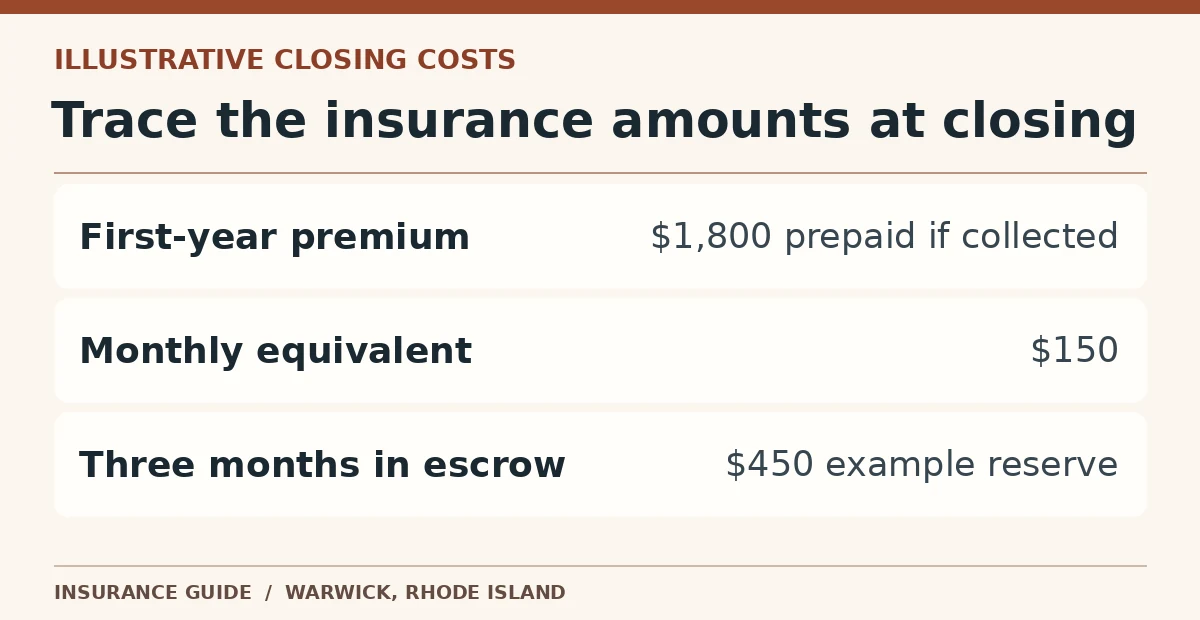
Review the homeowners insurance premium listed with prepaids and the initial escrow deposit if your loan has one. For example, a $1,800 annual premium is equivalent to $150 per month when divided by 12. You may see the first year’s premium paid at closing and a separate escrow deposit that funds future bills. Ask the lender which period each amount covers and whether you’ll pay the first premium directly or through closing (CFPB Closing Disclosure explainer and CFPB escrow guide).
Reconcile the insurance invoice with the closing numbers
Suppose the $1,800 first-year premium is being collected at closing. You might see it among the prepaids in Section F of a standard Closing Disclosure. If the initial escrow calculation in Section G includes an insurance reserve equal to three months of that premium, the reserve component would be $450 in this illustration. Ask your lender to identify the period that each charge covers and how any premium you paid before closing is reflected. The actual escrow deposit can include other items, such as property taxes (CFPB Closing Disclosure explainer).
Check the invoice from the insurer against the lender’s figures. If a revised policy changes the premium or you decide to pay it directly before closing, send the new invoice and any receipt to the lender or closing agent. Ask when the change will appear in the figures you receive. If flood insurance is required, ask the same questions for the flood policy and confirm which insurer will bill you or the servicer after closing.
Verify the policy again when the closing date changes
If closing moves, ask the insurer to confirm the effective date and check whether a revised binder or declarations page is needed. Then ask the lender to confirm it has accepted the updated proof. If your policy has an inspection requirement, check when the insurer will contact you and whether the new date affects the deadline. Save the final policy, proof of payment, and lender confirmation under the same address and closing date. That gives you a clear set of records if the insurer or mortgage servicer later asks for proof.
After closing, verify who is supposed to pay the next insurance bill. If your loan has escrow, check that the mortgage servicer has the correct policy and billing information. If you are paying the insurer directly, make a note of the due date and the payment plan you chose. If you receive a cancellation or nonpayment notice, contact both the insurer and the servicer promptly to confirm the payment status (CFPB guide to escrow accounts).
Before signing, check that the lender has accepted proof of every required policy and that the premium matches the coverage you selected. Keep the final quote, binder or policy, and Closing Disclosure together. If you haven’t checked the property’s flood zone, the Warwick flood insurance guide shows where to look up the address and what to ask about coverage dates. For a condo purchase, check the association’s master policy alongside your HO-6 condo insurance when gathering the lender’s documents.
What to compare in homeowners insurance quotes before closing
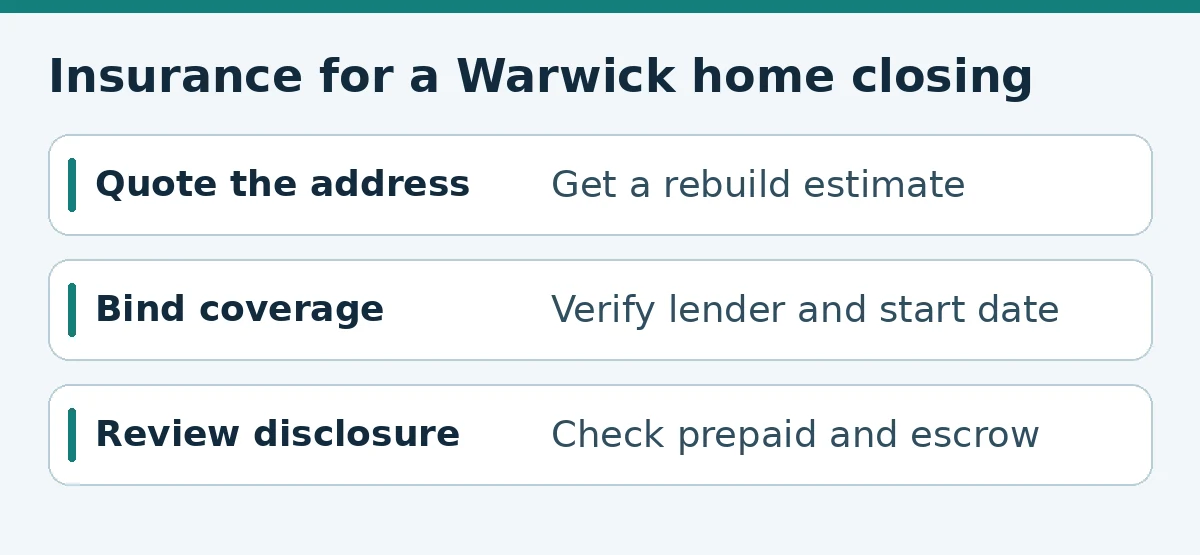
Tell the agent the closing date, property address, and lender’s insurance requirements. Compare the dwelling limit, hurricane deductible in dollars, and roof settlement basis. Have the lender check proof from the issuing carrier and identify prepaid premium versus the initial escrow deposit. If the dwelling estimate looks low, review the home replacement cost estimate before binding coverage.