Compare collision and comprehensive car insurance in Warwick, RI. Check covered vehicle damage, deductible options, premiums, and lender requirements.
Collision and comprehensive insurance can both help repair or replace your own car after a covered loss, but each responds to different causes and may have a different deductible. In Warwick, that distinction matters when comparing a quote for a daily driver with one for a financed car or an older second vehicle. Begin with what happened to the car in each scenario, then check how the policy defines the loss and what you would have to pay.
Which coverage usually applies?
Collision generally addresses covered damage from impact with another vehicle or an object, or from an overturn. If you back into a post or slide into a guardrail, look for the collision terms. Comprehensive, sometimes labeled other than collision, can apply to covered theft, vandalism, hail, falling objects, fire, or direct impact with an animal. In an animal-related incident, whether the car struck the animal or swerved and struck something else can matter. Give the insurer the exact facts and ask which coverage it would evaluate.
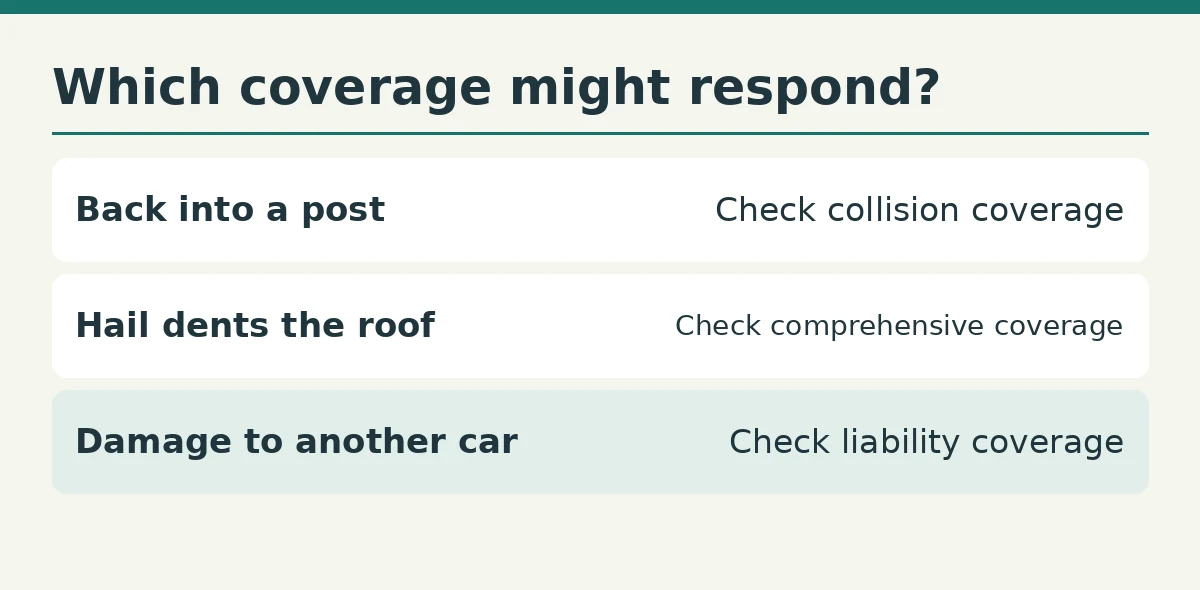
Liability is a separate coverage. When you are legally responsible for a crash, liability may pay covered injury or property damage claims by others, up to the applicable limit. It is useful to check the Rhode Island liability minimums alongside physical damage choices, particularly if you are removing collision on an older car. Dropping a physical damage option still leaves you with a decision about liability and uninsured motorist coverage.
Water also creates different questions for vehicles and homes. If rising water reaches a parked car, ask about your auto policy’s comprehensive terms. A separate homeowner or flood policy is a different contract with its own property definitions. If you are comparing multiple policies for the household, write down which one you would contact for each damaged item.
Break down a full coverage auto insurance quote by vehicle
Ask the carrier to identify the premium and deductible for collision and comprehensive separately, plus any optional glass or rental coverage. Price the same change on each vehicle using the full term. Then calculate what you would retain in a covered loss. If a camera-equipped windshield is a major concern, compare the glass deductible and calibration options independently.
Model the deductible on a repair you might file
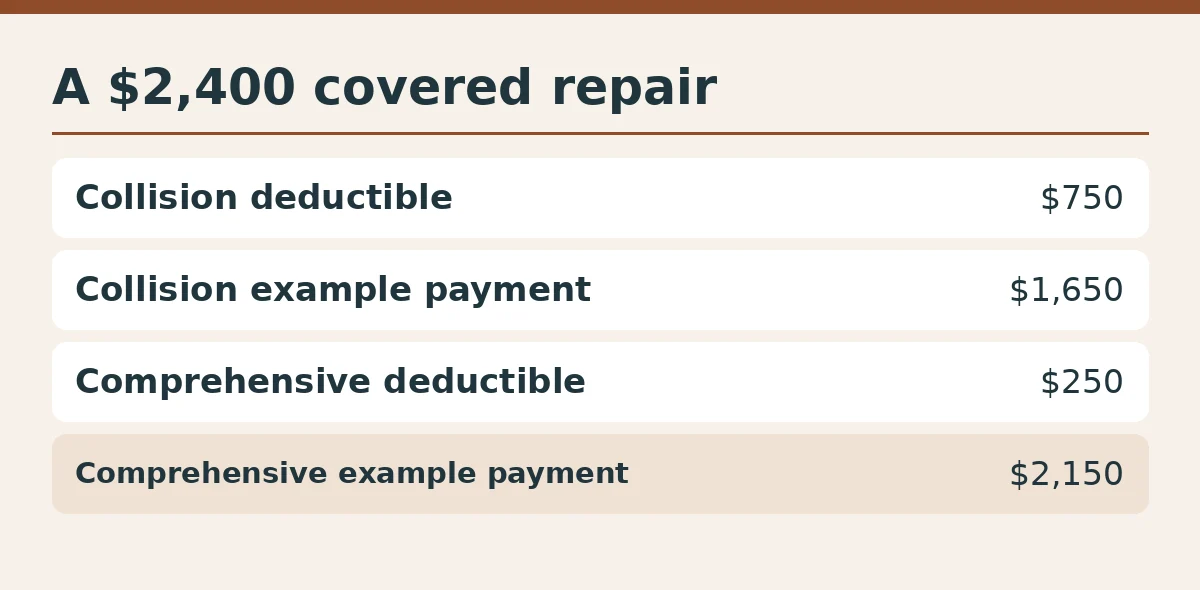
Imagine your carrier approves a $2,400 covered collision repair and you have a $750 deductible. With no other adjustments in this example, the insurer’s share is $1,650 and yours is $750. If a covered hail claim instead has a $250 comprehensive deductible, the same repair amount would leave an illustrative $2,150 insurer share. The lower deductible only helps under the coverage that applies to the cause of damage. Actual payments can depend on the estimate, coverage, and policy terms.
To compare options, get the annual or six-month premium for each deductible while keeping the remaining coverages fixed. If moving from $500 to $1,000 saves $85 per year, you’d take on up to $500 more of a qualifying claim. Think about whether you can pay that amount while covering the costs of getting to work. For a modest repair below the deductible, ask what the policy says about reporting a loss and whether there are other parties or potential claims involved.
Decide what makes sense on each vehicle
Start with a reasonable estimate of the car’s current value and whether you can afford to replace it. On an older car, a total loss payment may be modest after the deductible. However, the consequences of losing your only vehicle can be larger than the number on a settlement. An older car that you depend on for commuting can warrant a different choice from a second car you can do without. Ask the insurer to quote comprehensive and collision separately so you can see what each costs.
For a loan or lease, check the required insurance and the largest deductible the contract allows. Some agreements require both coverages, even if you would otherwise choose to self-insure a smaller loss. Confirm how the lender or lessor must be listed. The financed and leased car insurance guide shows which documents to gather before buying or replacing a vehicle.
Check related expenses before you sign
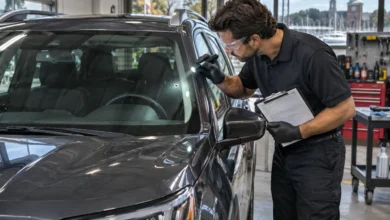
Ask about glass coverage and whether a special glass deductible or endorsement applies. Check whether the policy handles repairs and replacement differently and what it says about related work such as calibration of driver-assistance equipment. Get the answer for the actual vehicle. An option that looks useful on a quote for one car can work differently when you buy another.
Estimate what you would spend on transportation while the shop waits for parts. Check rental reimbursement by daily limit, maximum benefit, and qualifying loss. Roadside service is another line to check if you want help after a breakdown. Ask each carrier for a declarations page or quote summary showing optional coverage on the right vehicle.
When the revised policy arrives, check whether the selected deductibles and coverages were applied on the intended date. Keep both the quote and the issued documents. If your car is damaged, provide the insurer with a description of the event, photos if they were safely obtained, and the shop’s estimate. Ask which coverage the adjuster is using before you calculate what you may owe.
Questions to ask when the repair estimate changes
A shop may find more damage after it starts taking a car apart. Ask who sends the supplemental estimate to the insurer and how the insurer will confirm any additional approved work. If the revised estimate prompts a total loss review, ask how the carrier determined the vehicle’s value. Keep separate records for the estimate, insurance payment, any rental charges, and amounts the shop says you owe. That will make it easier to identify which question belongs with the carrier or the repair facility.
Price protection on a car that you own outright
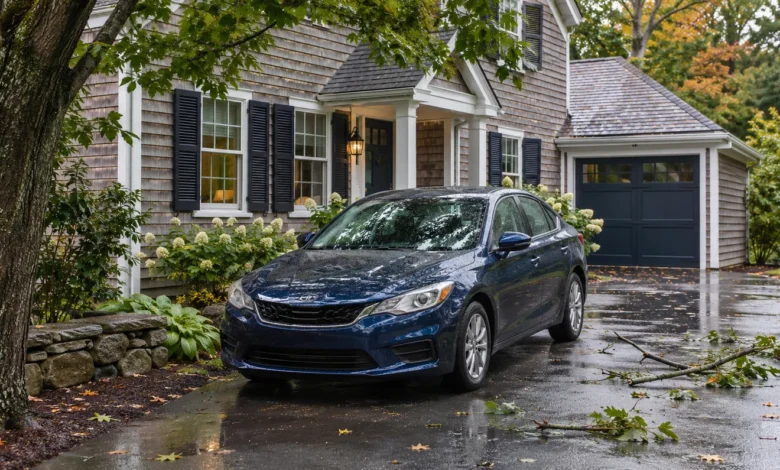
Suppose an older car is worth about $5,500 and the collision deductible is $1,000. A covered total loss under a policy that values the car at $5,500 would leave an illustrative payment of $4,500 before other adjustments. Ask how much collision adds to the policy and how you would replace the vehicle if you declined it. Then price comprehensive separately, since a theft or a tree branch hitting a parked vehicle can create a different need. Review that decision again if the value of the vehicle falls or it becomes the only car you can use for work.
Sources consulted: National Association of Insurance Commissioners, Consumer Auto and What Does Auto Insurance Cover?; Rhode Island Department of Business Regulation, Consumer’s Guide to Auto Insurance.
Compare two deductible options without changing the rest of the quote
Ask for separate collision and comprehensive premiums for each vehicle. Compare the additional deductible with the saving over a full term and check the lender’s limit if the car is financed. After payoff, follow the paid-off car insurance comparison to decide which protection to keep.