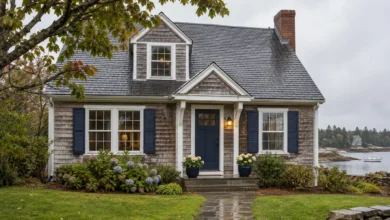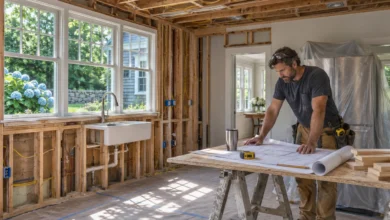
Compare ordinance or law coverage in Warwick, RI. Check what homeowners insurance can pay for demolition and new building code upgrades after a loss.
Ordinance or law coverage can help with certain costs caused by enforcement of a building code after a covered property loss. For a Warwick homeowner, the question arises when the cost of putting back what was damaged differs from the cost of making the work comply with current rules. Ask your insurer which building code expenses its policy addresses, what limit applies, and whether that limit is separate from the dwelling coverage.
Identify which work is required and why
Suppose a covered fire damages part of an older house. The contractor estimates the cost of repairing the damaged portion. A permit review may identify work required to bring the covered repair into compliance with a building code. Ask the contractor or local building official to identify the requirement and put it in writing. Obtain an estimate that separates repair work from work required by the code. That helps the insurer identify which policy provision it should review.
A code requirement can arise around construction, electrical work, or another part of the repair. Whether a specific cost is covered depends on what triggered it and the policy terms. Work you elect to do while the walls are open may be treated differently from required work. Ask the contractor to distinguish both on the written estimate and to identify any assumptions about the scope of the permit.
Ask for an ordinance or law quote using a written project estimate
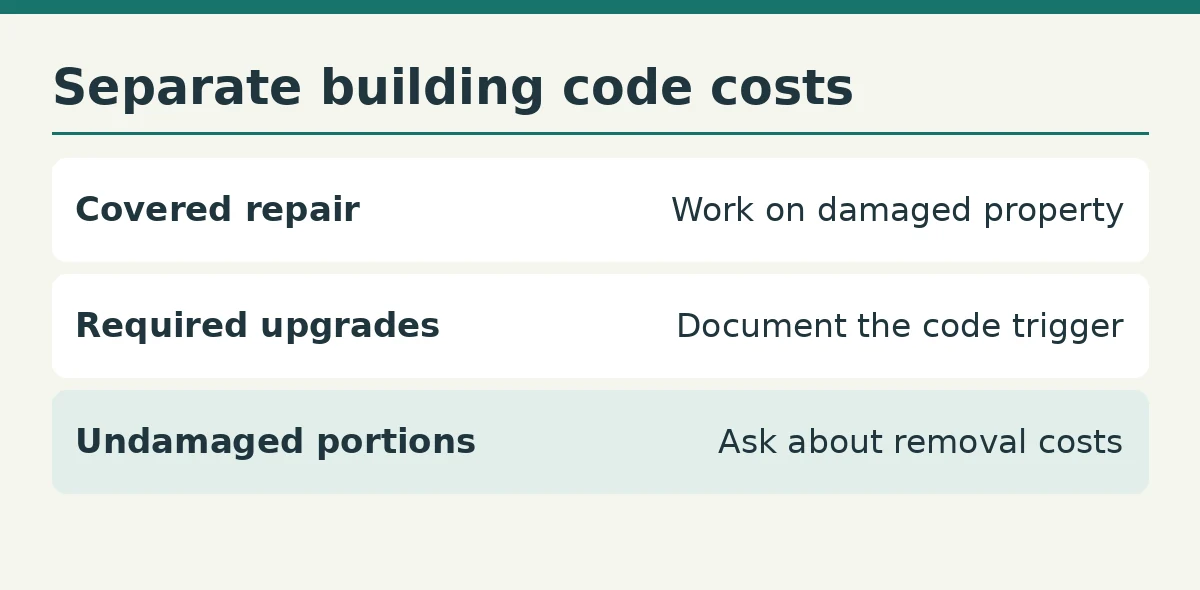
Separate the contractor’s ordinary repair scope from extra costs attributed to a written building-code requirement. Give carriers the same figures and ask how their ordinance or law endorsement allocates costs to the damaged area, any undamaged area, and demolition. Compare the resulting limits and added premium. If you are also arranging major work, use the Warwick builders risk comparison for the separate construction exposure.
Look for three types of cost
An ordinance or law form may address increased construction costs, demolition of undamaged portions, and loss in value of undamaged parts that must be removed. The terms can vary. Ask the insurer to show which categories the policy includes and whether they share a limit. Check whether removal and disposal are covered expenses under the applicable form. If a repair affects a detached structure, confirm whether the endorsement applies to that structure.
The Warwick homeowners declarations guide shows how to find forms and coverage limits. The declarations may list an endorsement number without explaining the covered costs. Ask for the full form as issued and keep a copy. If you bought the home recently, compare the policy with any renovation or inspection details you provided during the quote process.
Test the limit on a simplified estimate
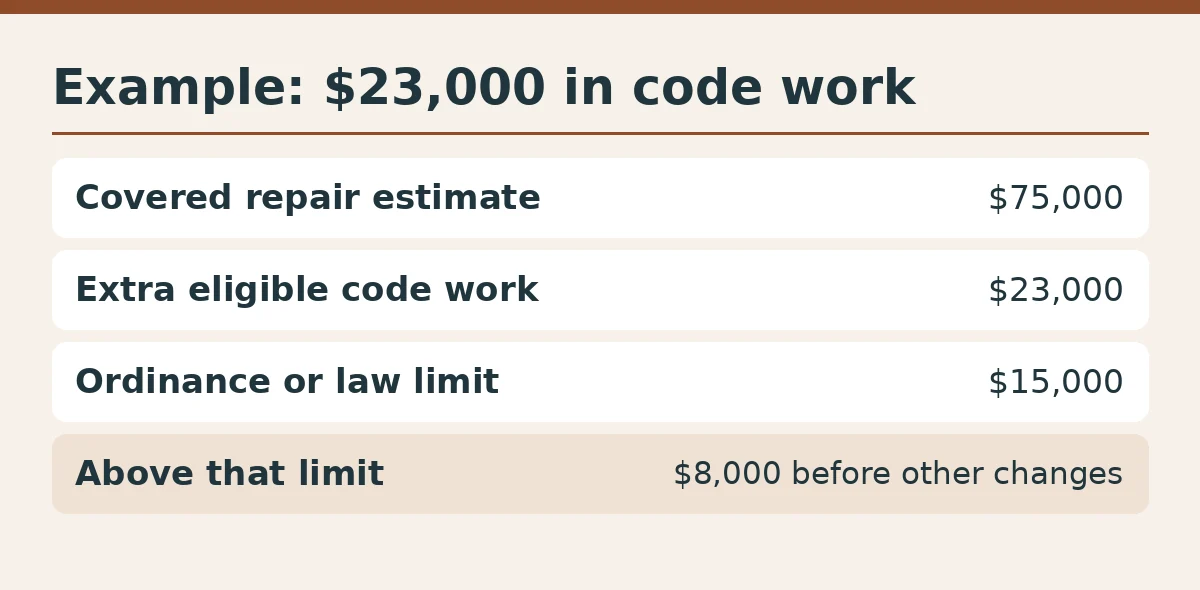
Imagine a contractor estimates $75,000 to repair covered damage and identifies an additional $23,000 of work required by the building code. An ordinance or law limit of $15,000 leaves $8,000 above that limit if all of the extra costs would otherwise qualify and there are no other adjustments. This example separates the $75,000 repair estimate from the $23,000 upgrade estimate. A deductible, another coverage limit, or an exclusion can change the actual result.
If the quote expresses coverage as a percentage, find out what the percentage is based on. For a $350,000 dwelling limit, a separate 10% amount would be $35,000 if the form defines it that way. Ask whether that amount is additional insurance, part of the dwelling limit, or subject to a different cap. Compare two quotes using both the dollars and the categories of work each one addresses.
Read the rules on the undamaged portion
A large loss can raise questions beyond the damaged room or wall. Ask what documentation the insurer needs if a local authority requires removal or alteration of undamaged portions. Confirm whether the form covers the value of the undamaged portion, demolition costs, or both. Ask what happens if you do not rebuild at the same location, and when the insurer pays any costs that must first be incurred. Do not use the example from a different policy as a substitute for the terms on your own.
If the loss involves the roof, check the settlement basis separately. A roof endorsement may use actual cash value or a payment schedule even when an ordinance or law endorsement is present. The Warwick roof settlement guide explains how to check that line. Ask the adjuster to separate depreciation, the applicable deductible, and any covered code-related expense on the estimate.
Prepare a paper trail for the insurer
Save the insurer’s estimate and the contractor’s estimate with dates and version numbers. Keep notices from the permit office and identify which requested work each notice refers to. If the insurer disagrees that the work is required or covered, ask whether it is questioning the scope, the applicable code, or an insurance provision. A clear written answer helps you supply the right documents and prevents repeated submissions of the same estimate.
If you are shopping for the first time, mention older renovations and any information you have about permits. Ask how the insurer estimates rebuilding costs and what allowance the quote makes for code upgrades. When you receive the final policy, record the endorsement limit and make a note to revisit it at renewal.
Review related costs while a claim is open
If code-related work delays your return to the home, ask how the policy evaluates the delay under loss-of-use coverage. Get a written estimate of the repair timeline and check the allowed period for temporary housing separately from the building payment. This lets you budget for both expenses while the insurer reviews the property claim.
Ask for a written example before you choose the limit
Give the agent an example that fits the house. If it is an older home with a finished addition, ask how the endorsement would handle a covered loss that requires work on both sections. Ask whether the quote assumes that any earlier renovation was permitted and whether existing violations affect coverage. Request the limit in dollars and save the form that describes how it is applied.
Compare that response with the cost of raising the limit. For instance, if the insurer offers a higher limit, find out whether the change also broadens any category of covered work or only increases available dollars. Get the price for the same dwelling limit and deductible so you can isolate the difference. A small price change may be easier to assess once you understand how much of a realistic estimate would fall into the endorsement’s categories.
Sources consulted: National Association of Insurance Commissioners, Consumer Homeowners and A Consumer’s Guide to Home Insurance; Rhode Island Department of Business Regulation, property and casualty insurance consumer resources; International Risk Management Institute, Building Ordinance Coverage.
Compare building code upgrade coverage on the same repair scope
Ask each insurer whether the quote addresses demolition, undamaged areas, and increased costs of construction. Record the percentage or dollar limit alongside the base dwelling coverage. Compare how the endorsement relates to the home replacement cost estimate so an upgrade allowance is not mistaken for the ordinary rebuilding amount.