Read your homeowners insurance declarations page in Warwick, RI. Check Coverage A, limits on personal property, deductibles, and listed endorsements.
A homeowners insurance declarations page summarizes what the insurer has issued for your Warwick property. Start by matching the insured address, policy period, and names. Then compare the dwelling limit, other structures, belongings, loss of use, liability, and deductibles. The declarations page is also a map to the policy forms and endorsements that can change how those lines work. If you are buying a home, keep it with the document the lender accepted as proof of insurance.
Match the property and the mortgage company
Make sure the address is the one you want to insure and that the named insured information reflects the ownership arrangement. If the property is held in a trust, rented out, or used as a seasonal home, describe that arrangement to the insurer and ask how it is recorded. Do the same after a remodel, a move, or a change in how you use the property. A policy for an owner-occupied house can have different terms from insurance for a rented house or a condo.
Find the mortgagee or lender information and compare it with the lender’s written instructions. If the loan has been transferred, ask whether the insurer needs a change. Get a revised copy if the insurer updates the mortgagee details. If you are preparing for a purchase, the Warwick closing insurance guide explains which documents to confirm with the lender and how to review the premium at closing.
Compare the endorsement numbers on homeowners insurance quotes
When you use the declarations to request a replacement quote, record the policy form and the version number of each endorsement you need. Ask the broker to mark any substitute form alongside the price. Check the dwelling amount and roof terms together. Use the roof replacement cost and actual cash value guide for questions to ask when the wording differs.
Read the property and liability limits separately
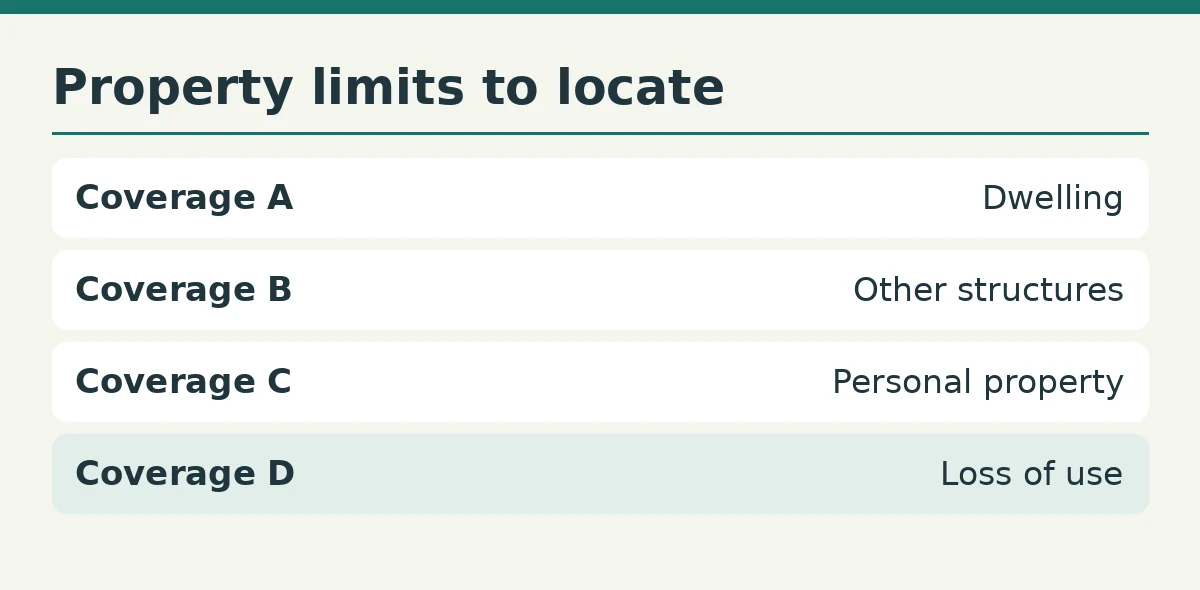
Coverage A is generally the dwelling. Ask how the insurer estimated the cost to rebuild the structure and what it assumed about the house. Coverage B often addresses eligible separate structures such as a detached garage. Coverage C generally addresses covered belongings. Coverage D commonly applies to loss of use, subject to the policy’s conditions and limits. Many policies also list personal liability and medical payments to others. Use the form actually issued to you when checking names or letter designations.
A $380,000 dwelling limit tells you little about what a detached garage or the contents of the house are insured for. Look at their own lines. Find out whether belongings are insured at replacement cost or actual cash value and whether particular categories have special limits. Use the Warwick home inventory checklist to see whether your personal property limit reflects what you own. If you have a condo, ask which parts of the unit are your responsibility under the declaration and master policy.
Translate deductibles and notice any changes at renewal
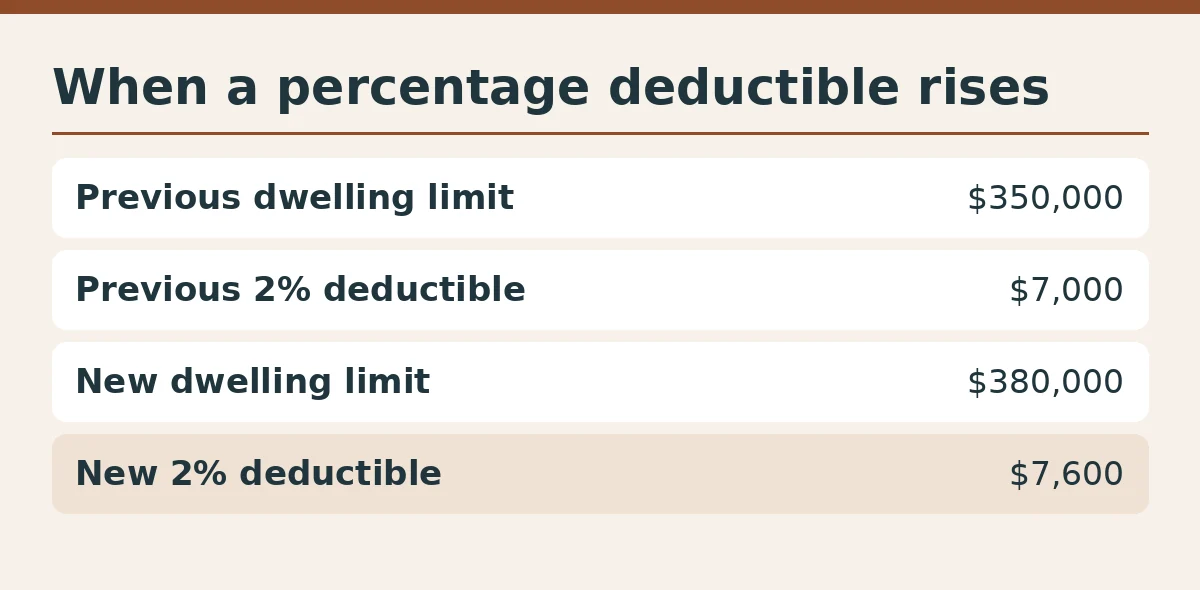
Find the standard property deductible and any separate hurricane deductible. If the latter is based on a percentage of Coverage A, translate it into dollars. On a $380,000 dwelling limit, 2% is $7,600. Ask when the deductible applies and read the hurricane notice if the insurer provides one. The Warwick homeowners deductible guide explains the Rhode Island trigger and how to compare the potential out-of-pocket cost.
Compare the renewal with the previous policy. An increase in the dwelling limit can increase a percentage deductible even if the percentage stays the same. For example, if Coverage A rises from $350,000 to $380,000, a 2% deductible rises from $7,000 to $7,600. Ask what changed in the dwelling estimate and whether any endorsements were added, removed, or revised. Use the current document rather than an old quote to decide what you could pay after a loss.
Open the endorsements named on the page
An endorsement can add coverage, narrow a settlement method, or apply a separate limit. Ask for the wording on roof settlement, water backup, ordinance or law, or other items that matter for the property. A roof endorsement may have terms that differ from the settlement method for the rest of the building. Check whether a water backup endorsement covers the basement or eligible property you have in mind and what dollar limit applies. Flood insurance generally requires its own policy or other separate coverage.
If the page lists a form number without a description, ask the insurer for the full form with the correct edition date. If you cannot find an option that appears on the quote, ask the carrier whether it was issued. Ask it to identify where that option is documented and to send an updated declarations page if a correction is required.
Compare the declarations with the bill
A declarations page may show a full-term premium. The bill may reflect an installment schedule, a midterm adjustment, or an escrow payment handled by the lender. Compare the effective date and billed policy period before comparing the numbers. If a premium jumps after a change, ask which part reflects a changed limit, which part reflects a revised rate, and when the new amount is due. Keep a copy of the written reply with the revised page.
Keep at least the current and previous versions in a place you can access after a loss. Record which forms apply and where to find a copy. When a claim occurs, start with the policy in force on the date of the event, then confirm the provisions the adjuster is using. That keeps your discussion tied to the correct documents.
Check the policy after a renovation or property purchase
If you finish a basement or add a detached structure, call the insurer with the date and a description of the work. Ask whether the dwelling or other structures estimate should change and whether that change affects any percentage deductible. If you added expensive furniture or equipment, check the contents limit and any special terms. Keep the estimates used before and after the change so you can identify how the policy was updated.
For a new purchase, check whether the issued document matches what you described during quoting. If you told the company the house has a newer roof or an updated heating system, confirm how those facts were recorded. Ask whether an inspection is pending and what will happen if it finds something that changes the terms. Save the policy separately from the listing and the seller’s documents so you can retrieve the carrier’s version easily.
Sources consulted: National Association of Insurance Commissioners, Consumer Homeowners and A Consumer’s Guide to Home Insurance; Rhode Island property insurance and weather claims regulation, 230-RICR-20-05-13.
Use the homeowners declarations page to compare renewal quotes
Match the insured address, mortgagee, Coverage A, deductibles, and the endorsement numbers. Ask which form changes roof settlement, backup protection, or additional living expenses. Check the Warwick replacement cost estimate guide if the insurer revised the dwelling amount.