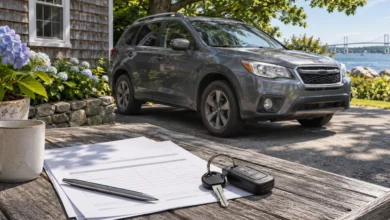
Get auto insurance quotes before moving to Rhode Island. Check your garaging address, policy start date, liability limits, and proof for registration.
The Rhode Island DMV generally gives new residents 30 days to obtain a Rhode Island title and registration. It requires liability insurance from an insurer licensed in the state. Start early if a bank holds the title or the vehicle is leased. Compare your Rhode Island car insurance quotes using the same limits, deductible, and effective date, and ask what paperwork is needed for each car.
Tell the insurer where the car will actually stay
Give your current carrier the date of the move and the address where the vehicle will normally be kept. A mailing address and the place where the car spends its nights can be different. Tell the company if the driver will work in another state, if the household is moving in stages, or if one car will stay with someone at the old address. Ask which policy it can issue and when it should begin. Confirm what it needs to verify the garaging location.
If the move has several dates, write them down. A moving truck leaving on Friday, a car arriving on Sunday, and a lease beginning on Monday can create different questions about when the risk changed. Tell the carrier the facts. Ask it to confirm the time the new insurance takes effect rather than relying on the quote date. Save the confirmation with the existing policy so you can see which company to call if damage occurs during the transition.
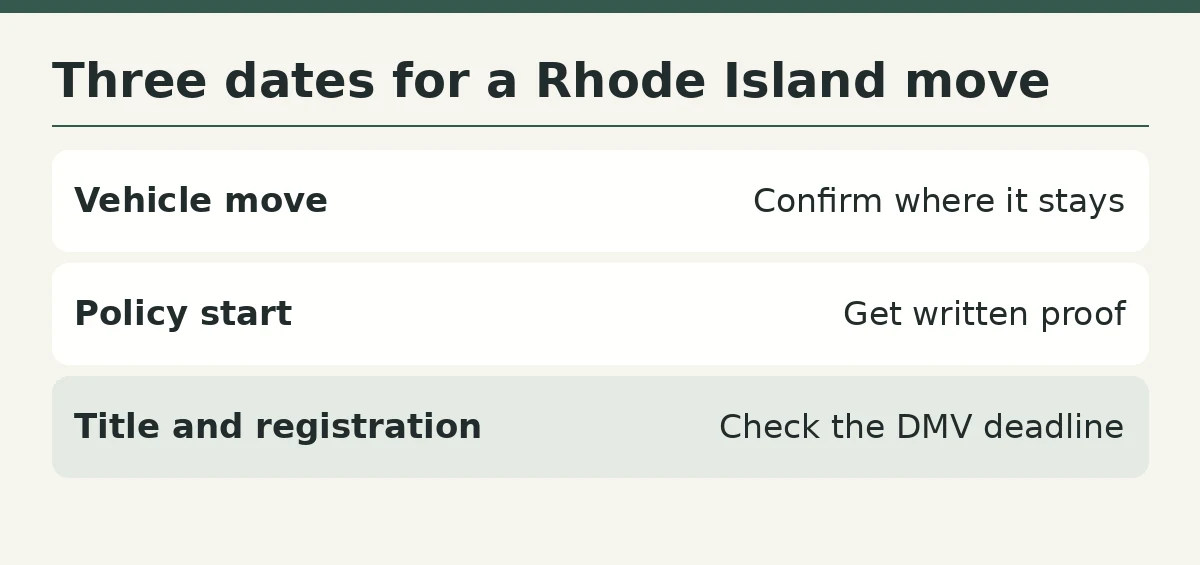
Ask for an auto insurance quote using your actual garaging dates
If the car will be kept at a temporary Rhode Island address, give the carrier the actual sequence rather than using the permanent address for the whole term. Confirm when new pricing and proof would apply. Ask the prior insurer when its protection ends and how it calculates any refund. Use the Rhode Island car insurance requirements guide to verify the relevant coverage selections.
Compare Rhode Island car insurance quotes for the new address
Compare state requirements and the company’s selections. A current policy from another state may use different liability or uninsured motorist limits. Ask each Rhode Island insurer to quote the same options and tell you what the default quote includes. The Rhode Island car insurance requirements guide explains the 25/50/25 figures. Check liability limits separately from collision and comprehensive and identify any written selection that is required.
If you finance a crossover and own a sedan outright, price them on the same quote but check each separately. The lender may require physical damage coverage and set a deductible maximum on the crossover. The sedan may have optional physical damage terms that you can keep or adjust. Follow the Warwick quote comparison process for the same driver, term, and payment arrangement. Ask what happens to any bundle with a home or renters policy if one of the policies moves first.
Get proof of insurance ready for Rhode Island title and registration
Review the DMV’s current checklist for an out-of-state transfer. Match the VIN and owner name across the insurance card, registration, and title paperwork. Ask whether a VIN inspection or additional proof applies to the specific vehicle. If a bank holds the title, ask when it can send the documentation and what the DMV accepts. A lessee should ask the leasing company which papers it will supply and how ownership should appear. Keep transaction reference numbers and delivery dates.
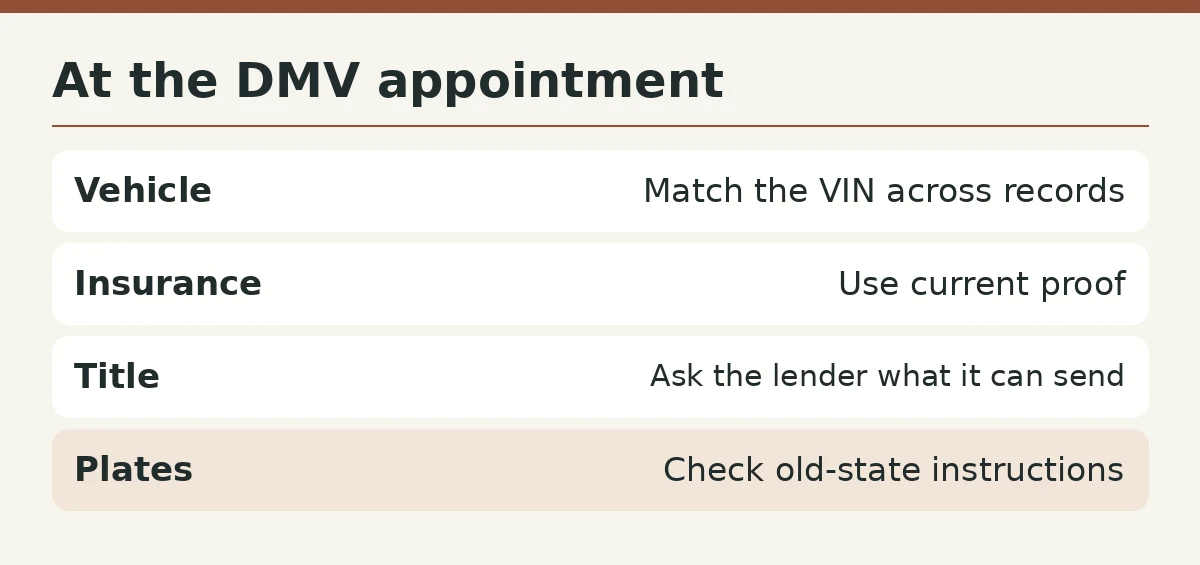
Set out the documents in the order you will use them. A quote shows proposed coverage. Proof of insurance shows the insurer and vehicle it covers on the applicable date. Lender or lessor authorization is a separate document. If the insurance card shows an abbreviated name or a different address, ask the carrier whether the DMV will need a correction. Obtain the revised document before the appointment if necessary.
Avoid a car insurance lapse when switching states
Once the new coverage is active, ask the old insurer how and when to cancel. Check the previous state’s plate and registration instructions first. States can have different rules for returning plates, ending registration, and removing insurance. Ask the old carrier whether it needs proof of the new coverage or registration. A canceled policy and a canceled registration are separate actions. Save every confirmation, particularly if you get a notice from the state afterward.
For example, suppose the new policy is effective on June 12, the registration appointment is June 15, and an old policy payment is scheduled June 14. Ask how the original carrier handles the payment and any refund, and ask the DMV in the old state what must happen with the plates. Do not use the billing date as the coverage end date. Have both insurers confirm the exact dates before relying on the change.
Review the issued document after the move
Open the Rhode Island auto declarations guide and compare your new policy with the accepted quote. Check drivers, lienholder, garaging, VIN, limits, deductibles, and term. Verify the first bill and make sure the registration includes the correct owner. If you bought renters insurance with the auto policy, review the apartment number and effective date on that contract separately. Ask which insurer will send proof if the state later checks coverage.
When another household member moves later, ask whether they need to be listed at the first date or added after the move. If a college student uses a car outside Rhode Island, ask how the insurer treats that situation. Update the record once the actual arrangement is settled. An annual review is easier if the original move paperwork shows the date and the information each insurer used.
A two-state move with two vehicles
Consider a couple moving to Warwick. One drives the family sedan from their former address on June 5. The other keeps the financed crossover there until June 22. Their apartment lease begins June 6, and the bank still holds the crossover’s title. Start with two lines on the timeline, one for each car. Record each car’s location, intended owner and usual driver, lender involvement, and target registration date. Give the insurer both lines. Ask whether the cars can move to the Rhode Island policy at different times or need another arrangement the carrier can issue. Ask how it would document coverage for each VIN on those dates.
The sedan owner plans to transfer registration first. Confirm whether it must be inspected and which documents the DMV will accept. For the financed crossover, ask the lender how quickly it can process the title transfer and send an acceptable document. Insurance can be ready before the title is. Keep the task for the lender separate so you can see which step remains outstanding. If a lender’s response might push you past a DMV deadline, contact the DMV for instructions rather than asking the carrier to interpret the registration rules.
Compare the insurance bill you will actually receive
Get a quote for the preserved liability, UM and physical damage choices, then compare the cost under the new address. Suppose the prior auto premium is $780 for six months. A Rhode Island quote shows $820 for the same term plus $15 in installment fees on your preferred plan. The new six-month cost is $835. Confirm whether any remaining premium from the previous carrier is refunded and how the bundle changes. If household rents or buys a home, keep those costs separate in the worksheet until both policies have been quoted.
Ask which price uses the correct status of both cars. If the $820 quote includes the sedan only for part of the term, request the cost after both cars are listed. A midterm bill can contain a prorated payment while the written declarations show the cost over the whole term. Ask for both numbers so the first post-move bank withdrawal is not the only number you use to compare carriers.
When someone will commute across the state line
A Warwick resident who travels routinely to Massachusetts or Connecticut should describe the regular commute. Confirm the carrier’s coverage territory and how it records annual mileage or business use. If a family member’s car normally remains in another state, tell the insurer that fact even if its bill comes to the new home. Ask what coverage and registration requirements the relevant DMV and carrier identify. Keep written instructions for both vehicles, and update the insurers when a temporary arrangement becomes permanent.
At a worksite or apartment with shared parking, verify what address the carrier wants to use. If the garaging ZIP on the declarations differs from what you supplied, request a correction. Save the quote, final documents, and the request. When the insurer changes the bill later, you can tell which information it used for the corrected price.
Ask whether the quote uses the same driver and territory
A move can change a premium without changing the actual coverage. Get a new price based on the correct address and compare it with versions that have the same drivers and limits. If the old carrier also operates in Rhode Island, ask whether it changes the policy it already has or issues a separate contract. Review both documents rather than assuming the same account means the same coverage. The APK guide to switching policies without a gap can help you compare exact effective times.
When comparing two quotes, ask each company what policy term it used and which discounts it carried forward. A six-month premium and a monthly installment can look different because of timing or fees. Ask the carrier to show each vehicle separately if one will need a lower lender-approved deductible. Take notes before the quote expires and request a corrected document if the company used an old address or did not list a driver whose access changed.
Keep proof accessible around the actual move
Plan to have the valid proof of coverage with the person who will drive each car. Save a digital copy you can reach if an insurer’s account page is unavailable. Ask the carrier for the form it needs if your address changes again before registration. Keep the VIN, registered name, and company details in the same place as the DMV checklist. If an agency handles the change for you, ask whom to contact for a corrected document and how quickly it can issue one.
When the move puts the car in a temporary location, state whether that is a storage site, parking garage, or a home with a driver. Ask which facts the insurer needs to update and whether there is an interim arrangement. Moving with a leased car may also require permission or a document from the lessor. Keep those requests and responses by date so you can distinguish an incomplete registration task from a problem starting insurance.
Questions people often miss during a state transfer
Can a current insurer simply keep the old policy? Ask whether the carrier can issue appropriate Rhode Island coverage and when it would do so. Give the actual location and dates. A carrier can be licensed in both states but still use different terms, coverage selections, or paperwork. Ask which documents the DMV can expect to see.
What if I own the car with someone who is not moving? Check the names on the title and get the DMV’s instructions for that ownership arrangement. Ask who needs to participate and what proof is required. Then ask the insurer how it lists the drivers and owner. Avoid using a quote as confirmation that a title transfer is complete.
Should I compare coverage before or after the registration appointment? Start early enough to verify the insurer’s paperwork and lender requirements before the appointment. Ask how long a quote is available and whether it can be revised if the move date changes. After registration, confirm the information on the insurance was updated if necessary. Store the final documents together.
Before accepting a Rhode Island auto quote
Match the moving dates and garaging ZIP code. Ask the insurer to show the insured address, VIN, and start time for each vehicle. If one car arrives later, ask how it is covered until the transfer.
Match the policy and the price. Compare the same bodily injury and property damage limits, uninsured motorist selections, and physical damage deductibles. Request the total due over the term, including any installment fees.
Match the paperwork to the registration. Give the DMV the proof it requests, confirm lender or lessor documents, and coordinate old-state plate instructions and cancellation with the existing carrier.
If Allstate is one of your options, use the Warwick Allstate car insurance quote checklist to compare the exact mileage, garaging address, and policy term. Ask for the first withdrawal and full-term premium before you cancel your old policy.
Sources consulted
Rhode Island Division of Motor Vehicles, Moving into RI from Out of State; Rhode Island Division of Business Regulation, auto insurance consumer guidance.