Compare landlord insurance quotes in Warwick, RI for dwelling coverage, landlord liability, and lost rent. Tell the insurer who occupies the property.
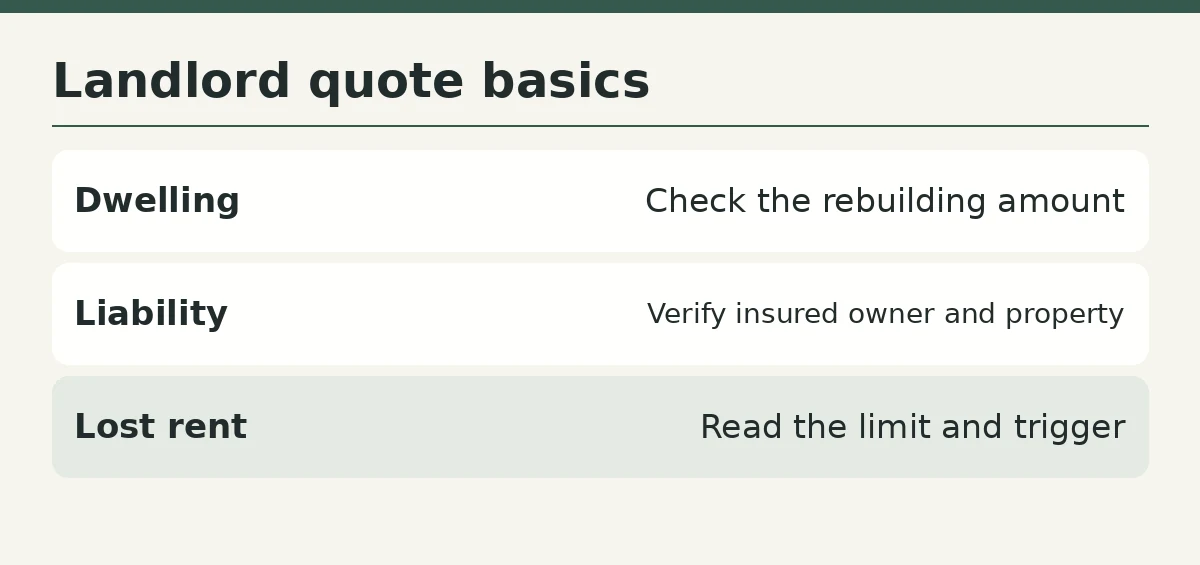
Give each insurer the same rental address, occupancy dates, and lease terms. A long-term tenant, an owner-occupied duplex, and a short-term rental can be priced under different arrangements. Check the building limit and deductible, what the policy pays after covered damage interrupts rent, and whether each owner or entity is insured.
Get landlord insurance quotes for the actual rental occupancy
Explain whether the property is a single-family rental, an owner-occupied duplex, or a home used for short stays. State how many units are rented and whether any are furnished. If the property is owned jointly or held through a business, ask how the policy should list the owner. Disclose any periods of vacancy or ongoing repairs. A lease term and the actual occupancy can both affect what a carrier offers. Check which policy type the insurer recommends for the intended use.
Ask how the property will be treated at the first and later dates. The owner might live in one unit before moving out, or a closing might occur weeks before a tenant arrives. Tell the carrier the dates and check whether coverage changes in between. Use the Warwick vacancy insurance guide for questions about the interim period. Obtain written confirmation of the effective date and type of occupancy.
Compare rental property insurance quotes at the same monthly rent
Give each insurer the actual rent and the same building limit, occupancy, and deductible. Ask what a documented covered loss could pay in lost rent, how the payment period ends, and whether tenant relocation is treated separately. If the property will stay empty before work or leasing, see the Warwick vacant home insurance comparison.
Separate dwelling, other structures and owned contents
Ask for the carrier’s rebuilding estimate and which features it includes. Review a garage, separate shed, attached porch, and equipment serving more than one unit. If you furnish a unit, make an inventory of what you own and keep it apart from the tenant’s belongings. Ask whether appliances or furniture are insured as building property or under a separate contents provision. Confirm any limit and the valuation basis.
The Warwick rebuild estimate guide shows what to compare when two carriers enter different details for the same house. Ask whether replacement cost or actual cash value applies to the building and roof. Then review any other deductible, such as a hurricane deductible for coverage subject to the applicable rule. A quote summary should identify the versions of the forms you will have to read.
How to compare lost rental income and fair rental value coverage
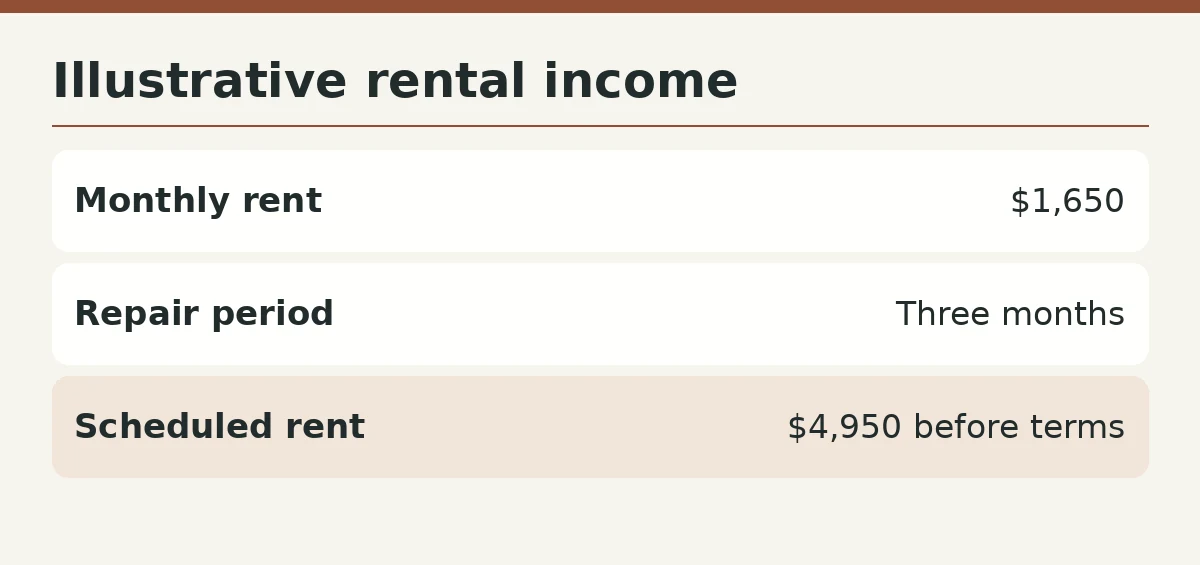
Suppose a unit rents for $1,650 a month and is unavailable for three months after a covered fire. That is $4,950 of scheduled rent. Ask how the insurer calculates eligible lost rental income or fair rental value, what expenses it subtracts, and when the benefit ends. Check the dollar and time limits on your quote. Unlike damage to the structure, this part of the claim may depend on the lease, payment records, and how long repairs should take. Loss of a tenant or a routine gap between leases is a different question.
Compare landlord liability insurance limits and defense terms
Ask about allegations involving injuries in common areas, equipment on the property, or a guest of a tenant. Find the liability limit and how defense is handled. If a property manager is involved, review who is insured by which contract and what proof each side requires. If you own several properties, list the addresses accurately. An umbrella may require underlying limits or separate listing for a rental. See the Rhode Island umbrella quote guide for the underlying-policy comparison.
Ask the carrier whether it has restrictions concerning pets, pools, certain work, or short stays. Disclose features and plans when you request the quote. Ask which owner activities are treated as business operations and which policy addresses them. Compare liability terms using the same property and owner rather than relying on the general insurance name.
Tell tenants what their own coverage would address
The landlord’s policy generally does not insure a tenant’s belongings. If the lease includes an insurance requirement, spell out what proof is needed and when. The Warwick renters insurance guide explains the tenant’s own property and liability limits. Keep tenant proof separate from insurance on the building so each policy can be located easily.
Before accepting the landlord quote, check the lender’s requirements and any separate flood need. Keep copies of the policy, lease, inventory, and property inspection. After a loss, identify the affected unit, eligible repair, expected rental interruption, and any time-sensitive steps the insurer requires. Separate the building repair from the rent and liability questions when sharing documents with the adjuster.
Compare a duplex before and after the owner moves out
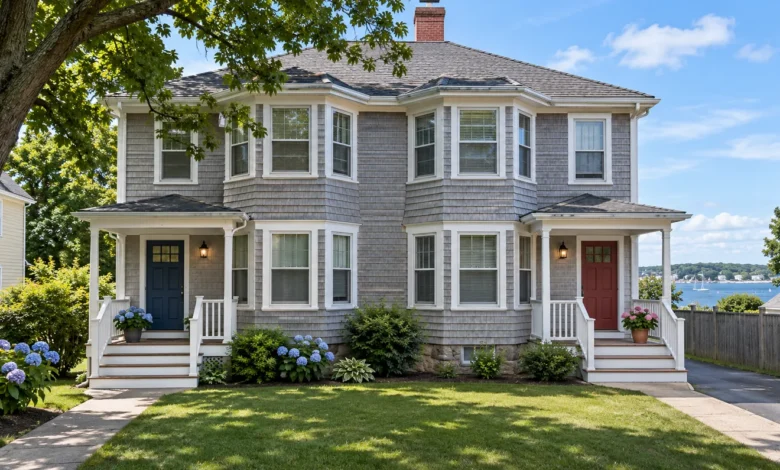
Imagine an owner lives upstairs and rents the lower unit year-round. Next summer the owner plans to move and lease both units. Ask the current insurer what coverage can apply during owner occupancy and what it can offer after the change. Describe any interval between move-out and the next tenant’s arrival. Get a written quote for the planned rental and ask which date would switch the occupancy terms. The dwelling and potential rent both change. Keep the insurer’s response and the leases so you can describe the actual status if an event occurs during the transition.
Ask how the carrier handles a repair in a shared area such as a stairwell or boiler room. If a covered event makes only one unit unavailable, ask whether the rental-income calculation addresses that unit alone or also affects the second. Use the real lease amounts and label expenses that would stop during repairs. A contractor’s estimate of the building repair and the documents showing when a tenant could return answer different parts of the claim.
Model the building limit and the lost-rent amount separately
Suppose an endorsement offers $8,000 for eligible lost rent, and a covered event makes a unit renting for $1,650 unavailable for six months. Scheduled rent would total $9,900 before any policy adjustments. Ask whether the dollar cap is separate from a period limit and which expenses or lease terms affect eligibility. A higher building limit would not necessarily increase that amount. Ask for a price for the rental-income coverage you want and note whether the same property loss triggers it.
Then ask about the rebuilding estimate. If a repair needs work to an older shared utility system, ask what the base policy includes and which code-related work could require endorsement coverage. Confirm the settlement basis for parts of the building with different materials. Compare the quotes on the same terms. The site’s ordinance or law insurance guide separates the cost of replacing damaged property from possible code work.
Give the property manager a usable first-notice checklist
Record the insurer and the person authorized to report property damage. Have the manager identify the affected unit, date first observed, photographs, tenants affected, and urgent work requiring attention. Ask which expenses the insurer wants documented before repairs. Keep receipts and the manager’s factual report. If a tenant reports an injury, ask the carrier whose policy and defense terms apply and what correspondence should be forwarded.
When renewing, update rents, lease dates, and the property description. Ask about additions, occupancy changes, and updated lender proof. If the household is converting a primary home to a rental, review the amount of any old homeowners refund and the first charge for the landlord policy separately. Save documents showing which policy was in force at each point in the change.
Long-term rental insurance versus short-term rental coverage
Tell the carrier whether stays last hours, days, months, or longer. Describe which part of the property is used and whether you offer other services. A carrier may classify frequent short stays differently from a long-term lease. Any coverage offered through a platform can have its own period, conditions, and exclusions. Ask whether you need a policy or endorsement that explicitly allows the activity, and request written confirmation based on the expected number and length of stays.
If the property can switch between long and short stays, describe the last and next expected use, rather than selecting whichever quote is cheaper. Ask what happens if the rental stays empty between bookings or the household uses it for visits. The building policy should match the actual operation on the date you want protection. A company quoting a tenant-occupied dwelling needs different information from one pricing an owner’s vacation home.
Give rental income protection its own worksheet
Keep the current lease, any scheduled increase, and proof of which rent is associated with each unit. Estimate how long it would take to restore a unit after a particular covered event. Ask whether an option covers a portion of rent, subtracts expenses that do not continue, or applies a separate dollar and time cap. Compare the lease records with the carrier’s instructions. A cancelled reservation, a nonpaying tenant, and rent interrupted by covered building damage have different causes.
For a rented two-unit property, ask how the insurer handles rent if one unit remains usable. If a common system is affected, ask which records show when an undamaged unit could be used safely. Keep contractor timelines, tenant communications, and any required official notice. Ask the insurer how it evaluates the reasonable repair period. If the work will be extended for renovations unrelated to the event, document those dates separately.
Compare liability and repair concerns for the same building
Check the named insured, landlord entity, address, and insured structures. If you add another property, ask whether it needs its own policy or could be listed separately. Confirm whether the underlying landlord liability can meet any umbrella requirement. If a tenant reports an issue with a particular fixture, record who was responsible for maintaining it and the facts. A claim can involve information about the area, lease, injury, and prior work. The carrier can explain the required notices and records.
Ask the manager which insurance it has and which matters it is authorized to report. Keep that contact record alongside your carrier’s instructions. If the tenant’s own insurance is required, clarify how proof is checked and when it renews. Nothing about tenant coverage changes the structure or lost rent limit you selected for the owner’s property. Ask each provider to verify the actual terms it issued.
Revisit the quote before a change in occupancy
Give each quoted company the same condition and occupancy dates. The lowest initial price can be based on a different rental term, which could make the comparison misleading. Ask for a version that matches the lease in writing. If the insurer chooses different occupancy terms before move-in, check the date and what proof the lender will accept through the transition. Save the documents with the related property so you can identify the contract quickly if a loss affects more than one address.
Review the cost of a gap between tenants
A six-week gap between leases is an occupancy issue before any insured damage occurs. Record the date the prior tenant actually left and when the next tenant can move in. Ask the insurer which activities or inspections it wants documented during that time and whether the contract changes after a specified period. Budget lost rent for planned turnover separately from the insurance payment you might receive after damage. If repairs reveal that work will take longer, notify the agent and keep the reasons in writing. A quote for a leased home should use the expected occupancy, and any interim policy should match the actual dates.
If one carrier quotes the property at a new rental address and another quotes it as a former home, compare the named owners and occupancy before submitting proof. Ask the lender to confirm which record it accepted. Save the issue date with your lease and insurance invoice.
How to compare two rental property insurance quotes
Use the same reconstruction facts. Match the number of units, finishes, detached structures, and owner’s furnishings. Check whether the carrier values the dwelling or roof at replacement cost or actual cash value.
Check the rental income limit. Ask what would trigger payment, how the carrier determines the eligible period, and whether upkeep or expenses that stop during repairs are deducted. Use the actual rent for each unit.
Check ownership and use. Name the insured landlord or entity correctly, disclose any short stays or vacancies, and ask how underlying landlord liability works with any umbrella. Compare the premium after these terms are comparable.
When a tenant keeps a dog, confirm how the carrier addresses the owner’s rental-property liability and whether any animal limitation applies. Use the Rhode Island dog liability coverage questions to request the landlord policy’s specific wording.
Sources consulted
National Association of Insurance Commissioners, home-sharing and landlord insurance consumer guidance; Rhode Island Department of Business Regulation, A Consumer’s Guide to Home Insurance.