Compare non-owner car insurance quotes in Rhode Island. Review liability for covered rentals and borrowed cars, regular use, and household exclusions.
This type of insurance is worth comparing if you do not own a vehicle and drive occasionally. Start with the specific cars you use, how often you drive them, and whether one is kept at your home. Ask which policy would respond first, what the non-owner policy would pay if it applies, and how you would cover damage to the car itself. Paid driving and regular access to a household vehicle need separate answers.
Who qualifies for non-owner car insurance?
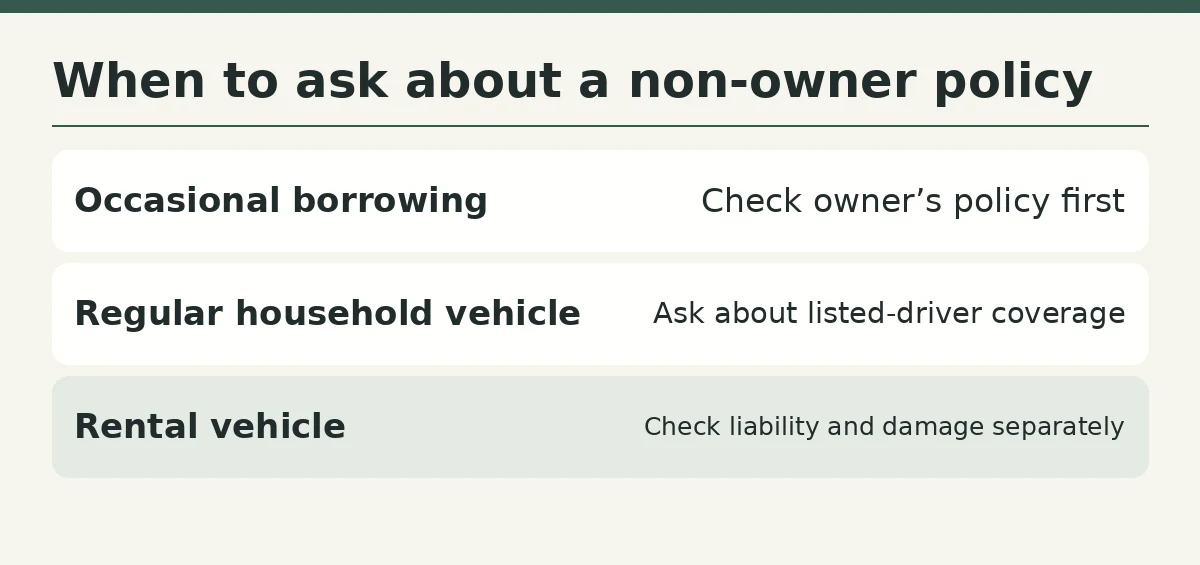
Describe each car, who owns it, where it is kept, and how often you drive it. Include vehicles belonging to a partner, family member, employer, or housemate. A named non-owner policy can have exclusions for vehicles that you own or that are furnished for your regular use. Ask the insurer to identify the wording that applies rather than assuming a vehicle is eligible because it is titled to someone else. Ask the owner whether its carrier wants you listed as a driver.
Think about where the vehicle is actually available. A driver who borrows a sibling’s car twice a year is in a different position from someone who uses a partner’s car for daily commuting. Give both actual examples to the company and ask how the form distinguishes them. If there is a regular household vehicle, get an answer from its insurer about being added to the policy before signing a separate contract.
Disclose regular access before pricing non-owner liability insurance
Tell each insurer how often you borrow a car and which vehicles are available to you through your household or work. Ask how the form coordinates with the owner’s policy and which people and vehicles qualify. Compare the same liability and UM choices. If most driving is in rentals, review the Rhode Island rental car insurance guide for questions about rental agreements and damage waivers.
How non-owner liability coverage works with the owner’s policy
Ask about the vehicle owner’s policy, your proposed non-owner policy, and any rental company’s liability coverage. The answer can depend on the policy terms, who has permission, and the facts of the accident. Ask whether the non-owner coverage is excess and how it would operate after a covered loss. The owner’s insurer should confirm whether a permissive driver is eligible in the situation you described. Do not use a generic statement about borrowing a car to settle a specific claim.
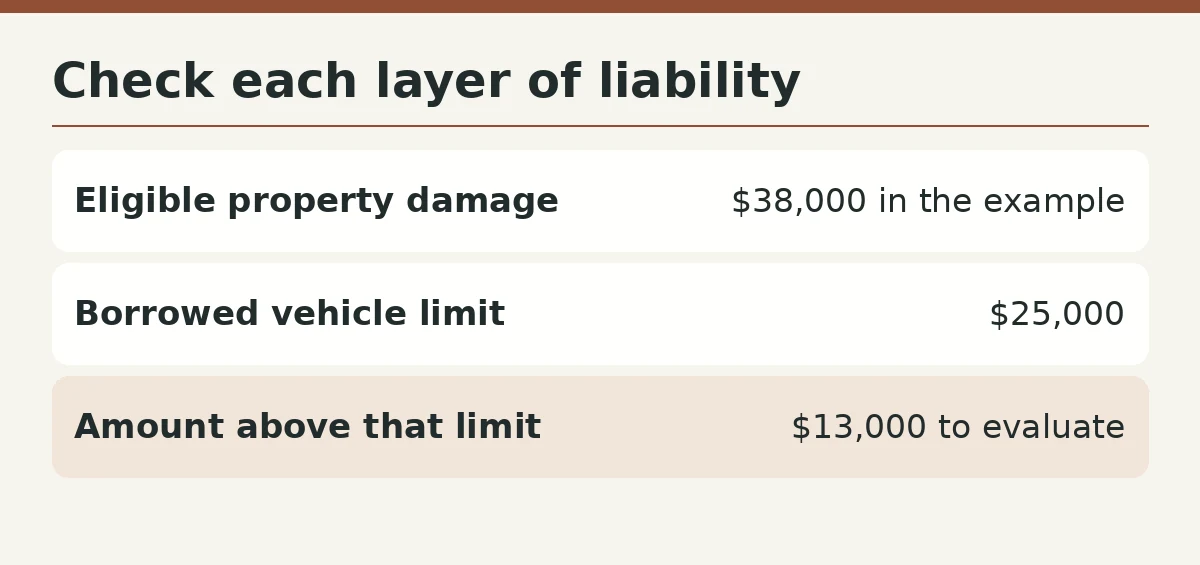
Suppose a borrowed car has $25,000 of property damage liability and an eligible covered driver causes $38,000 in damage to someone else’s property. The $13,000 above that figure illustrates why the order and available limits matter. Whether another policy pays anything depends on its terms and how they interact. Use the Rhode Island liability guide to read each limit separately, then ask the insurer to walk through the example.
Check damage to the car and belongings separately
A named non-owner liability quote is generally aimed at covered legal liability, not damage to the borrowed or rented vehicle itself. Ask whether any other protection is available for an eligible rental and what role a card benefit or waiver would have. Read the rental car insurance guide for the difference between damage to the car, a rental company’s fees, and liability. Keep a separate plan for the borrowed vehicle’s deductible or loss that concerns the owner.
Ask about uninsured motorist or other optional coverage on the policy, and what the insurer offers under Rhode Island requirements. Do not assume a non-owner quote has the same terms as a standard owner’s policy. Check who is named, which activity qualifies, and what is specifically excluded. If you use a rental for paid driving or delivery, disclose that use to both companies and obtain their written answers.
Compare non-owner car insurance quotes with rental liability costs
Estimate the number of rentals, their length, and what protection you typically purchase at the counter. A traveler who rents several weeks a year may have different concerns from a resident who borrows a car on occasional weekends. Ask whether a non-owner policy would change any offer given by the rental company and whether you would still buy a damage waiver. Compare the full annual cost of the protections you intend to use. The cheapest liability quote can still leave an important expense outside the contract.
When comparing companies, match the liability limits, optional coverage, and term. Use the Warwick auto quote checklist to organize the figures even if you do not have a VIN. Ask how the company will issue proof and how it will describe the policy. A proof document for a driver without a car does not establish that a specific vehicle is insured to meet registration requirements.
Switch from a non-owner policy to an owner’s auto policy
If you purchase, lease, or regularly keep a vehicle, notify the carrier before relying on the old contract. Ask for an owner’s policy and verify the date, VIN, and protection required by a lender. Compare the dates on both documents and confirm when the non-owner arrangement should end. If you are moving or sharing a vehicle at a new address, give the carrier the updated details. Keep the original record in case a claim refers to a date before the change.
Compare three actual driving schedules
One driver without a car borrows a friend’s car twice a year with permission. Another regularly commutes in a partner’s car kept at home. A third rents a compact car for visits to family. Ask the insurer to explain each schedule using the actual contract. The first situation draws attention to whether the owner’s policy covers occasional permission and how a non-owner form would coordinate. The second raises regular-use and household driver questions. The third requires separate attention to the rental agreement and coverage for the rented vehicle. Write down which situations the insurer is willing to evaluate and which contract it would use.
A named non-owner form is usually tied to the person named and eligible vehicles, not an open permission to drive any car under any circumstances. Ask if a spouse would need to be named or apply separately. If you regularly borrow from a roommate, notify the owner’s insurer and ask what it wants documented. If a friend lets you keep a car for a month, call again with updated details. The frequency and access have changed even though the owner’s name remains the same.
Price the year against a smaller number of rentals
Suppose a non-owner quote costs $420 per year and you typically rent for 14 days. Compare the actual cost of the liability choices available at the counter with the terms of the annual quote. For illustration, a separately quoted $17 daily liability option would cost $238 over 14 days. That comparison is incomplete until you confirm the limits, any uninsured motorist options, and whether you also borrow cars from friends. Check the damage waiver separately. Compare costs for a realistic year rather than using an unusually light or heavy travel period.
Ask how you would provide proof on a trip and what happens if you extend the rental. If the card benefit has different requirements from your auto protection, keep both records. Ask the counter for a copy of the rental agreement and the price of each option. If someone adds an optional product you did not intend to buy, ask for an itemized correction when you can still verify the terms. Keep the agreement you accepted with your trip notes.
Check driving for an employer or using a car-share app
A personal non-owner liability quote may not match regular use of an employer’s car, deliveries, passenger rides, or other paid driving. Tell the carrier exactly what you do and how often. Ask the employer whether its insurance provides any coverage for you under the circumstances. If you use a car-share service, review its coverage proof and payment terms and ask whether your non-owner insurer treats it as an eligible rental. Ask which records you would need after a covered loss.
Keep a simple record of which car you used, its owner, and the time and permission involved when relevant. Use the Rhode Island rideshare and delivery insurance guide for paid-driving questions. When the use is occasional and personal, compare the actual written terms first and have the carrier explain the order in which it would evaluate coverage.
Decide whether the form addresses the actual reason you are buying
Some drivers want to reduce liability exposure on occasional rentals. Others have stopped owning a car temporarily and want to understand their insurance options before buying another. Explain your reason to the carrier. Ask whether it can issue the form for the way you drive and what happens if your habits change. If you are using a policy to satisfy a specific requirement, ask the authority or organization what evidence it accepts. An insurer’s marketing description cannot make a proof document sufficient for an unrelated requirement.
Choose liability limits based on the coverage you intend to buy, then review details of who drives and which cars are eligible. Ask whether the policy provides anything beyond liability in the quote you received. If it includes uninsured motorist or other optional coverage, check how it applies to a rental or an occasional borrowed vehicle. If the insurer cannot explain the answer, ask for the relevant form and put the question in writing.
Create a comparison you can revisit after a move
If you move and begin sharing access to someone else’s car, tell both insurers the new location and how often you expect to drive. Ask whether the owner can add you and what the non-owner carrier would require if you still want separate coverage. Check whether the policy lists an address that is no longer correct. Read the APK guide to insuring a car when moving to Rhode Island if a vehicle will be registered as part of the change.
If you buy a car soon after switching, plan for both start dates. Get insurance for the exact vehicle and confirm it is active before you drive it. Ask whether the non-owner form ends or should be canceled at a specific time. Verify the owner’s name and whether a lender requires collision and comprehensive. Record which company is responsible for which period, rather than treating the new quote as an automatic replacement.
Questions to ask about a quote without a VIN
What happens if I rent the same car for a month? Give the exact period and the type of rental to the insurer. Ask whether repeated or prolonged access triggers a limitation. Ask the rental company what liability and damage terms it offers for an extension.
Can I insure a car that belongs to my partner without being listed on their policy? Explain the ownership and actual access to both insurers before relying on coverage. The vehicle owner’s insurer may want to rate or list regular drivers, and a named non-owner form may exclude the situation.
What should I compare if I rarely drive? Compare eligible vehicles and drivers, the liability and optional limits, any exclusions, and the full price. Review separate damage protection if you rent. Then check what you would need if the borrowing becomes regular or you acquire a car.
Confirm who should report a loss in someone else’s car
Notify the owner and gather proof of permission and the date of use if needed. Contact the insurer as required by the relevant contracts. Share the actual circumstances and the other insurer’s information. If one company asks for the other’s decision, get it in writing and keep both claim numbers. Check who is authorized to discuss the owner’s insurance instead of assuming the person who drove can access the whole policy.
Compare non-owner liability quotes on the same driving schedule
Describe each vehicle you plan to drive. Tell the insurer who owns it and whether you borrow it once in a while, use it for commuting, or rent it repeatedly. Ask what regular-use or household restrictions apply.
Use matching liability limits. Ask whether the non-owner policy would pay after the owner’s insurance and confirm any uninsured motorist options. Check whether the policy excludes business driving.
Estimate the full annual cost. Add any rental damage waiver or credit card costs you would still have. If you expect to buy a car soon, ask how the non-owner contract would end once an owner’s policy takes effect.
If you compare uninsured and underinsured motorist coverage on two non-owner quotes, ask which insured persons qualify and how either policy would coordinate with insurance on the borrowed vehicle. Ask for the relevant form numbers.
Sources consulted
Rhode Island Department of Business Regulation, auto insurance consumer guidance; National Association of Insurance Commissioners, Consumer Auto; insurer’s actual named non-owner form.